Evaluating the Real Muscle-Building Potential of Pilates Home Workouts
A no-equipment full-body Pilates home workout has surfaced on Mshale, presented as a complete muscular coverage solution.
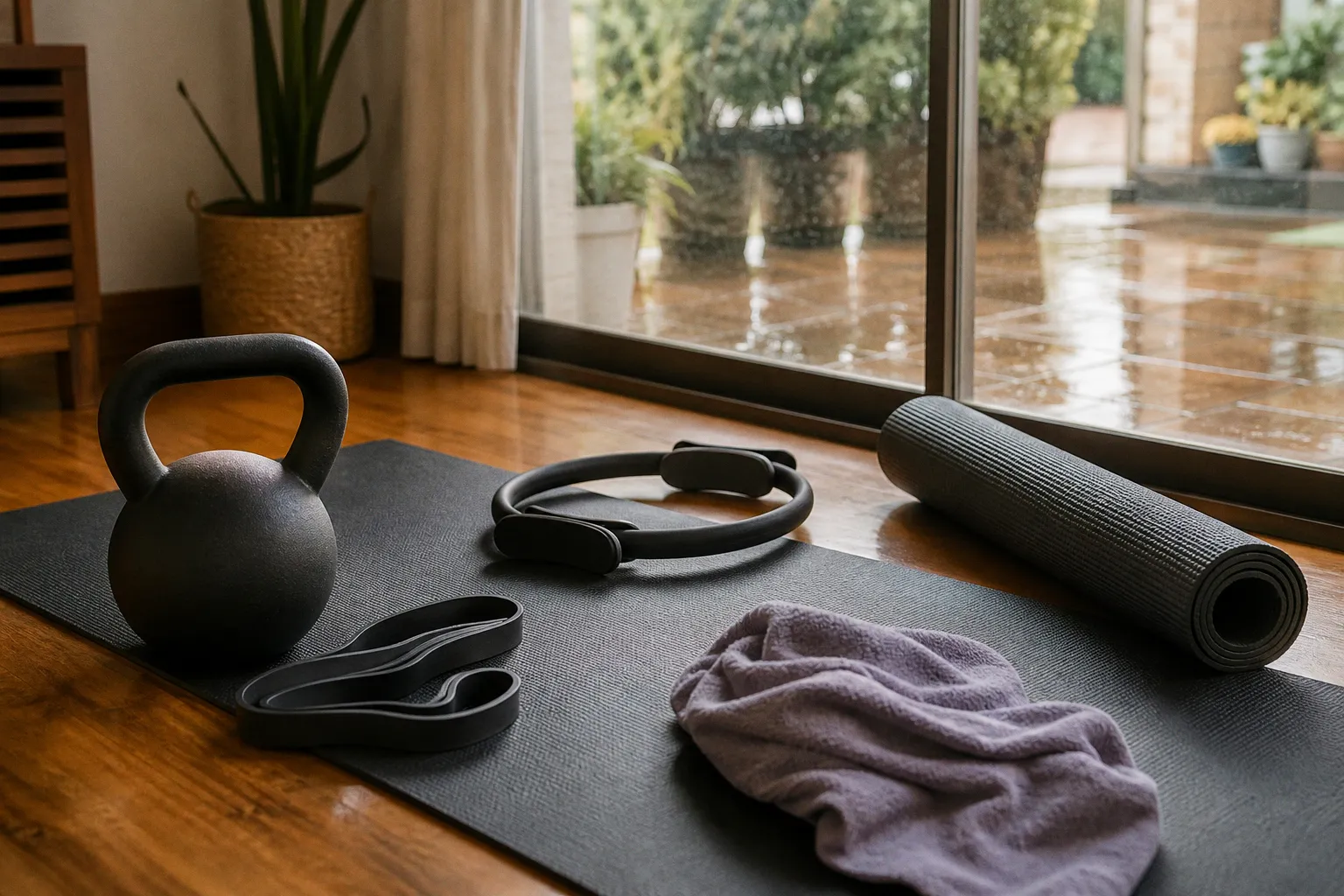
For readers who train with mechanical intent, the headline claim is also the first thing to dismantle: no single bodyweight protocol fully loads every muscle group through its full strength curve. The video's value lies in what it actually delivers, not what the title promises.
What the Pilates Format Actually Loads
According to the Mshale feature, the Ron Baron session targets all major muscle groups without external load. The honest mechanical read:
- Anterior core and hip flexors dominate the time-under-tension profile because most Pilates sequences use spinal flexion, leg lifts, and rolling patterns.
- Glute and hamstring recruitment remains partial. Without external resistance or heavy single-leg work, the posterior chain operates at low mechanical tension — sufficient for activation, insufficient for hypertrophic stimulus.
- Shoulder stabilization is present, but pressing movements are bodyweight only. The deltoids and triceps receive submaximal loading, which limits strength adaptation in the upper body.
Treat it as a mobility and control protocol, not a strength program. The session works for circulation, postural endurance, and joint articulation. It does not replace progressive resistance work.
When Load Becomes Non-Negotiable
If the objective shifts toward force production, the recent Women's Health kettlebell guide catalogs the equipment options in plain mechanical terms. The central technical points:
- Cast iron without coating is the budget baseline. It allows direct loading progression in 5–10 lb increments up to 60 lb, which covers most intermediate pressing, squatting, and swing variations.
- Vinyl-coated models protect flooring and reduce wrist torque spikes during dropped cleans or snatches. The Yes4All option wraps the lower handle, which matters when the bell contacts the forearm during high-velocity work.
- Competition-style bells have a uniform handle diameter regardless of weight. This standardizes grip mechanics but reduces the grip-strength challenge that variable handles provide.
The guide's trainers — including Tyneka Pack and Taylor Beebe — stress coaching before solo use. Kettlebell movement errors (hip hinge failure, wrist over-rotation during the snatch) place unchecked torque on the lumbar spine. Form must be verified before intensity scales.
A Benchmark Before You Add Anything
The Men's Health Milo's Triangle challenge functions as a fitness-level diagnostic rather than a training program. It assesses work capacity across multiple planes, which is closer to a standardized field test than a stimulus protocol. Useful as a pre-intervention marker: record the output, run a strength mesocycle, retest. If the score does not move, the programming is the variable to interrogate, not the athlete.
Implementation Rules
- Use the Pilates session on active recovery days or as a morning mobility primer. Three times per week is a sustainable ceiling for this modality.
- Introduce kettlebells only after a movement screen confirms hip hinge competence. Start at 15 lb for women, 25 lb for men, regardless of training age.
- Retest Milo's Triangle monthly. If the same lift pace produces gasping output cycles, endurance is the priority. If breathing remains controlled but pace collapses, force production is the gap.
Progress is mechanical. If the bodyweight session stops producing acute fatigue, the next step is load, not more reps.