Beginner Strength Training: Checklist Before Your First Lift
The fitness industry has a favorite promise: start lifting heavy and “newbie gains” will take care of the rest. That makes a good caption, but not a very good first-session plan.
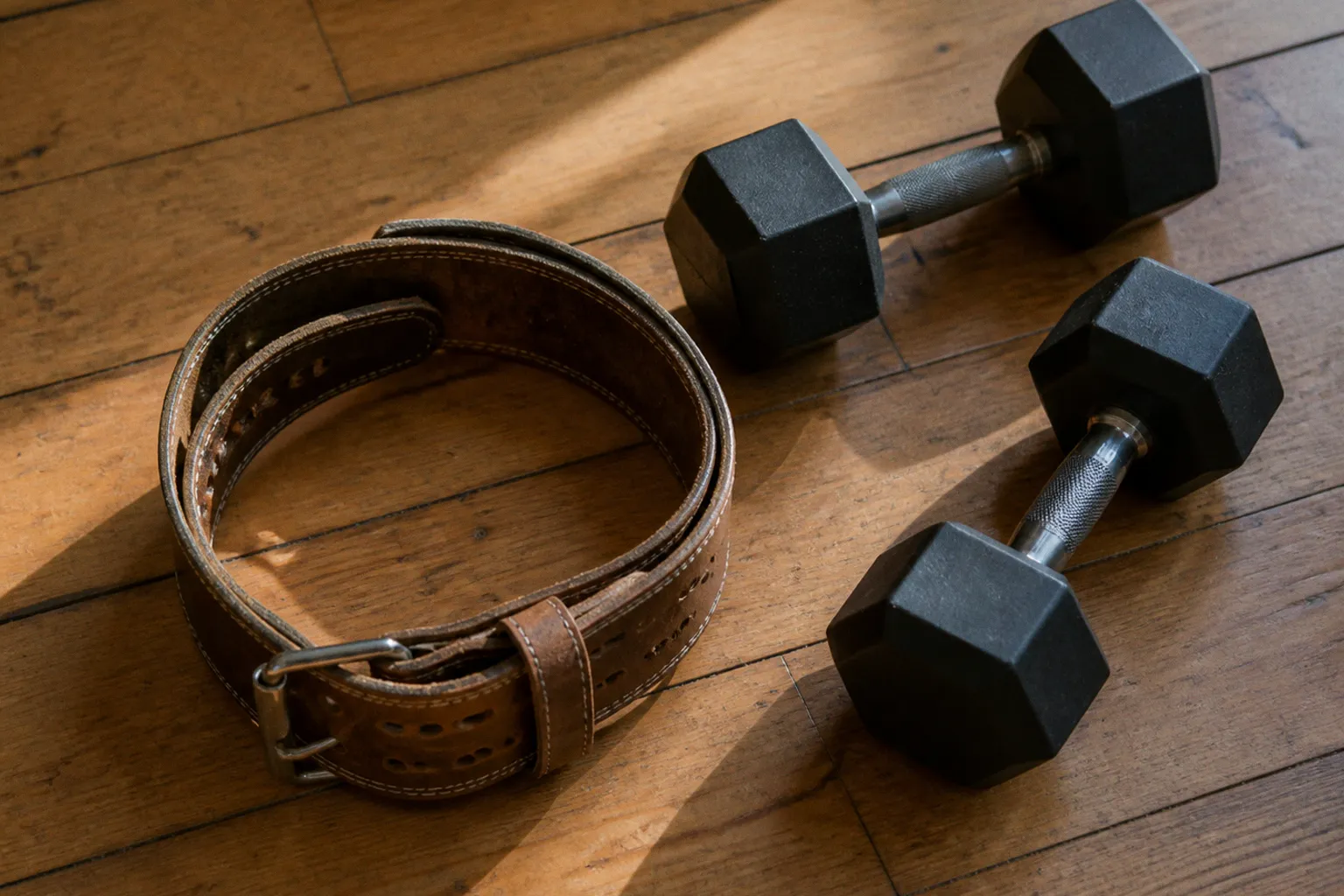
Strength training is less intimidating when you prepare for the parts that actually matter: choosing manageable loads, learning the movement patterns, setting up a safe space, and leaving enough room for recovery.
Many beginners arrive with the visible accessories sorted. They have a shaker bottle, a new pair of leggings, perhaps a playlist built for personal records. What they do not always have is a way to decide whether a weight is appropriate, how to structure a full-body session, or what to do when their joints and muscles feel different the next day. The gap is rarely a lack of enthusiasm. More often, it is a lack of practical preparation.
I have seen enough beginner workouts go off course to know that the problem is usually not motivation. It is a rushed warm-up, an ambitious first load, an exercise selected because it looked impressive online, or a program that leaves no space for recovery. A useful beginner strength training checklist before starting should deal with those decisions before the first rep, not after something starts hurting.
Strength training does not require a heroic first session. It requires a repeatable one.
The Preparation Most Beginners Skip
Before you touch a dumbbell or film your “day one” reel, check the basics. These are not administrative details. They determine whether your first few sessions feel controlled enough to teach you anything.
Start with your current health, not your ideal workout
If you have persistent pain, a history of joint problems, cardiovascular concerns, a recent injury, or a medical condition that could affect exercise, speak with an appropriate healthcare professional before beginning. The point is not to create unnecessary bureaucracy around a squat. It is to understand which movements, intensities, or positions may need to be modified.
A professional clearance is not a guarantee that every exercise will feel good. It is a way to identify boundaries before you start testing them under load. If you have restrictions, build the program around them rather than treating them as an inconvenience to ignore.
Pay attention to symptoms during training as well. Normal effort can include muscular fatigue, a temporary burning sensation, and the feeling that the final repetition is challenging. Sharp pain, unusual pressure, dizziness, numbness, or pain that changes your movement is a different signal. Stop and reassess instead of trying to prove that you can push through it.
Give the goal a useful shape
“I want to get stronger” is a reasonable direction, but it is too vague to guide a session. A more useful goal might be to perform a set of goblet squats with consistent depth and control, complete a certain number of well-executed push-ups, or become comfortable with a dumbbell deadlift.
The first goal does not have to be a dramatic strength milestone. In the beginning, skill is progress. You are learning how to brace, hinge, press, pull, and control the lowering phase of a movement. Those improvements may show up before the number on the dumbbell changes.
Write down what you want to improve and how you will recognize it. You can track:
- the exercise and variation you used;
- the number of sets and repetitions;
- the load, if you used one;
- how difficult the final set felt;
- whether your technique stayed consistent;
- any discomfort that appeared during or after the session.
This gives you something more reliable than motivation to return to. It also prevents you from changing five variables at once and then guessing what helped.
Treat technique as the first training adaptation
Your first sessions are not an audition for the strongest person in the gym. They are practice. A lighter load that allows you to repeat the same controlled pattern is more useful than a heavier load that changes your posture halfway through the set.
You do not need to master every technical detail before you begin. You do need to understand the basic shape of the movement and have a way to check yourself. A mirror, a coach, or a short video recorded from the side can help. Use video as feedback, not as a performance review.
The main question is simple: can you complete the planned repetitions without losing the position you are trying to learn? If your knees collapse inward during a squat, your lower back takes over during a hinge, or your shoulders shift during a press, reduce the load or choose an easier variation. That is not going backward. It is making the exercise match your current ability.
Audit the space before you train at home
For home workouts, clear enough floor space to step, hinge, lie down, and put equipment down safely. Check that the surface is stable and that nothing can slide under your feet or roll into a walkway. Keep pets, loose cables, and fragile objects out of the immediate training area.
You do not need a full gym to begin. A pair of dumbbells or adjustable weights, a resistance band, and a stable surface can cover a surprising number of movement patterns. A sturdy chair may help with supported exercises, but do not use furniture that shifts, folds, or is not designed to bear your weight.
The equipment should make the session easier to organize, not turn it into an equipment demonstration. If you cannot explain what a piece of gear is for, you probably do not need to buy it yet.
What a Beginner Program Needs to Cover
A first strength session should be broad rather than elaborate. The goal is to introduce the major patterns without creating so much fatigue that you cannot repeat the session comfortably.
For a full-body workout, select one exercise from most of these categories:
1. Squat or knee-dominant movement: bodyweight squat, goblet squat, split squat, or leg press.
2. Hip hinge: kettlebell deadlift, dumbbell Romanian deadlift, or a shortened-range hinge drill.
3. Horizontal push: incline push-up, regular push-up progression, or dumbbell bench press.
4. Horizontal pull: one-arm dumbbell row, supported row, or resistance-band row.
5. Loaded carry: farmer’s carry or suitcase carry, if you have enough space and appropriate weights.
6. Trunk control: plank variation, dead bug, bird dog, or banded anti-rotation press.
You do not need to use all six in every session. Four well-chosen exercises can be enough for a first workout, especially if you are still learning the setup. The list is a menu, not a dare.
A useful beginner weight lifting checklist is less about collecting exercises and more about checking whether the session has balance. If you press, include some pulling. If you squat, consider a hinge. If you work hard in one direction, avoid building the entire program around that same direction.
A simple session structure
A practical beginner session can look like this:
- brief general warm-up;
- one rehearsal set for each movement;
- two or three working sets per exercise;
- a comfortable number of repetitions, usually stopped before technique deteriorates;
- enough rest to repeat the next set with control;
- a short note in your training log.
The exact repetition count is not sacred. A moderate range can work well because it gives you enough practice without requiring maximal effort. Some exercises will feel better with fewer repetitions, while others are easy to control for more. The movement, load, and your experience all matter.
Start with a set that feels like you could perform several more good repetitions. As you gain confidence, you can gradually work closer to technical fatigue. For now, “challenging” should not mean “barely surviving.”
The Mechanics of Your First Session
Warm up to rehearse, not to perform
A warm-up does not need to leave you exhausted. Its job is to raise your temperature slightly, move the joints through the positions you will use, and give you a low-pressure rehearsal of the exercises.
A few minutes of walking, cycling, or another easy form of cardio can be followed by dynamic movements such as bodyweight squats, hip hinges, arm circles, and light band rows. Then perform a practice set with no weight or a very light weight.
The practice set often reveals more than a generic warm-up. It shows whether your range of motion feels comfortable, whether you understand the movement, and whether the planned load is realistic. If the first rehearsal feels awkward, do not rush into the working set simply because it is written in the program.
Choose a load that leaves room for learning
The right starting weight is the one you can control through the intended range of motion while keeping your breathing and posture organized. It may feel almost too light at first. That is acceptable. You are establishing a baseline.
Use these signals:
- If every repetition looks identical and the final set feels very easy, you may have room to increase slightly next time.
- If your range of motion shortens, your body starts swinging, or you hold your breath throughout the set, the weight may be too heavy.
- If the first set is comfortable but later sets fall apart, reduce the load or take more rest.
- If an exercise causes pain rather than ordinary effort, change the variation or stop.
Do not judge the load by how impressive it looks on the rack. Judge it by whether it allows you to perform the exercise you intended to perform.
Rest long enough to repeat the movement
Short rests can make a workout feel intense, but intensity is not the only measure of a productive session. Rest gives your breathing time to settle and helps you approach the next set with enough control to practice the movement again.
A short, consistent rest period may be appropriate for lighter exercises, while more demanding movements may require longer. Rather than treating a timer as a law, use the next set as the test. If you are still too breathless to brace, grip, or maintain your position, wait longer.
The purpose of rest is not to make the workout feel easy. It is to make the next set useful.
The best starting weight is not the heaviest one you can move. It is the heaviest one you can control repeatedly.
Keep the first session shorter than your ambition
Beginners often add exercises because the workout does not feel dramatic enough. That is how a focused session turns into a long tour of every machine in the room. More exercises create more opportunities for technique to fade, especially when you are still learning how to organize your effort.
Finish while you still feel capable of doing the same kind of session again. A workout that leaves you stiff, depleted, and reluctant to return has not necessarily been more effective than one that felt measured.
Equipment, Space, and What You Can Ignore for Now
A home setup can be simple. A commercial gym can be useful, but access to more machines does not automatically make a program better.
| Need | Practical starting option | What to look for |
|---|---|---|
| Squat pattern | Bodyweight or goblet squat | Stable feet and controlled depth |
| Hip hinge | Kettlebell or dumbbell deadlift | A weight you can keep close to your body |
| Push | Incline push-up or dumbbell press | A position that lets your shoulders move comfortably |
| Pull | Band row or supported dumbbell row | Support that prevents twisting and momentum |
| Trunk training | Dead bug, plank, or bird dog | Control rather than a long, uncomfortable hold |
| Carrying | Dumbbells or one weight at your side | A clear path and a stable walking pattern |
A bench is convenient, but it is not mandatory. Adjustable dumbbells save space, but a matched pair of fixed weights can work just as well. Resistance bands are versatile, although their tension changes through the range of motion and may feel less predictable than a dumbbell.
A rack with safety arms can be valuable when you are ready for barbell squats and presses. It is not a requirement for learning the underlying movement patterns. You can build a strong foundation with variations that allow you to stay in control.
Specialty accessories also have their place, but they are not substitutes for practice. Lifting shoes, belts, wrist wraps, knee sleeves, and elaborate cable attachments may become useful for particular goals. They do not solve a poorly selected load or an exercise you have not learned to perform.
Keep your phone out of the way when possible. Recording a set for form review is useful; scrolling between sets is a different activity. Distraction makes it easier to lose track of repetitions, rush the rest period, or stop paying attention to the position of your body.
Recovery Is Part of the Program
A strength session is a stimulus, not the complete adaptation. Your body needs time, food, sleep, and ordinary movement between workouts. That does not mean you must remain motionless after lifting. It means you should distinguish between productive activity and repeatedly stressing the same tissues before they feel ready.
For many beginners, leaving a day between full-body sessions is a sensible starting point. If you train the same muscle groups on consecutive days, the second session may need to be lighter or use different movements. The appropriate gap depends on the exercises, the effort, your training history, sleep, nutrition, and how your body responds.
A calendar can help. Place your training days far enough apart that you are not making every session a test of soreness tolerance. If you want to move on non-lifting days, walking, gentle mobility work, or another low-intensity activity can keep you active without turning recovery into another hard workout.
Pay attention to the difference between ordinary post-workout soreness and a problem that changes how you move. General stiffness that gradually improves is common when a new activity is introduced. Persistent or worsening pain, swelling, instability, or symptoms that interfere with everyday movement deserve more attention.
Sleep and nutrition do not need to become a second job. Aim for regular meals that include a useful source of protein, drink enough fluids to avoid starting dehydrated, and give yourself a reasonable amount of sleep. The more demanding the training becomes, the less helpful it is to treat recovery as an afterthought.
Recovery is not the pause between the real work. It is part of the work.
How to Progress Without Chasing a Deadline
Progression is not limited to adding weight. You can improve by performing the same load with better control, completing an additional repetition, using a larger comfortable range of motion, or choosing a more demanding variation.
A simple progression model works well for many beginners:
1. Choose a repetition range that allows clean technique.
2. Keep the same load until you can complete the planned sets without form breaking down.
3. Add a small amount of weight or one repetition when the current version feels consistently controlled.
4. If the increase makes your technique unstable, return to the previous load and build more gradually.
5. Record what happened so the next session starts with information rather than guesswork.
Do not increase weight simply because the calendar says you should. Increase it when your performance shows that you are ready. Conversely, do not treat a lighter session as failure. Stress, poor sleep, travel, and an unfamiliar exercise can all affect performance. Adjusting the load is a training decision, not a character judgment.
A log does not need to be elaborate. Write down the movement, sets, repetitions, load, and a brief note such as “steady,” “grip limited,” or “left side less stable.” Over time, these notes show patterns that a mirror or scale cannot.
Planned easier periods can also be useful when fatigue accumulates. You might reduce the number of sets, use lighter loads, or choose simpler variations for a short period. There is no need to force every session to be a personal best.
The Checklist to Run Before You Lift
Use this as a practical final pass, not as a test you can fail.
1. Health considerations reviewed: you know whether any pain, condition, injury history, or restriction changes your starting plan.
2. Goal clarified: you can describe what you want to improve and how you will recognize progress.
3. Space checked: the floor is clear, stable, and large enough for the planned movements.
4. Equipment inspected: weights, bands, benches, and attachments are secure and in usable condition.
5. Session kept focused: the workout includes a few movement patterns rather than every exercise you have seen online.
6. Warm-up planned: you will rehearse the movements before loading them.
7. Starting load chosen conservatively: the first set leaves room to learn and adjust.
8. Rest allowed: you will take enough time to repeat the next set with control.
9. Recovery considered: your next session is not scheduled so closely that you are forced to train through significant soreness or pain.
10. Workout logged: you will record what you actually did, including any modification.
If you are preparing to train at home, set the equipment out before the session and decide where each exercise will happen. If you are going to a gym, walk through the space first. Find the dumbbells, benches, bands, and open floor area before you start. Removing small decisions from the workout makes it easier to concentrate on the important ones.
What to Do This Week
Choose a few exercises you can explain and demonstrate at an easy level. Put two or three sessions on your calendar with enough space between them for recovery. On the first day, warm up, practice each movement, use a conservative load, and stop before your technique becomes unreliable.
On the following day, move normally. Walk if you feel like walking. Notice how your body responds, but do not use soreness as a scorecard. When you return to training, use those observations to decide whether to repeat the session, reduce the load, or adjust an exercise.
Beginner strength training is not complicated, but it does require restraint. You do not need to buy every piece of equipment, train to exhaustion, or follow a dramatic transformation plan. You need movements you can control, a structure you can repeat, and enough patience to let small improvements accumulate.
The strongest choice you make before your first lift may be the least glamorous one: start with a plan that leaves you wanting to come back.