Building Functional Strength After 40: The Essential Deadlift Variations for Longevity
According to Woman & Home, board-certified health and wellness coach Jill Brown, 59, has identified the stiff-leg deadlift and its single-leg variant, the Romanian deadlift, as the foundation of her…
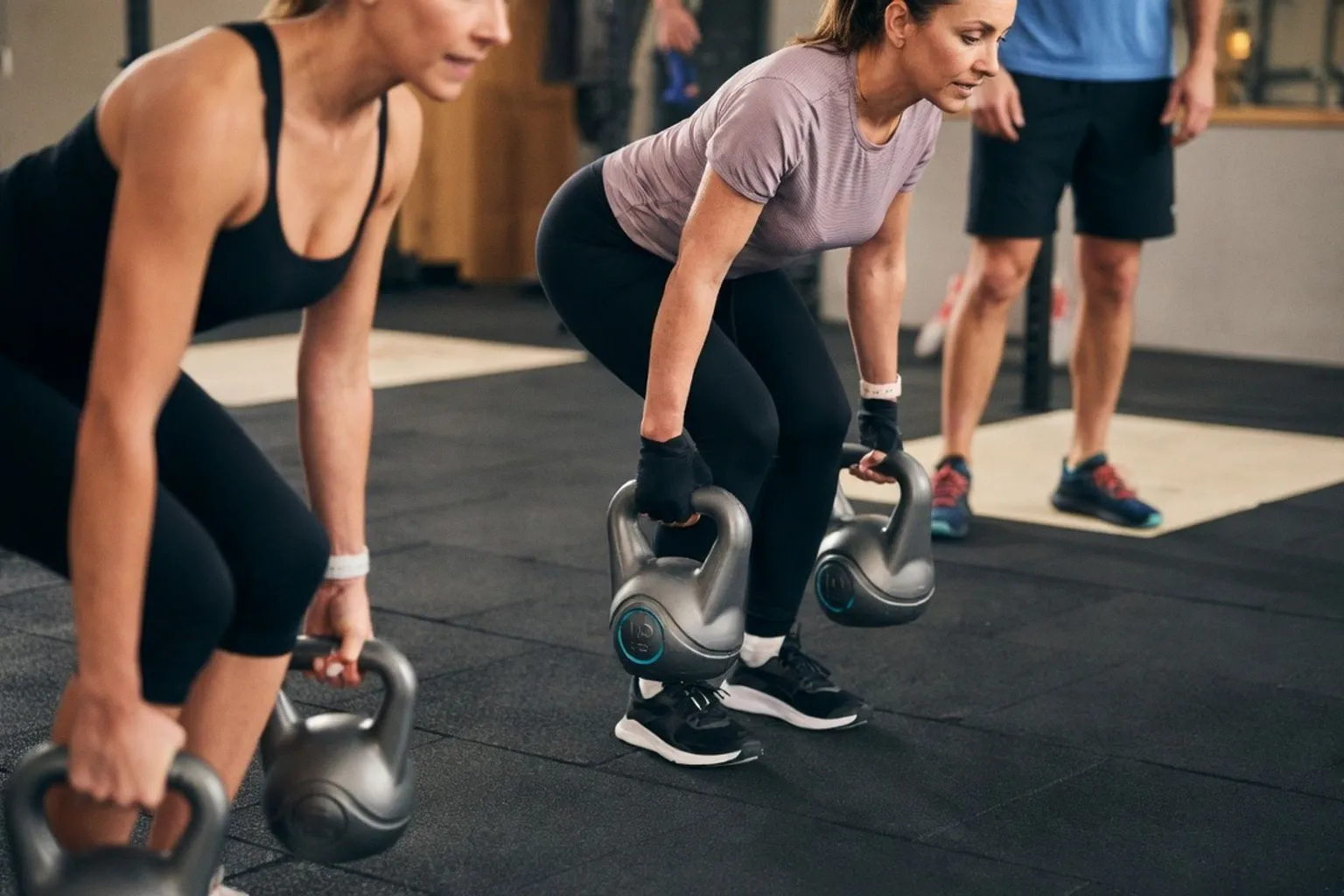
According to Woman & Home, board-certified health and wellness coach Jill Brown, 59, has identified the stiff-leg deadlift and its single-leg variant, the Romanian deadlift, as the foundation of her lower-body programming for women in their 40s. The pairing operates as a compound movement, recruiting the posterior chain through a hip hinge rather than isolating single muscle groups. For an audience training for long-term functional capacity, the selection is deliberate: it maps directly onto the movement patterns required for lifting objects off the floor, standing from a seated position, and maintaining postural integrity under load.
The Mechanics of the Pair
The stiff-leg deadlift and single-leg Romanian deadlift are sequential, not interchangeable. The bilateral version establishes the hinge pattern under symmetrical load; the unilateral variation introduces sagittal-plane instability that demands continuous contralateral hip stabilization.
Execution requires a neutral spine throughout the eccentric phase. The hamstrings elongate under tension while the spinal erectors work isometrically to resist thoracic flexion. Gravity serves as the primary external load vector. The lifter's job is to decelerate it.
The single-leg variant adds a rotary stability demand. Standing on one limb requires continuous frontal-plane adjustment from the glute medius and the deep core musculature. Most lifters fail this pattern not from muscular weakness but from inadequate proprioceptive control. Brown emphasizes that the movement teaches the lifter to hinge at the hips rather than flex the spine, a distinction that protects the lumbar vertebrae and redirects force production to the gluteal complex.
The Osteogenic and Hypertrophic Signal
Resistance training is not optional past 40. Age-related muscle loss begins by the mid-30s and accelerates through the fifth and sixth decades. The only documented intervention that slows or reverses this trajectory is mechanical tension applied to skeletal muscle.
The stiff-leg and Romanian deadlift deliver this through two pathways. First, the axial loading through the spine and femoral neck creates the osteogenic stimulus required to maintain bone mineral density, a non-negotiable for postmenopausal women. Second, the eccentric hamstring work produces microtrauma in the muscle fibers; subsequent repair drives the hypertrophic response.
The superset pairing Brown recommends, performing both exercises back-to-back without rest, extends time under tension and elevates heart rate. Cardiovascular demand increases as a secondary effect, though incidental to the primary mechanical goal.
Protocol and Equipment
- Use a barbell for bilateral work. The rigid shaft keeps the weight path linear and enables heavier loading than dumbbells.
- Switch to adjustable dumbbells for unilateral work and home sessions. Click-in resistance plates allow incremental load changes without storage overhead.
- At upper loads, grip failure becomes the limiting factor. Lifting straps resolve this without compromising the target musculature.
- Progress resistance gradually. Maintain a neutral spine. Train the hinge pattern under load two to three times per week.
The objective is structural reserve, the capacity to move under load at 70, 80, and beyond. Single exercises do not deliver that. A consistent hinge pattern, loaded progressively, does.