Courtney King: The Evolution of Bikini Olympia Standards and Training
According to Fitness Volt, her 2016 package reset what judges rewarded, establishing a new standard for lower-body hypertrophy and conditioning that has shaped the division since.
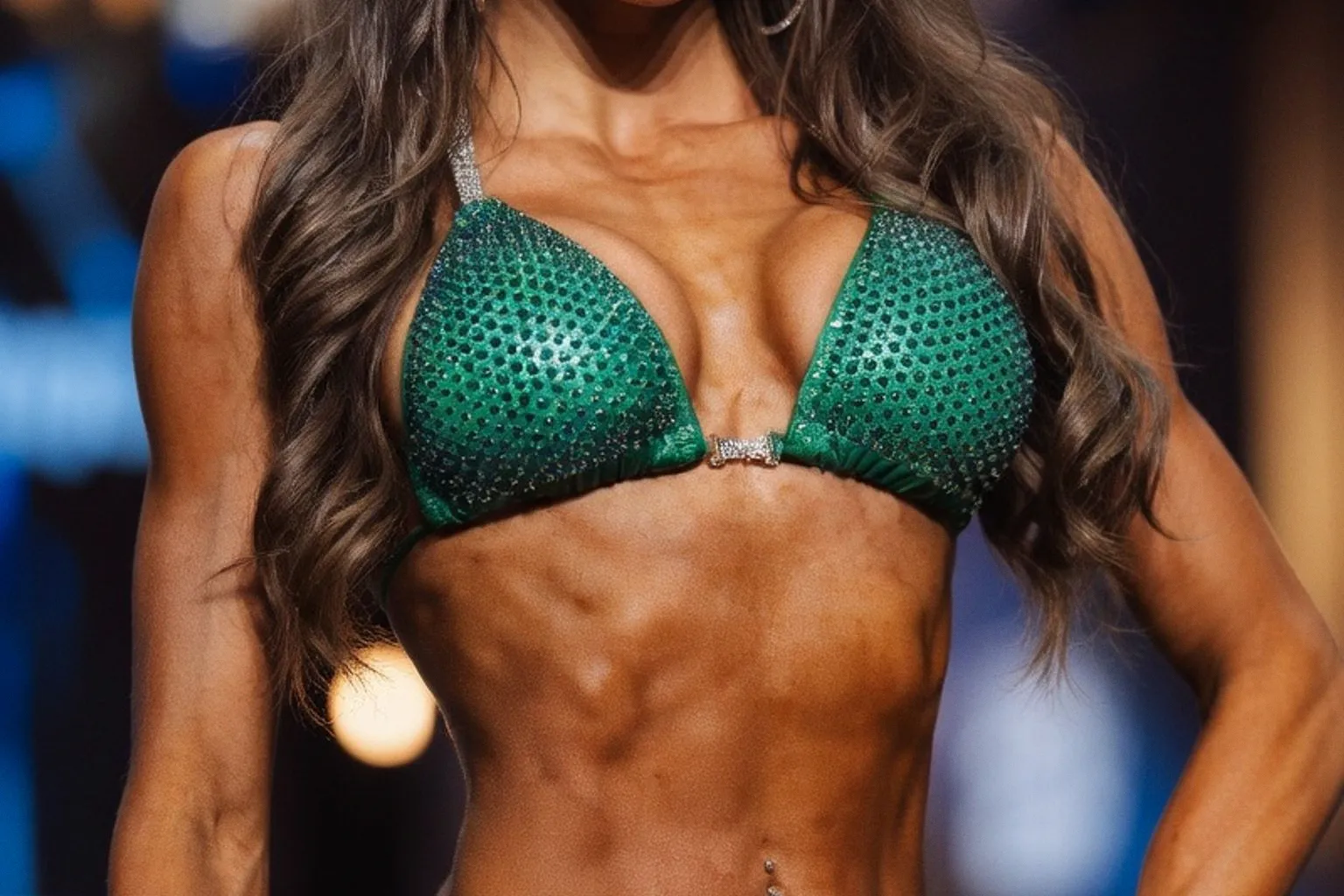
Courtney King's competitive trajectory from Chicago high school athletics to the 2016 Bikini Olympia crown represents a specific mechanical and physiological evolution in the division's judging criteria. According to Fitness Volt, her 2016 package reset what judges rewarded, establishing a new standard for lower-body hypertrophy and conditioning that has shaped the division since.
Conditioning Reset and Division Trajectory
King unthroned Ashley Kaltwasser, who had held the Bikini Olympia title for three consecutive years from 2013 to 2015. The shift was quantifiable in the package presented: greater lower-body muscularity paired with tighter conditioning. In the nine editions following King's 2016 win, six different athletes have claimed the title. Only Angelica Teixeira has recorded back-to-back victories. That churn traces back to the criteria King's presentation established.
Athletic Base and Early Loading
Born September 13, 1993, in Chicago, King accumulated a broad athletic base before competing. Soccer, gymnastics, basketball, cross-country, and swimming composed her developmental loading history. Each modality delivered distinct mechanical stimuli: multiplanar coordination from gymnastics, sagittal-plane endurance from cross-country, ballistic force production from swimming. That mixed base likely contributed to the joint stability and movement control visible in her stage presentation.
King began consistent resistance training in high school. According to Fitness Volt, a woman at her gym noted her physique and introduced her to the Bikini division. After months of preparation, King entered the 2011 Teen National Championships and won.
Pro Pathway and Exit Timing
King won her division at the 2012 NPC USAS, earning her IFBB Pro card. Her first professional appearance was the 2013 Battle on the Beach Pro, where she finished as runner-up. She later won the Europa Games Pro and Tampa Pro in 2013, qualifying for the 2013 Bikini Olympia. She placed seventh at that debut Olympia appearance.
King vacated her throne in 2017 and retired from competitive bodybuilding. Her partner is Chris Bumstead, who won the Classic Physique Olympia six consecutive times before retiring after the 2024 show.
For athletes analyzing the King model, three variables stand out:
- Multi-sport youth development preceding specialization
- Three-year amateur-to-pro pathway (2011 first show, 2012 Pro card, 2013 Olympia debut)
- A defined competitive window (2013–2017) before exit, avoiding long-term accumulation of stage-related physiological cost
The post-2016 division trajectory suggests King's specific conditioning package created a moving target that most competitors have not sustained across multiple seasons. Any trainee seeking to replicate the result must accept that the standard itself has continued to advance, not stabilize, since her win.