AI Fitness Equipment Vs. Personal Trainers: Where Tech Falls Short
A recent Forbes comparison, "AI Fitness Equipment Vs.
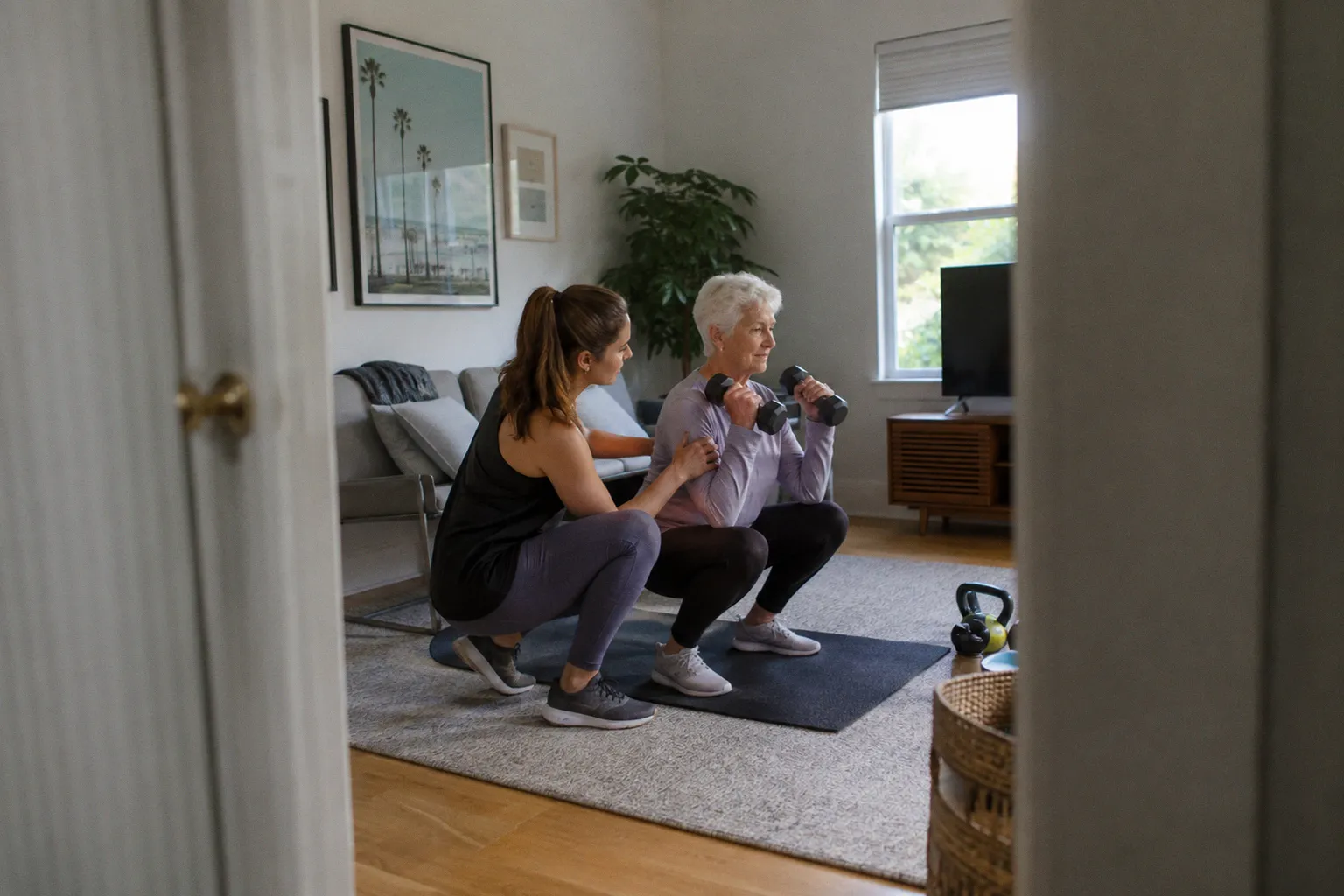
Personal Trainers: Where Tech Falls Short," puts a hard question to anyone considering a smart mirror, connected cable machine, or app-driven resistance setup over a human coach. The short version: hardware tracks load and rep count. It does not manage your spine. Read on for the mechanical breakdown.
What the Hardware Actually Measures
Connected fitness gear outputs three data streams: external load, velocity, and range of motion against a preloaded baseline. That is the entire dataset. No wearable, camera rig, or force plate built into consumer AI equipment in 2026 reads:
- Intra-rep motor control failure (the lumbopelvic hinge collapsing under fatigue)
- Compensatory recruitment patterns at adjacent joints
- Tendon tolerance versus current training density
- Breathing timing relative to spinal loading
A sensor can log that you squatted to 120 degrees of knee flexion. It cannot tell you that your adductors took over at the bottom because your glutes failed at rep seven.
Where a Trained Human Is Non-Optional
A competent coach performs real-time pattern recognition across the kinetic chain. That is not a vibe. It is a perceptual skill built on hundreds of thousands of movement reps under load. The Forbes piece lands here. Tech still falls short on three fronts:
- Load prescription: progression requires reading tissue readiness, not just last session's tonnage. AI defaults to linear progression. Linear progression breaks tendons in adults over 35.
- Cue specificity: external cueing ("push the floor away") outperforms internal cueing ("feel your quads") in motor learning research. AI rarely cues at all. It counts.
- Injury margin: a coach downshifts the session before the set that ruptures the supraspinatus. Hardware waits for the rep to drop and adjusts next time. The damage is already done.
The Protocol: Stack Tech, Not Replace
For self-directed trainees with a clean movement baseline, AI equipment is a compliance tool. It removes decision friction. It does not replace the diagnostic layer. Use it under one of these conditions:
- You have passed a movement screen with a qualified professional within the last 90 days
- You program your own mesocycles and treat the AI data as a log, not a prescription
- You have a defined exit criterion for stopping a set (form break, RPE ceiling, joint pain) that the hardware cannot detect
If any of those is missing, the smart equipment is a rep counter with a subscription fee. Hire the coach. The Forbes angle is correct: the gap is not in the silicon. It is in the sensing layer between the bar and the nervous system.