Why a 48-Year-Old Fitness Expert Prioritizes Consistency Over Intensity
Pvolve founding trainer and chief training officer Antonietta Vicario, a 48-year-old former dancer and choreographer, has published her weekly training template in Fit&Well, prioritizing muscle…
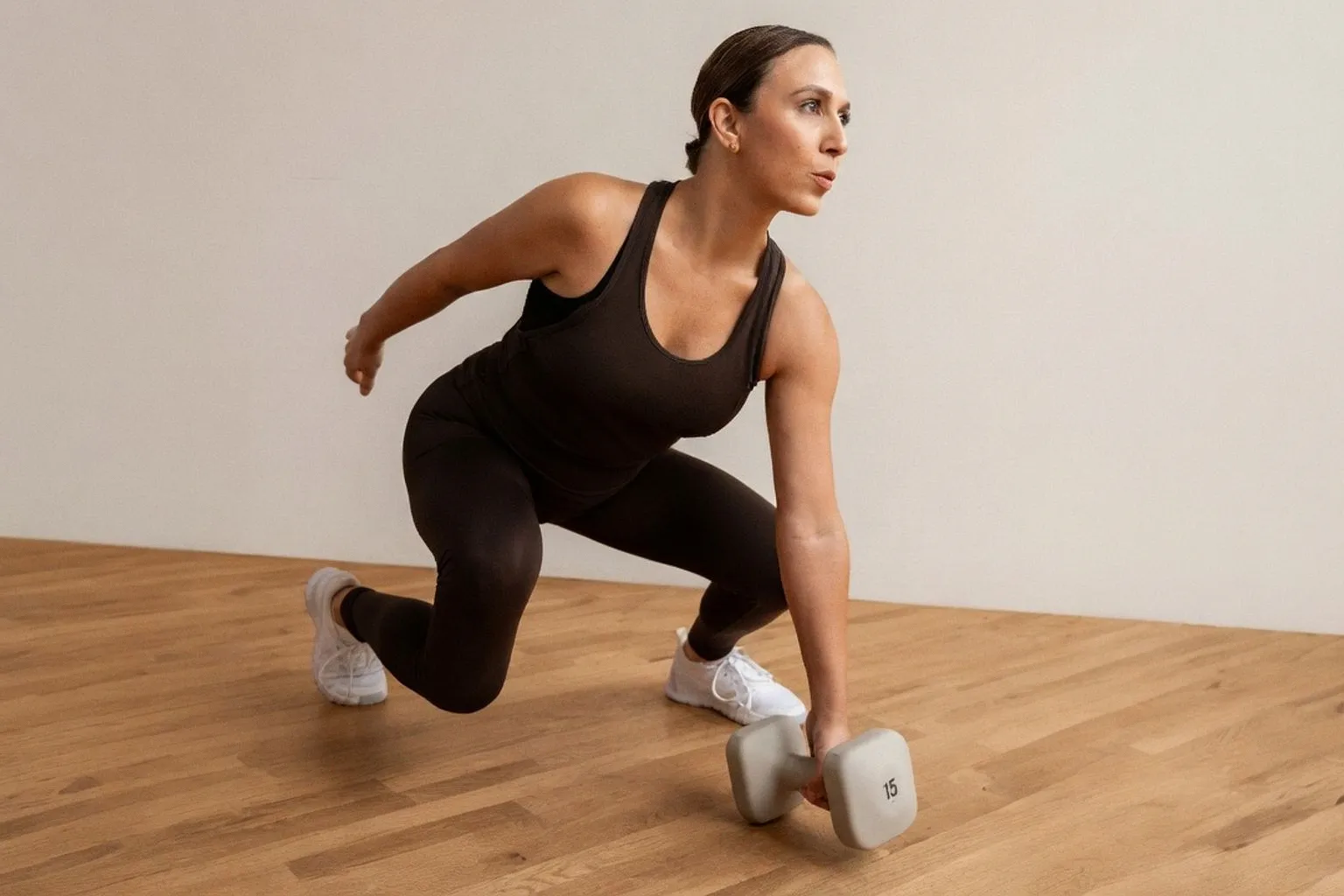
Pvolve founding trainer and chief training officer Antonietta Vicario, a 48-year-old former dancer and choreographer, has published her weekly training template in Fit&Well, prioritizing muscle retention, joint mobility, and adherence over volume.
The Adherence Equation
Vicario targets five sessions weekly. Reported completion sits at 60–70 percent. She frames the gap as structural rather than motivational—a scheduling constraint at the intersection of peak career output and caregiving, not a willpower deficit.
- Minimum viable dose: 15–20 minutes on compressed days
- Training window: 8–9 a.m., immediately after school drop-off, before appetite for movement decays
- Progression trigger: short sessions become habitual before duration expands
- Mental health load: even truncated sessions produce measurable mood regulation
"Perfection is the enemy of success," Vicario states. Her prescription for new trainees: 15-minute blocks, three times per week, as the entry dose. Volume scales after the behavior locks in. The all-or-nothing entry pattern, she argues, is the primary cause of early dropout, not lack of discipline.
Mobility and Stability as Load-Bearing Variables
The biomechanical case is direct: resistance work without mobility and stability training produces strength with an expiration date.
- Mobility: full access across sagittal, frontal, and transverse planes
- Stability: coordinated motor control operating within that available range
- Combined output: the substrate that keeps accumulated muscle functional past midlife
"Most women are hyper-focused on resistance training, but without mobility and stability, strength has an expiration date," Vicario notes. Muscle is the organ of longevity; movement quality is the delivery mechanism. A hypertrophic response generated without joint competence is a depreciating asset—the tissue accumulates, the system cannot fully deploy it under real-world demand.
Implementation Protocol
- Anchor at three short sessions weekly; expand volume only after adherence stabilizes
- Verify instructor certification or program accreditation before committing time and capital
- Match movement selection to current physiological capacity, not aspirational capacity
- Treat missed sessions as noise. Self-critique carries a higher biological cost than the missed stimulus
Vicario points to clinical trials as the verification layer for Pvolve's method—a relatively rare standard in the commercial fitness category. The takeaway for trainees approaching or in midlife is mechanical: muscle mass is necessary but insufficient. The joints must own it. Programming that ignores range-of-motion acquisition and motor control will produce measurable strength gains that fail to transfer into durable, pain-free function across a training lifespan.