Why Plyometric Training Is the Secret to Bone Health for Women Over 40
According to Fit&Well, personal trainer Angie Wilkinson argues that power output—not maximal strength—is the first neuromuscular variable to deteriorate with age.
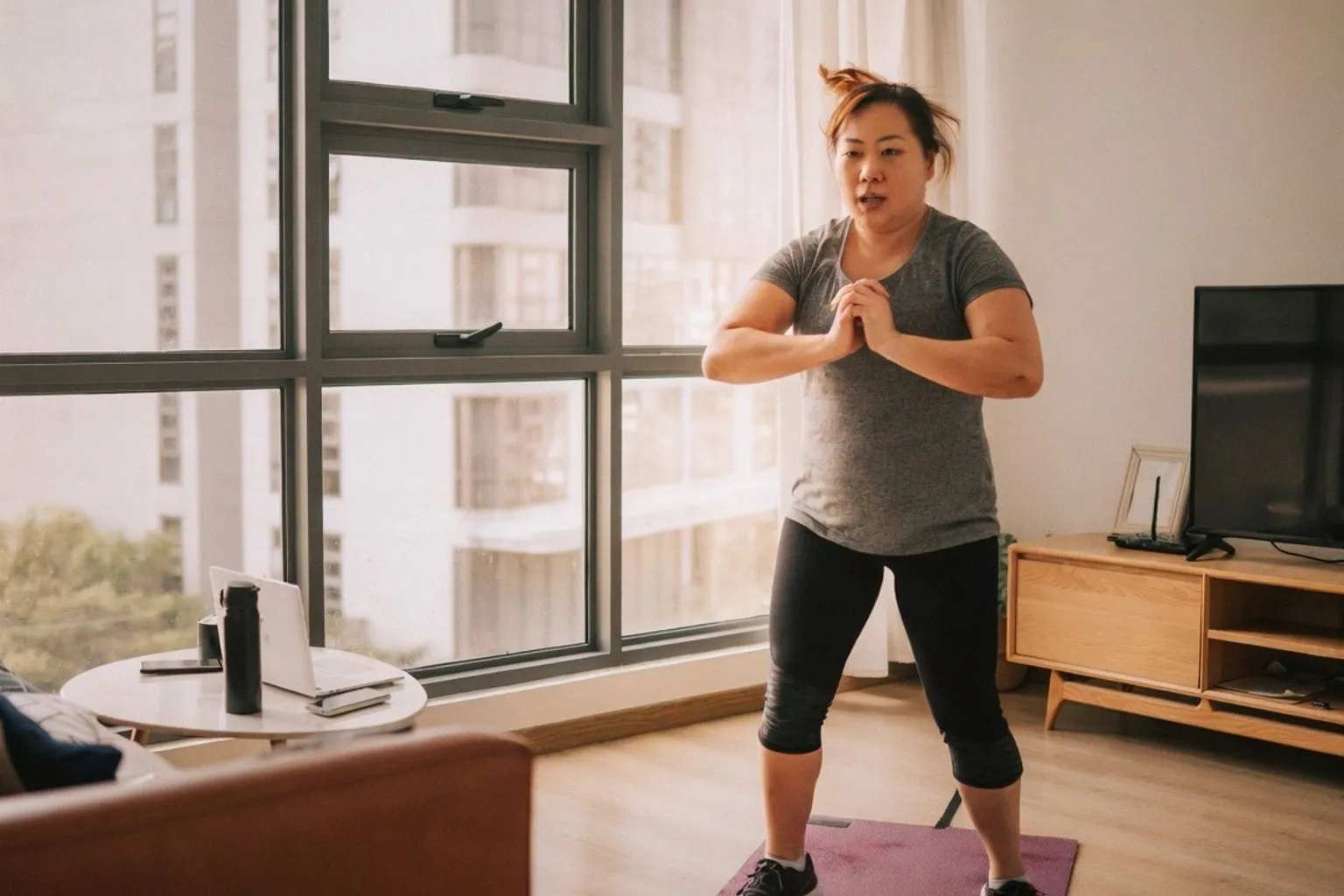
Her recommendation: reintroduce jump training past the fourth decade, since mechanical impact through plyometrics remains one of the few non-pharmacological levers for stimulating bone formation and preserving rate of force development.
The Mechanical Deficit
Loss of power precedes strength loss because fast-twitch motor units undergo preferential denervation with age, and peak neural drive velocity drops alongside reduced spinal excitability. The skeletal system follows a parallel curve. Bone mineral density plateaus near age 30, then enters a slow resorption phase that sharpens sharply during the menopausal transition as oestrogen's inhibitory effect on osteoclast activity is withdrawn. Mechanical deformation of bone tissue—specifically the strain magnitude generated by ground-impact loading—is the primary stimulus for osteoblast recruitment. Sedentary loading patterns do not exceed the minimum effective strain threshold required to trigger that response.
The Progression Protocol
Wilkinson outlines a five-tier entry plan, beginning seated and advancing only when each stage is performed with clean mechanics for a defined duration:
- Seated foot taps. Rapid alternating taps to the floor from a chair. Builds ankle stiffness and rhythm tolerance. Progress after 45 seconds of steady output without lower-leg fatigue.
- Marching. Standing in place at brisk cadence with relaxed arm swing. Progress when balance requires no external support.
- Stepping. Controlled step-ups onto a stable platform. Exhale on ascent, inhale on descent. Progress when no grip is needed and no wobble is present.
- Small hops. Bilateral ground contacts with minimal knee flexion. Let impact transmit through the calcaneus and tibia; soft landings dissipate the force before it reaches the skeleton. Rest between sets.
- Pogo jumps. Continuous rapid bouncing on the forefoot. Land with stiffness—the goal is spring rebound, not jarring impact. Brace the abdominal wall throughout.
Loading Parameters
Once stage five is sustained without discomfort, the cited dose-response range for osteogenic and neuromuscular benefit is 20 to 50 jumps per day, distributed across three to four weekly sessions. Entry-level dosing: 10 to 15 seconds of continuous output per round, two to three rounds, full rest between rounds. Pelvic floor tolerance, joint comfort, and landing quality—not jump count—gate progression. Hold at the previous level if any stage produces pelvic heaviness or joint pain.