Building Muscle After 60: How One Woman Transformed Her Body Through Strategic Strength Training
Women’s Health reports that a woman began serious weight training at 63 and, over two years, gained 18 pounds of muscle while losing 29 pounds of fat. Her yearly DXA scans reportedly showed a 17.3 percent reduction in body fat since 2024.
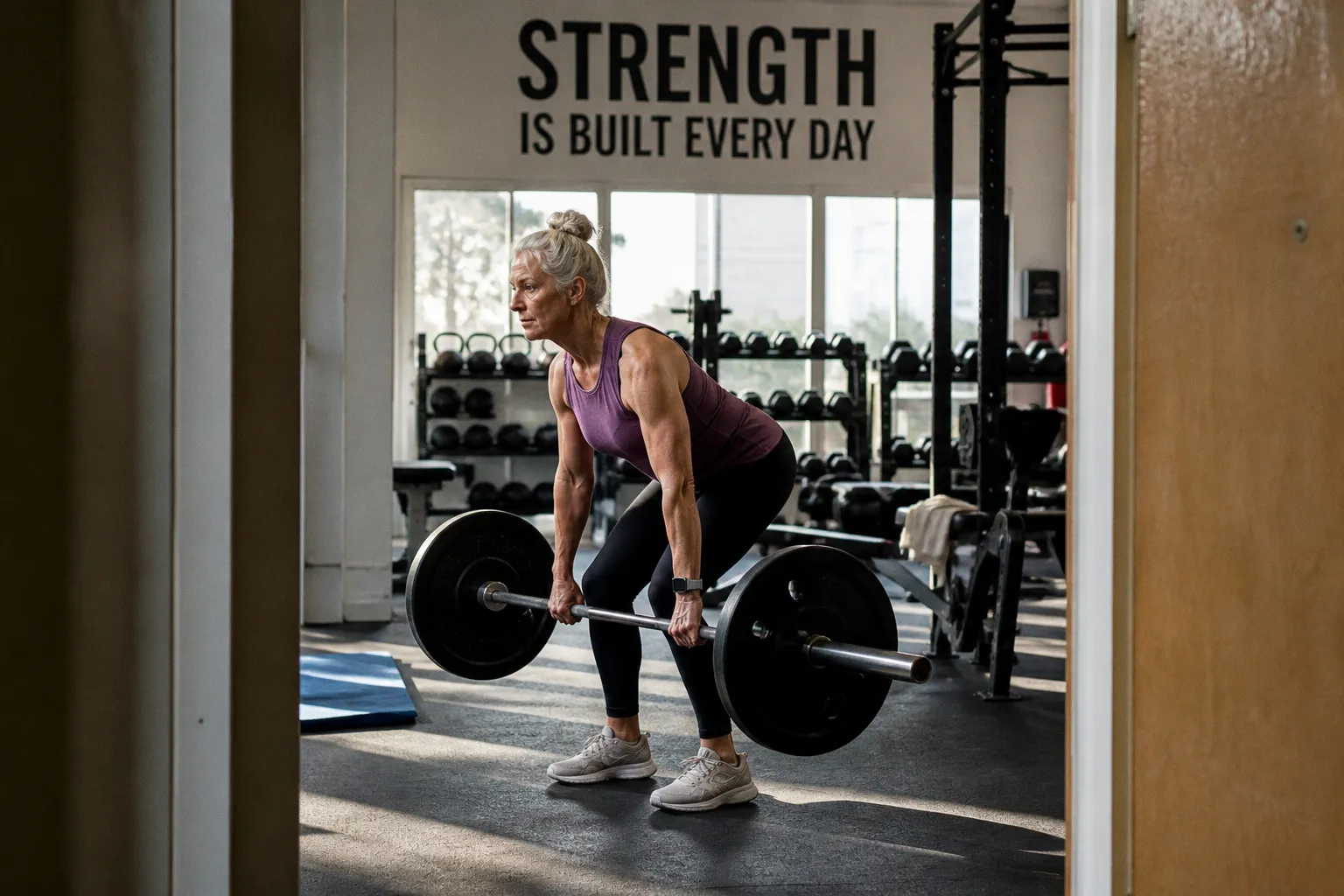
The relevant training lesson is not the headline number. It is the use of individualized loading after multiple joint surgeries.
The program was built around constraints
The athlete had both hips replaced at 48 and 49 after pain associated with hip dysplasia. At 55, she underwent knee replacement surgery after years of wear and tear. She completed rehabilitation after each procedure and later returned to activities including volleyball.
Serious resistance training began at 63 with her son, a NASM-certified personal trainer. The structure was simple:
- Two full-body sessions per week.
- One push-focused day and one pull-focused day.
- Resistance training combined with cardio conditioning and mobility work.
- Exercise selection changed between sessions based on her current movement quality.
- Load was heavy enough to create a challenge, but not pain.
That last point is the controlling variable. A program cannot be judged only by its exercise list. The same squat, press, or pull can produce different joint torque depending on range of motion, stance, trunk position, external load, and the lifter’s current capacity.
The source reports that the trainer added corrective work when he observed muscle imbalance, poor core engagement, or inadequate hip stability. This makes the routine a coaching process rather than a fixed template.
The exercise menu targeted several mechanical demands
Reported exercises included lat pulldowns, dumbbell bench presses, assisted pull-ups, rowing-machine work, pushups, and barbell squats. Single-leg squats and Bulgarian split squats were used for balance. The program also included burpees and jump rope for cardio conditioning, plus banded lateral walks, single-leg bridges, and clamshell variations for hip-focused corrective work.
The useful distinction is between primary strength movements and assistance work:
- Bilateral lifts: barbell squats, dumbbell bench presses, rowing-machine work.
- Vertical pulling: lat pulldowns and assisted pull-ups.
- Unilateral loading: single-leg squats and Bulgarian split squats.
- Hip stability: banded lateral walks, single-leg bridges, and clamshell variations.
- Conditioning: burpees and jump rope.
This distribution addresses more than hypertrophic response. It exposes the body to sagittal-plane force production, unilateral balance demands, upper-body pulling, pressing, and hip abduction. However, the evidence does not establish that every listed movement was performed in every session, nor that the routine alone caused the reported body-composition changes.
The 18-pound muscle gain and 29-pound fat loss are reported outcomes from the individual case. They should not be converted into a forecast for a new client. The source also reports increased energy and stronger knees and back, but those are personal outcomes, not a clinical trial result.
The implementation protocol is narrower than the headline
For a client with a surgical history, the transferable element is the decision process:
1. Establish the current movement limitations before selecting load.
2. Use two weekly full-body sessions as the reported starting structure.
3. Separate push and pull emphasis while retaining mobility and conditioning.
4. Select resistance that creates challenge without pain.
5. Reassess core engagement, hip stability, and side-to-side balance during training.
6. Add corrective exercises when a specific deficit appears.
7. Progress only when the current range of motion and technique remain controlled.
Do not copy the exercise list as a prescription. The reported trainer modified the session according to observed mechanics. That is the main reason the routine matters for strength coaches: frequency was consistent, but exercise selection was not treated as immutable.
A separate Sacramento Bee headline reports that 90 minutes of strength training per week was associated with a 19 percent reduction in cardiovascular death risk, according to researchers. The available evidence here provides no study details, so that figure should remain a reported claim rather than a basis for programming.
The practical conclusion is strict: use the routine as a framework for individualized resistance training, not as a promise of identical body-composition results. Two weekly sessions, controlled loading, mobility work, and ongoing movement assessment are the confirmed components. Everything beyond that requires its own measurement.