Can Bodyweight Exercises Alone Build Significant Muscle?
Here’s the thing that drives me up the wall every time this question comes around: gym chains run their “no excuses” ads in January, implying bodyweight training is barely training at all, while…
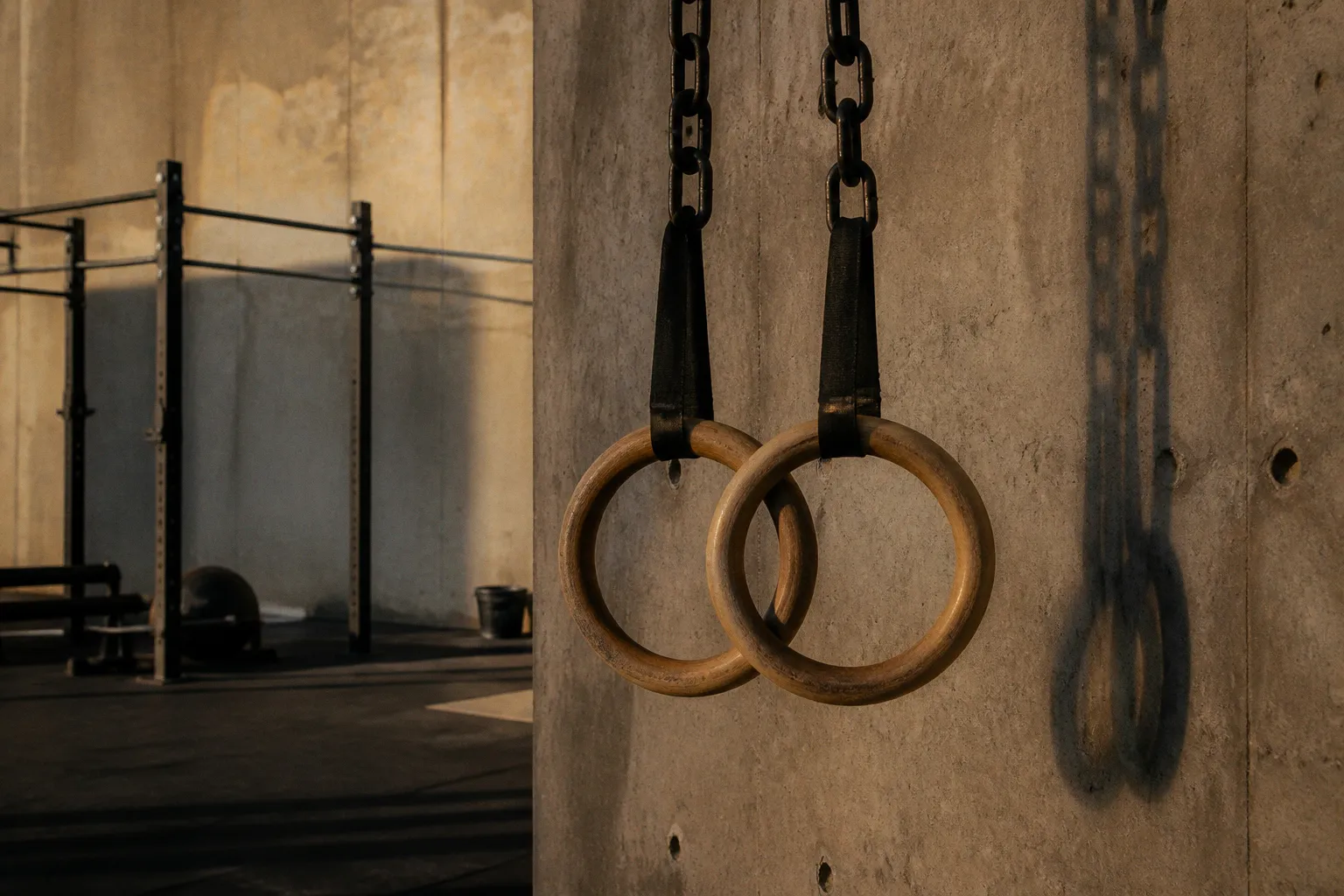
Here’s the thing that drives me up the wall every time this question comes around: gym chains run their “no excuses” ads in January, implying bodyweight training is barely training at all, while calisthenics influencers post “gyms are a scam” reels a few months later and declare free weights obsolete. Both camps are selling you something. Neither is especially interested in explaining what happens when you train consistently with nothing but your body, gravity, and a limited set of progressions.
So let’s cut the noise. Can you build significant muscle using only bodyweight exercises? Yes—with caveats that the bro-science crowd tends to skip. The answer depends on your training age, the muscle group you’re trying to grow, how close your sets get to failure, and whether your routine is actually progressing.
Bodyweight training can build a strong, muscular upper body. It can develop your chest, shoulders, triceps, back, arms, and core far beyond the beginner stage. It can also build your legs, particularly if you use unilateral exercises and make the movements genuinely difficult. But bodyweight training has a less forgiving progression system than weights, and eventually some muscles become difficult to overload in small, predictable steps.
That distinction matters. The question isn’t whether bodyweight exercises “work.” They do. The better question is whether they can continue providing enough stimulus for the specific muscles you want to grow.
The Engine Room: Mechanical Tension, Not Iron
Let the adjustable-dumbbell disciples clutch their 50-pounders. The basic physiology is less interested in the equipment than people assume. Muscle growth depends on sufficient mechanical tension, muscular effort, and enough productive training volume over time. None of those variables require a barbell. None of them care whether resistance comes from a weight plate or your own body positioned at an unfavorable angle.
When you perform a push-up, your pecs, triceps, and anterior delts don’t receive a memo informing them that the resistance is bodyweight. They respond to the force they produce against the floor. If the movement is difficult enough and the set is taken close enough to muscular failure, the exercise can provide a legitimate hypertrophy stimulus.
This is where many people get tripped up. They assume that because the absolute load is fixed, the stimulus must be weak. But the number printed on a dumbbell is only one way to describe difficulty. Leverage, range of motion, stability, tempo, limb position, and the distribution of your bodyweight all change how much work a target muscle has to perform.
A standard push-up, a deficit push-up, a ring push-up, and a pseudo-planche push-up may look related, but they do not place the same demand on the body. Moving your hands, elevating your feet, narrowing your base of support, or shifting your shoulders forward can make a familiar exercise substantially harder without adding a single external plate.
The tissue doesn’t read the equipment label. It responds to the demands placed on it.
Muscle doesn’t read the equipment label. It reads tension, effort, and how close you got to failure.
That doesn’t mean all forms of resistance are interchangeable forever. A heavy squat and a high-repetition air squat can both train the legs, but they are not equally practical for building more muscle once you become strong. The point is simply that bodyweight is not disqualified from the hypertrophy conversation. It has to be applied intelligently.
What the Push-Up Research Actually Shows
The Kotarsky et al. 2018 study is one of those pieces of work the fitness industry loves to half-quote. Twenty-three healthy men completed four weeks of training, with one group performing progressive barbell bench presses and the other performing progressive push-ups. The load was matched, and the resulting upper-body muscle-thickness gains were comparable between the groups, with no significant difference between them.
Read that carefully. It was a short, load-matched comparison. It does not prove that every push-up variation is equal to every pressing exercise, or that push-ups will provide unlimited chest growth. It does show that a bodyweight pressing movement can produce a meaningful hypertrophy response when the difficulty and effort are appropriate.
Four weeks is not a year. The participants were moderately trained men, and the study focused on upper-body outcomes. It does not mean push-ups equal squats for your quadriceps. It does not mean a casual set of ten performed nowhere near failure produces the same stimulus as a demanding, progressively overloaded set. It does mean the lazy claim that bodyweight training cannot build “real muscle” doesn’t survive contact with the evidence.
The important word is progressive. The exercise has to become harder, the workload has to increase, or the set has to create more challenge for the target muscle. Repeating the same comfortable push-ups forever is not a program. It is a habit.
Progressive Overload Without Iron: The Toolbox
This is where bodyweight training gets interesting—and where most trainees fall flat on their face. You can’t simply put a five-pound plate on your back every time a push-up starts feeling easy. You have to manipulate the movement itself.
That gives you several tools:
- Mechanical leverage changes. Decline push-ups, archer push-ups, one-arm progressions, planche leans, pseudo-planche push-ups, feet-elevated pike push-ups, and ring variations shift more of the demand onto the working muscles. Changing the angle or base of support is often the bodyweight lifter’s most useful form of overload.
- Range of motion. Deficit push-ups, deep split squats, elevated heel squats, and movements performed through a controlled full range can increase the challenge without requiring a completely new skill. Range of motion is especially useful when a standard version has become too easy but an advanced progression is not yet technically reliable.
- Repetitions and sets. Adding reps can work, particularly when you are still building a base. Adding a set can also increase weekly volume when the quality of your existing sets is high. Neither should be used as an excuse to turn every workout into an endurance contest.
- Tempo. A controlled eccentric, a pause in the hardest position, or a deliberate concentric can expose weak points and reduce the amount of momentum available. Slow training is not automatically superior, but it can make an otherwise easy variation meaningfully harder.
- Stability demands. Rings and suspension trainers create an unstable environment that increases the coordination and control required from the chest, shoulders, arms, and trunk. Instability is not magic, and it can reduce the load you can handle, but it can be useful when a stable variation no longer challenges you in the right way.
- Rest and density. Shorter rest periods can make a workout more metabolically demanding, but they are not a substitute for mechanical tension. If your rest is so short that every later set turns into poor-quality fatigue work, you may be reducing the useful stimulus rather than improving it.
- Exercise order. Put the movement that matters most for growth early in the session, when you can perform it with better control and more effort. If chest growth is the priority, don’t exhaust your triceps with several isolation-style push-up variations before your hardest press.
A common mistake is treating every progression as equally valuable. It isn’t. A harder variation that mainly tests balance or coordination may be impressive without being the best way to accumulate muscle-building work. The goal is not to unlock the most dramatic-looking movement. The goal is to keep the target muscle working hard through a repeatable range of motion.
For hypertrophy, a set should usually become difficult enough that you have relatively few good repetitions left when you stop. That doesn’t mean every set must end in an ugly failure. It does mean that stopping while the movement still feels effortless is unlikely to provide much reason for adaptation.
A set of twelve clean decline push-ups can be productive. A set of fifty partial air squats performed while your attention is somewhere else is not automatically productive because the number is larger. Repetition count is a tool for measuring and progressing work, not a guarantee that the work is useful.
Why Progression Can Become Awkward
Weights offer unusually fine control. If a dumbbell press becomes manageable, you can often make a small increase and continue using nearly the same movement pattern. Bodyweight progressions are different. You may be able to add a repetition, slow the eccentric, pause at the bottom, or increase the range of motion, but those adjustments eventually run out.
The next available variation may be substantially more difficult rather than just slightly harder. Moving from a regular push-up to an archer push-up, or from a supported single-leg squat to a demanding pistol squat, can require a major change in strength, balance, mobility, and coordination all at once. That makes it harder to tell whether you are progressing the muscle or simply learning a more complex skill.
This is the central issue behind the bodyweight training muscle growth limits. The problem is not that bodyweight resistance suddenly stops working. The problem is that it can become difficult to adjust precisely enough to keep increasing muscular tension without making the exercise dramatically more technical.
Bodyweight training doesn’t fail because it is too easy. It becomes difficult when the next progression is much harder than the last one.
The answer is to use smaller changes wherever possible. Add a pause before changing the entire exercise. Increase the range of motion before chasing a one-arm variation. Add a set before turning a controlled strength movement into a balance test. If you have access to a backpack, weight vest, rings, or resistance bands, those tools can bridge the gap without turning your home into a commercial gym.
The Wall: Where Gravity Stops Cooperating
Now for the part the calisthenics influencers don’t want you to read at two in the morning.
Bodyweight training has real limits, and they show up fastest in two places: the lower body and advanced trainees.
Bodyweight squats, lunges, Bulgarian split squats, step-ups, and single-leg variations can build a serious foundation. For a beginner, even a basic squat program can produce noticeable changes in leg strength and muscle. A split squat can become brutally difficult without any external load, especially when you use a full range of motion, control the descent, and avoid bouncing through the bottom.
But the legs are large, strong muscle groups designed to move and stabilize the entire body. As your strength improves, many bilateral bodyweight exercises become too easy to challenge them effectively. You can make the movement harder with pauses, slower repetitions, elevated heels, deeper ranges, and unilateral loading. Eventually, though, the available progressions may become limited by balance or mobility before they are limited by the strength of the quads and glutes.
That is why bodyweight-only lower-body training often reaches its practical ceiling earlier than upper-body training. It is not impossible to build muscular legs without weights. It is simply less convenient to keep increasing the resistance in a way that is stable, measurable, and focused on the muscle rather than the skill.
The hamstrings create a similar problem. Bodyweight hip hinges and sliding leg curls can be useful, but they require the right setup and may be difficult to progress in small increments. Nordic hamstring curls are exceptionally demanding, yet the jump from an assisted version to a strict version can be large. Again, the issue is not a lack of effort. It is the spacing between available difficulty levels.
The glutes can often be challenged with single-leg bridges, hip thrust variations, long-range split squats, and step-ups. But once those movements become manageable, you may need external loading to continue making the stimulus heavier without adding endless repetitions.
Upper Body Versus Lower Body
The upper body generally gives bodyweight trainees more room to maneuver. Pull-ups can be made harder with pauses, slower eccentrics, chest-to-bar targets, towel grips, archer progressions, and eventually one-arm work. Push-ups can move through a similarly broad progression from incline variations to feet-elevated, ring, archer, and planche-oriented movements. Dips, rows, handstand push-up progressions, and pike presses add still more options.
The lower body has options too, but the progression often becomes less tidy. You can make a split squat harder, but the movement may eventually be limited by balance. You can perform higher repetitions, but the session can drift toward local endurance rather than the kind of high-effort loading that makes further growth straightforward. You can use a harder pistol-squat progression, but the skill requirements may dominate the set.
Here is the practical difference:
| Training situation | Bodyweight potential | Common limitation |
|---|---|---|
| Beginner upper body | Very high | Learning technique and accumulating consistent work |
| Beginner lower body | High | Limited exercise selection and basic strength |
| Intermediate upper body | Still strong | Finding repeatable progressions and managing joint stress |
| Intermediate lower body | Useful but less predictable | Difficulty increasing resistance without adding excessive reps |
| Advanced upper body | Possible with equipment and skill | Small, measurable progressions become harder to create |
| Advanced lower body | Often restricted | Quads, hamstrings, and glutes may need external loading |
This is also why rings and a pull-up bar can change the home-training equation so dramatically. They expand the exercise library without requiring a full rack of equipment. A person limited to floor push-ups and air squats has fewer options than someone who can perform ring rows, dips, hamstring curls, pull-ups, and suspended split-squat variations.
How to Build Muscle With Bodyweight Only
If you are asking, “Can you build muscle with bodyweight only?” the practical answer depends on what you do with the answer. Performing random exercises until you feel tired is not the same as following a progressive plan.
Start by selecting movements that cover the major patterns:
- A horizontal push, such as push-ups or ring push-ups
- A vertical push, such as pike presses or handstand push-up progressions
- A vertical pull, such as pull-ups or chin-ups
- A horizontal pull, such as inverted rows
- A knee-dominant leg movement, such as split squats or step-ups
- A hip-dominant movement, such as sliding leg curls or single-leg bridges
- Direct trunk work, such as hanging knee raises, rollouts, or controlled hollow-body movements
You do not need every variation in the same session. You need movements that are difficult enough to train with intent and simple enough to repeat consistently.
A useful home bodyweight workout might begin with a demanding push and pull pairing, followed by unilateral leg work and a smaller amount of direct core training. The order matters because the hardest movements require the most coordination. If you leave them until the end, fatigue may turn a strength exercise into a collection of compromised repetitions.
Track more than reps. Write down the variation, range of motion, tempo, rest period, and whether the final repetitions were technically sound. If you perform twelve push-ups this week and twelve push-ups next week, that may not represent progress. If the second week includes a deeper range, a pause, cleaner form, or less rest, it may represent progress even though the number stayed the same.
A simple progression model looks like this:
1. Choose a variation you can perform with consistent technique.
2. Build repetitions within a planned range without allowing form to collapse.
3. Add a set or modestly reduce rest when the movement becomes comfortable.
4. Increase range of motion, add a pause, or slow the eccentric.
5. Move to a harder variation only when the current version no longer provides enough challenge.
6. If the next progression is too large a jump, use assistance or a small external load to bridge the gap.
That last step is not a failure of bodyweight training. It is good programming. A resistance band can assist a difficult pull-up progression. A backpack can provide a small increase for split squats. A weight vest can make push-ups harder while preserving the same movement pattern. “Bodyweight only” is a useful constraint for some people, but it is not a moral category.
What Near-Failure Really Means
Training close to failure is useful because lighter resistance generally requires more effort before it produces a strong hypertrophy signal. But near-failure does not mean repeating a movement after your technique has completely disintegrated.
A good final repetition may be slow. It should still resemble the exercise you intended to perform. If your push-up becomes a worm-like motion, your hips sag, or your shoulders lose their position, you may be accumulating fatigue without keeping the target muscles under the same kind of tension.
Use a consistent stopping point. For example, end the set when you believe you could perform only a small number of clean repetitions with the same range and control. Occasionally taking a set to true failure can help you understand the difficulty of a movement, but there is no need to turn every set into a survival exercise.
This is particularly important with dips, deep push-ups, handstand work, and single-leg exercises. Poor fatigue management can shift stress toward the shoulders, elbows, wrists, knees, or lower back. Building muscle is a long-term project. A progression that irritates a joint every week is not a clever progression.
Bodyweight Versus Weight Training for Hypertrophy
The comparison is often framed as a competition, but the two approaches solve slightly different problems.
Bodyweight training is convenient, inexpensive, and accessible. It develops relative strength, coordination, body control, and movement skill. It can work exceptionally well for people who are new to resistance training, training at home, traveling, or simply more likely to exercise when the barrier to entry is low.
Weight training offers more precise loading. You can increase resistance in smaller increments, keep the movement pattern stable, and target a muscle without asking the entire body to solve a complicated balance problem. That makes it particularly useful for advanced hypertrophy training and for lower-body development.
| Factor | Bodyweight training | Weight training |
|---|---|---|
| Equipment requirement | Minimal, though a bar or rings expand your options | More space and equipment required |
| Progression | Leverage, range, tempo, reps, sets, and difficulty changes | Usually easier to adjust load in small increments |
| Upper-body hypertrophy | Strong potential with demanding progressions | Strong potential with broad exercise selection |
| Lower-body hypertrophy | Effective early and with unilateral work | Usually easier to progress long term |
| Skill demand | Can become high in advanced variations | Often more stable and easier to standardize |
| Convenience | Excellent for home and travel | Less convenient, but highly adjustable |
| Main challenge | Large jumps between some progressions | Access, setup, and sometimes adherence |
The best choice is the one you can perform regularly and progress. A theoretically perfect gym program that you avoid is less useful than a bodyweight routine you complete three times a week. On the other hand, if your goal is maximal leg hypertrophy and you have already exhausted sensible bodyweight progressions, refusing all external resistance will make the job harder for no physiological reason.
There is no prize for making a manageable training problem unnecessarily difficult.
What Results Should You Expect?
Your starting point determines how dramatic the early changes are. Beginners often respond to almost any well-organized resistance training because the body has so much room to adapt. A person who has never trained consistently may gain strength and visible muscle from push-ups, rows, split squats, and pull-ups without needing an elaborate system.
As you become stronger, the standard version of each movement stops being enough. That is when many people mistake a plateau in programming for a verdict on bodyweight training. They continue doing the same push-ups, the same air squats, and the same short circuit, then conclude that bodyweight exercises no longer work.
The exercise has not failed. The stimulus has stopped changing.
Meaningful progress may show up as:
- More repetitions with the same strict technique
- A harder variation performed for the same repetitions
- Greater range of motion
- Better control through the eccentric phase
- More work completed with the same rest
- More total quality sets across the week
- Improved strength in a position that was previously unstable
- Visible changes in muscle size and shape over time
Not every improvement needs to be dramatic. In advanced training, progress can be slow and frustrating regardless of equipment. The difference is that weights usually make small increases easier to measure, while bodyweight training often requires more creativity and patience.
You should also be realistic about what bodyweight training emphasizes. Pull-ups and rows can create a strong back, but they may not provide the same isolated loading options as pulldowns, machine rows, or chest-supported rows. Push-ups and dips can build the chest and triceps, but some trainees eventually find that their shoulders or wrists limit the movement before the chest receives all the work they want. Training is always a negotiation between the target muscle, the movement, and the joints involved.
So, Should You Skip the Gym?
If you are training at home, traveling, or simply do not want to deal with a membership contract, bodyweight training absolutely can build muscle. The mechanisms are real, the potential is substantial, and the ceiling is higher than many gym regulars will admit.
But “higher” is not “infinite,” and where you sit on the experience ladder changes the calculation. A beginner can make excellent progress with simple movements. An intermediate trainee may need rings, a pull-up bar, a weight vest, or carefully selected unilateral progressions. An advanced trainee pursuing maximum hypertrophy will usually benefit from external resistance, particularly for the legs.
The smart move is not to defend one tool as morally superior. Use bodyweight exercises as a foundation, a travel system, a conditioning option, or a way to build relative strength and movement skill. Pull-ups, dips, push-ups, rows, split squats, lunges, hamstring work, and core exercises can support an impressive physique for a long time.
When you hit a genuine plateau, first check the basics:
- Has the exercise become too easy to take close to failure?
- Are you using the same variation and repetition target every week?
- Is your range of motion consistent?
- Are you actually accumulating enough hard sets?
- Are you recovering well enough to adapt?
- Is the movement limited by the target muscle, or by balance, grip, pain, or technique?
- Would a band, backpack, weight vest, or pair of dumbbells solve the problem more cleanly?
Those questions keep the conversation grounded. They also prevent you from changing exercises every few days simply because progress feels slow.
Don’t let ego or influencer marketing convince you that adding weight is cheating. Adding weight is one of the most straightforward ways to continue progressive overload when leverage-based progressions become too far apart. At the same time, don’t let gym culture convince you that bodyweight training is merely a warm-up. For many people, it is enough to build substantial strength and muscle, especially when the program is structured around difficult movements and consistent progression.
The Final Call
Bodyweight training builds muscle. The mechanisms are legitimate, and the results can be significant when the exercises are challenging, the sets are performed with control, and the workload progresses over time.
The limits are practical rather than mysterious. Upper-body bodyweight training can go surprisingly far because leverage, instability, range of motion, and advanced progressions provide several ways to increase difficulty. Lower-body training usually reaches its practical ceiling sooner because strong legs eventually need more resistance than gravity and a single-leg variation can provide conveniently. Advanced trainees also have fewer ways to make small, measurable increases without introducing a large jump in skill or complexity.
So the honest answer to the question is yes—but not indefinitely, not equally for every muscle group, and not with the same five exercises repeated forever.
Train hard enough to create a reason for adaptation. Progress before your body has fully settled into the workload. Choose variations that challenge the muscle rather than merely displaying a difficult skill. And when bodyweight stops giving you a clean way forward, use external resistance without pretending it changes the laws of physiology.
The equipment matters less than the quality of the stimulus. The progression matters more than the brand of the tool. The ceiling exists, but most people never reach it because they stop progressing long before gravity is actually the problem.