Elevate Your Home Cardio with Low-Impact Bodyweight Aerobics
According to Fit&Well, professional dancer and personal trainer Lucy Borrie has launched BeBody — a training system built on '80s aerobics mechanics that layers cardiovascular tempo over standard…
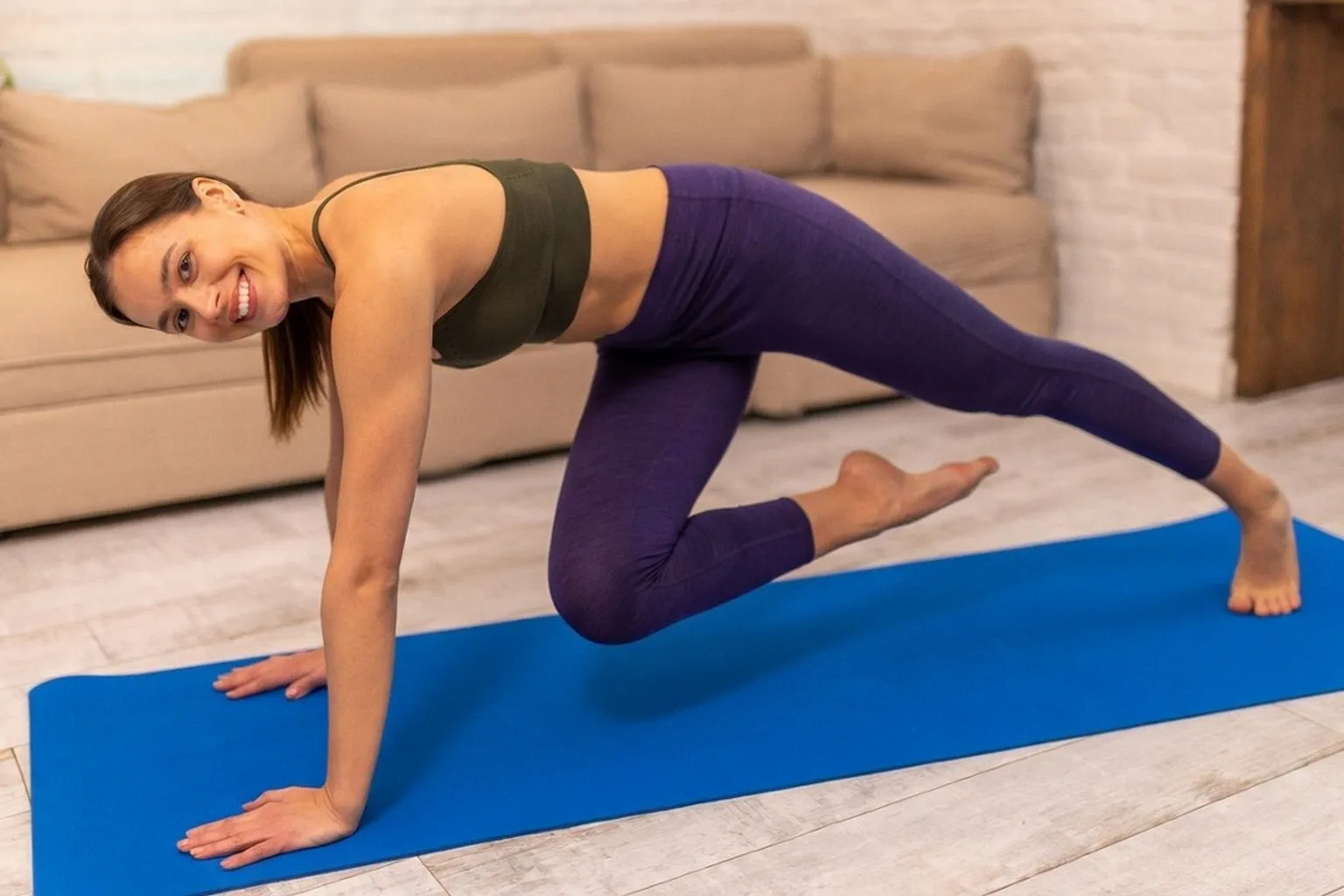
According to Fit&Well, professional dancer and personal trainer Lucy Borrie has launched BeBody — a training system built on '80s aerobics mechanics that layers cardiovascular tempo over standard bodyweight resistance patterns. For the home trainee, the relevant outcome is joint-sparing aerobic work without sacrificing muscular loading.
The Method and Its Mechanics
The system runs on a dual-stimulus model. Bodyweight movements — squats, hinges, push patterns — executed at elevated cadence produce two simultaneous effects: mechanical tension for muscular recruitment, and elevated heart rate for aerobic conditioning. Borrie pairs each movement with fast-paced music to enforce working tempo.
As Borrie states in Fit&Well: "Any movement I do, I always start slow, even if it's a cardio movement. I like to feel the move rather than rush into it, and then pick up the pace."
That sequencing is non-negotiable. Slow repetitions first establish the motor pattern and verify joint clearance. Tempo escalation then layers cardiovascular load on top of a stable mechanical base. Reversing the order — accelerating before pattern integrity is confirmed — increases injury risk and degrades force output under fatigue.
Fit&Well specifies a circuit protocol: 40 seconds per movement, 20 seconds passive rest, three total rounds. The structure keeps cardiac output in a sustained training zone across the full session while allowing peripheral fatigue to partially clear between intervals.
Application for the Home Trainee
For trainees without treadmill or stationary bike access, the mechanical case is direct. Steady-state cardio machines impose repetitive sagittal-plane loading on the knees, ankles, and lumbar spine. A well-structured bodyweight circuit at sufficient tempo produces comparable cardiac stimulus while distributing load across multiple muscle groups — reducing repetitive stress on any single joint structure.
The aerobic adaptation still registers. The musculoskeletal cost drops.
Implementation Protocol
1. Select three bodyweight movements sustainable for 40 seconds at controlled form.
2. Execute two slow repetitions of each before the working sets. Confirm joint comfort and full range.
3. Run the circuit: 40 seconds work, 20 seconds rest.
4. Complete three rounds.
5. Pair movement with music at accelerating tempo to maintain output consistency.
Borrie's specific movement selections were not detailed in the available source material. Trainees building their own circuit should prioritize bilateral, low-skill patterns first — bodyweight squats, modified push-ups, stationary lunges — before advancing to unilateral or higher-complexity variations.