Fitness tracker options: smartwatch, ring, or band?
The best fitness tracker is not the one with the longest feature list. It is the one that gives you useful information at the moment you need it—and stays out of the way when you do not.
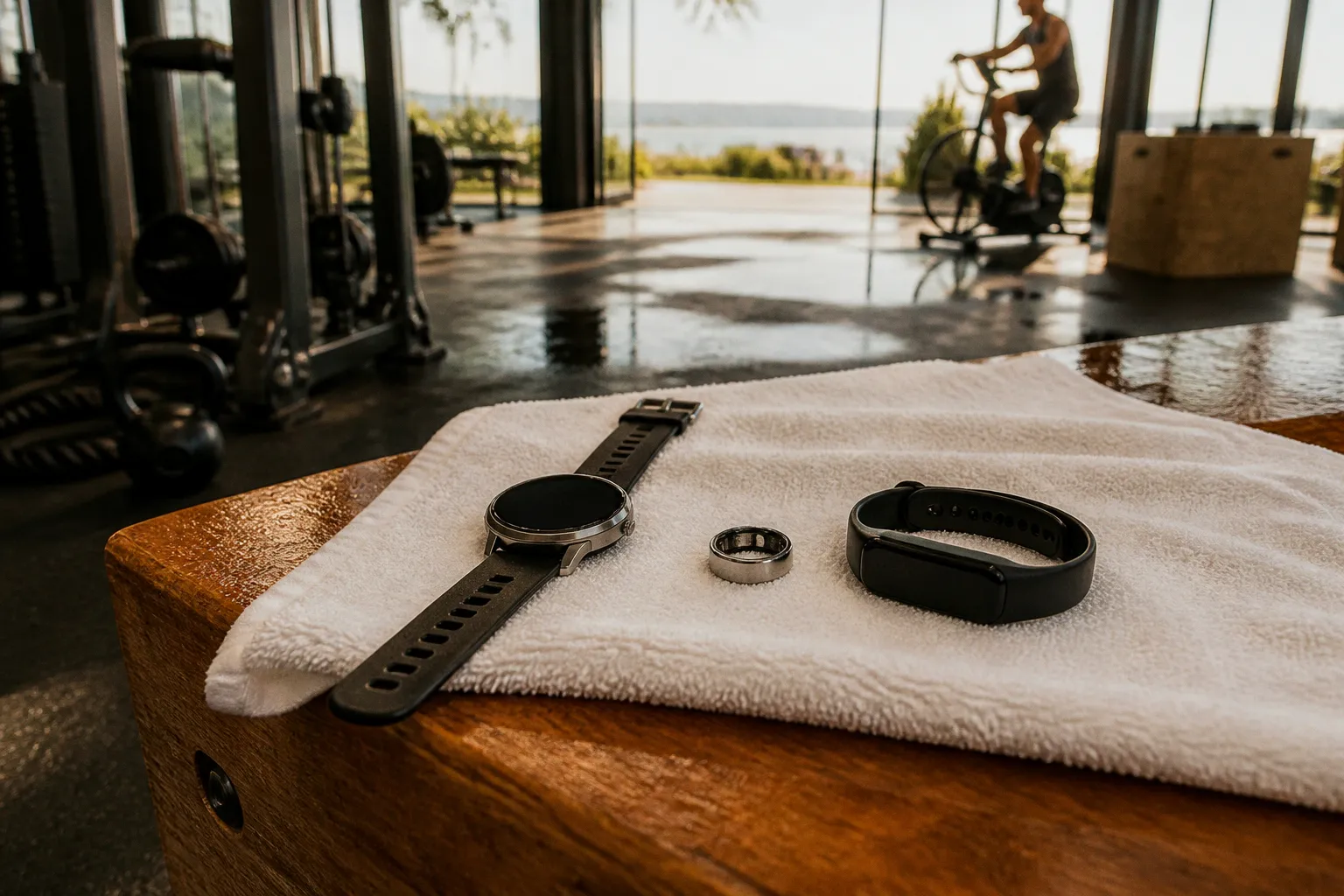
That is where the choice becomes practical. A smartwatch can show pace, heart rate, intervals, and route data while you train. A smart ring can quietly collect sleep and recovery trends overnight. A fitness band often sits between the two: lighter and less expensive than a watch, but more interactive than a screenless ring.
So when we compare fitness tracker options—smartwatch vs ring, ring vs band, and everything between—we are really choosing how we want feedback to fit into daily life. Do you need live guidance during a workout, passive recovery data, long battery life, or simply a device you will remember to wear?
The right tracker should support your training decisions, not turn every walk, meal, and night of sleep into a performance review.
Start with the moment you need information
Before comparing brands, let’s identify the friction you are trying to solve.
If your main question is, “How fast am I running right now?” a ring is not the right tool. Smart rings generally have no built-in screen and no GPS, so they cannot replace a sports watch for live pace, route mapping, or interval prompts.
If your question is, “Am I recovering well enough to train today?” a ring may be a better fit. Its small size and consistent skin contact make it comfortable to wear overnight, when resting heart rate, heart rate variability, and body temperature trends can be collected with little interference from movement.
And if your question is simply, “Can I track workouts, steps, and general activity without spending smartwatch money?” a fitness band deserves attention. It may give you the practical middle ground you need without adding another complicated device to your routine.
The fitness tracker options smartwatch vs ring comparison is therefore less about which category wins and more about matching the device to your behavior:
- Choose a smartwatch when real-time exercise feedback, GPS, apps, and an interactive display are central to your training.
- Choose a smart ring when sleep, recovery, passive tracking, and a discreet form factor matter most.
- Choose a fitness band when you want basic workout tracking, a lightweight design, and longer battery life at a lower price.
This is the first useful distinction: a tracker can be excellent at measuring what happens during exercise, after exercise, or around the clock. Those are different jobs.
Smartwatch: the training console on your wrist
A smartwatch is the most capable option for active workouts. Its main advantage is not that it collects more numbers; it is that it can show relevant information while you are moving.
Built-in GPS can record outdoor routes and support pace or distance feedback. App integration can extend the device into workout planning, notifications, music control, and other daily functions. Live workout telemetry can help you see information such as heart rate, elapsed time, pace, or interval status without reaching for your phone.
For runners, cyclists, hikers, and people following structured training plans, that immediate access can make a real difference. You can adjust effort during the session rather than trying to interpret everything later. A watch is also useful when your workout has several moving parts: warm-up, intervals, recovery periods, distance targets, or heart-rate zones.
The trade-off is that a smartwatch is usually the most noticeable option. Typical models weigh around 40 to 80 grams, compared with approximately 3 to 8 grams for a smart ring. The difference may seem minor on paper, but you feel it more during sleep, yoga, strength training, or any activity where you prefer nothing on your wrist.
Battery management is another part of the experience. Depending on the model and feature set, smartwatch battery life can range from roughly 18 hours to as long as 48 days, although feature-heavy models often require charging daily or every few days. GPS use, bright displays, music, cellular features, and frequent notifications can all shorten the interval.
Smartwatches also occupy the widest price range. They commonly run from about $200 to more than $1,200, depending on the ecosystem, materials, health features, and outdoor capabilities. The expensive model is not automatically the better training choice. If you only need step counts and occasional workout duration, you may be paying for functions you will not use.
A smartwatch makes the most sense when:
1. You train outdoors and need route or pace information. Built-in GPS is a major advantage for running, cycling, hiking, and similar activities.
2. You follow timed or structured sessions. Interval prompts and live metrics are much easier to use on a screen.
3. You want one device for fitness and everyday tasks. App integration, messages, music, and notifications may be part of the appeal.
4. You are comfortable with frequent charging. The most capable watches often demand more attention from their owners.
5. You enjoy making decisions during training. A watch lets you adjust pace, effort, or rest periods in real time.
The potential downside is mental as much as technical. A screen can be helpful, but it can also encourage constant checking. If every workout becomes a search for the perfect heart-rate number, the device may be adding noise rather than improving your training.
Smart ring: recovery data without the screen
A smart ring takes a quieter approach. It does not try to be your workout dashboard. Instead, it focuses on collecting health and activity signals in the background, especially during rest and sleep.
Most smart rings weigh between 3 and 8 grams, making them the least intrusive of the three categories. Their small size is particularly useful for people who dislike wearing a watch overnight or who already use a traditional watch during the day. Battery life generally falls between 4 and 12 days, depending on the model and how it is used.
The ring’s strongest use case is consistent, passive tracking. During sleep, it can monitor trends such as resting heart rate, heart rate variability, and body temperature. The finger can provide reliable skin contact, while the relative lack of movement at night makes it easier to gather this type of data consistently.
That does not mean a smart ring can tell you exactly what is happening inside your body. These devices are not medical diagnostic tools, and the most useful information is usually found in patterns over time—not in a single overnight score. A higher or lower reading should be treated as context for your decisions, not as a diagnosis or a command.
A ring may be helpful when you are deciding whether to push a planned workout, reduce intensity, or prioritize recovery. But we should keep the relationship flexible. Sleep may have been disrupted by travel, a late meal, stress, a new training load, or a noisy environment. The tracker can show a change in the trend; it cannot always explain the cause.
There is also a financial detail that is easy to miss. Smart rings commonly cost around $199 to $499, and some ecosystems charge an ongoing subscription for detailed health and sleep analytics. For example, the Oura ecosystem has been associated with a subscription of about $5.99 per month for expanded trend features. That recurring cost may be reasonable if you use the insights consistently, but it should be included in the long-term price.
A smart ring is a strong match when:
- Sleep and recovery are your main priorities.
- You want a discreet, screenless fitness tracker.
- You dislike wearing a watch overnight.
- You prefer reviewing trends later rather than checking data mid-workout.
- You value battery life measured in days rather than hours.
- You are willing to pay for an ecosystem, including a possible subscription.
The limitation is straightforward: a ring is not designed to guide a demanding workout in real time. It may record or support activity data through its app, but it will not give you the same immediate feedback as a watch. For live pace, route navigation, interval timing, or on-wrist exercise metrics, you will need another device—or a different category altogether.
Fitness band: the practical middle ground
Fitness bands are often the most approachable option. They usually weigh around 15 to 35 grams, cost approximately $50 to $200, and offer battery life of roughly 7 to 21 days.
They sit between a ring and a smartwatch in both behavior and capability. Many include a small display, dedicated exercise tracking modes, step and activity monitoring, and basic notifications. They are generally less expensive and less feature-heavy than a smartwatch, while offering more direct feedback than a screenless ring.
For someone building a consistent movement routine, that can be enough. You may want to track walks, gym sessions, general activity, and sleep without needing route maps, extensive apps, or a large display. A band can provide a simple reminder to move and a quick view of workout duration or heart rate.
The key is to avoid treating “basic” as a criticism. A device with fewer features may be easier to wear, easier to charge, and less distracting. If your goal is to establish a dependable exercise habit, a fitness band can support that goal without creating a second hobby around data management.
The fitness band vs smart ring comparison usually comes down to visibility. The band gives you more immediate interaction because it typically includes a display and workout modes. The ring is more discreet and often more comfortable for continuous wear, especially at night.
Compared with a smartwatch, the band usually gives up advanced app integration, navigation, and the depth of live workout tools. Compared with a smart ring, it may be more noticeable and less elegant for sleep tracking. But the balance of cost, battery life, and everyday functionality is often appealing.
A fitness band may be the right choice when:
1. You want a lower-cost entry point. The typical price range is substantially below that of smartwatches and many smart rings.
2. You want a display, but not a full smartwatch. A glanceable screen can be useful for steps, duration, and basic exercise data.
3. You prefer longer battery life. Seven to 21 days is a practical range for people who do not want frequent charging.
4. Your training is general rather than highly structured. Walking, gym sessions, cycling, and everyday activity may not require advanced navigation or apps.
5. You want one straightforward device. Less functionality can mean fewer distractions and less setup.
The comparison that actually matters
Here is the practical map before we get lost in feature lists:
| Parameter | Smartwatch | Smart ring | Fitness band |
|---|---|---|---|
| Typical weight | 40–80 g | 3–8 g | 15–35 g |
| Typical price | $200 to over $1,200 | $199–$499, sometimes with a subscription | $50–$200 |
| Battery range | About 18 hours to 48 days, depending on model | 4–12 days | 7–21 days |
| Built-in screen | Yes | No | Usually yes |
| Built-in GPS | Common in advanced models | No | Varies by model; often more limited |
| Live workout feedback | Strongest option | Limited | Basic to moderate |
| Sleep and recovery focus | Available, but not always the central strength | Usually the main strength | Available, generally less specialized |
| App integration | Broadest | Ecosystem-dependent | More limited |
| Best for | Structured workouts and outdoor training | Passive health and sleep trends | Everyday activity and accessible workout tracking |
The table is useful, but it cannot answer the most important question: which information will change what you do?
If live pace changes your running decisions, choose the watch. If sleep and recovery trends help you adjust training load, choose the ring. If seeing a simple activity number helps you walk more and train consistently, choose the band.
A tracker earns its place by changing a useful decision—not by producing the largest number of metrics.
Real-time feedback versus passive tracking
This is the central divide in the smart ring vs smartwatch for fitness discussion.
A smartwatch is built for interaction. You look at it, respond to prompts, change a workout, and use the information while the session is happening. That is valuable when timing and intensity matter.
A smart ring is built for continuity. You wear it, sleep in it, and review the patterns later. It asks less of you in the moment and may therefore be easier to keep on consistently.
Neither approach is automatically more advanced. They simply serve different parts of the fitness process.
During the workout
For strength training, a smartwatch or fitness band can help with elapsed time, exercise modes, rest intervals, and heart-rate feedback. For running and cycling, a smartwatch has a clear advantage because of its screen and GPS capabilities. You can see information without stopping or pulling out your phone.
A ring may still fit into an active lifestyle, but it should not be selected with the expectation that it will replace a dedicated outdoor sports watch. It is not designed to provide live pace, route mapping, or interval display during demanding sessions.
After the workout
All three categories can help you review activity, but the depth and presentation vary. A smartwatch may combine exercise data with training history and apps. A fitness band may keep the review simple. A ring may place more emphasis on sleep, readiness, and broader recovery patterns.
Here, the best device is the one whose data you can interpret without turning the process into a daily judgment. We are looking for trends: Is your usual resting heart rate shifting? Are your sleep patterns changing? Are hard sessions stacking up without enough recovery? A single score is rarely enough to answer those questions.
Overnight
Smart rings are usually the most comfortable option for uninterrupted overnight wear. Their low weight and small profile can make them easier to forget about.
Smartwatches may still provide useful sleep data, but some people remove them because of weight, charging, comfort, or personal preference. A fitness band can be a reasonable compromise if you want a display during the day and do not mind wearing a light device at night.
Consistency matters more than theoretical capability. A device that you remove every night cannot provide the same long-term view as one you comfortably wear through sleep.
Accuracy, trends, and the danger of over-reading the data
Wearable health technology can be useful without being perfect. That distinction keeps the whole process grounded.
There is no single universal accuracy score that applies to every brand and every exercise condition. Performance can vary with movement, fit, skin contact, exercise intensity, device placement, and the specific metric being measured. Extreme exercise conditions are particularly difficult to compare across categories without a consistent testing standard.
Sleep-stage data also deserves a careful interpretation. Consumer devices may estimate sleep stages, but those estimates should not be treated as equivalent to clinical polysomnography. If you have symptoms or health concerns, a wearable cannot diagnose the cause.
A better approach is to use your tracker as a trend tool:
- Compare your current readings with your own baseline rather than someone else’s score.
- Look for changes that persist across several days instead of reacting to one unusual night.
- Pair device data with how you feel, how you perform, and how well you are recovering.
- Use the information to adjust training, sleep routines, hydration, or rest—not to punish yourself.
- Be cautious with readiness scores that compress complex signals into one simple number.
This is where a behavioral approach helps. Data should reduce friction, not create more of it. If checking your score makes you anxious or causes you to ignore your body, reduce how often you review it. More information is not automatically more useful.
Battery life is a behavior issue, not just a technical specification
Battery life appears in every comparison, but its real impact is behavioral.
Charging a smartwatch every day may be manageable if you already charge your phone overnight and do not care about continuous sleep data. It may be frustrating if sleep tracking is your main reason for buying the device.
A ring with four to 12 days of battery life can offer a better rhythm for passive monitoring, but it still needs charging. Because rings do not have a screen, it may be less obvious when the battery is low. You need to build charging into a routine, such as charging while showering or during a short period when you are not wearing it.
Fitness bands, with roughly seven to 21 days of battery life, can be easier for people who want minimal maintenance. This is not a small advantage. The device that stays charged is the one that collects usable data.
Think about your actual habits:
- Do you remember to charge a device before bed?
- Are you willing to remove it briefly during the day?
- Do you travel often and want fewer chargers?
- Will a low-battery warning make you abandon the device?
- Is uninterrupted overnight tracking a priority?
The most technically capable tracker becomes irrelevant when it lives in a drawer.
Travel, training, and daily wear
For travel, the best fitness tracker depends on whether your trip is training-focused or simply active.
A smartwatch is useful when you plan to run in unfamiliar places, record routes, follow timed workouts, or use GPS without carrying your phone. It can also replace several small functions, but that convenience comes with charging needs.
A smart ring is attractive when you want to keep track of sleep and recovery through changing time zones, long travel days, and disrupted routines. Its discreet design can be easier to wear at the airport, in meetings, and during sleep. But it will not guide you through an unfamiliar running route.
A fitness band can be a sensible travel companion when you want basic activity tracking and long battery life without bringing a high-value smartwatch. It may give you enough information to stay aware of movement during long flights, sightseeing days, or hotel workouts.
Packing a simple routine alongside the device matters more than collecting every metric. A short resistance-band session, a walk after a long journey, and a consistent bedtime may do more for your energy than an advanced dashboard you never open.
Can you combine devices?
Some people use two categories together—for example, a smartwatch during training and a smart ring overnight. This can work when each device has a clearly defined job.
The benefit is specialization: the watch handles GPS and live workout feedback, while the ring focuses on sleep and recovery. The cost is financial, logistical, and interpretive. Two devices may produce overlapping or conflicting measurements, and you may spend more time comparing dashboards than acting on the information.
If you combine devices, give each one a role:
- Smartwatch: live training, GPS, intervals, and workout records.
- Smart ring: sleep continuity, recovery trends, and passive monitoring.
- Fitness band: general activity and simple day-to-day feedback.
Do not assume that more sensors create better decisions. If both devices tell you that your sleep was unusual, the useful next step is still to ask what changed and what adjustment would support your energy.
A simple way to choose
We can narrow the decision without turning it into a technical research project.
Choose a smartwatch if…
You want to see metrics while exercising, use built-in GPS, follow structured training, or connect several apps in one place. You are comfortable with a larger device and more frequent charging, and you value active guidance over quiet background tracking.
Choose a smart ring if…
Your priority is sleep, recovery, and discreet all-day wear. You prefer reviewing trends later instead of watching a screen during exercise. You understand that detailed analytics may involve a subscription and that the ring is not a substitute for a GPS sports watch.
Choose a fitness band if…
You want affordable, lightweight tracking with a useful battery life. Your workouts are straightforward, and you would benefit from a small display without needing advanced smartwatch features. You want enough information to support an active routine, not another complex system to manage.
The decision should fit your next month, not your ideal self
A common mistake is choosing a tracker for the athlete you hope to become rather than the routine you can sustain now.
If you currently walk, do occasional home workouts, and want a gentle nudge toward more movement, a fitness band may be enough. If you already train for races or rely on interval structure, a smartwatch is more likely to earn its place. If your main challenge is poor sleep, inconsistent recovery, or wanting less screen exposure, a smart ring may fit your priorities better.
We do not need to buy the most advanced device to make better choices. We need a device whose feedback is clear, comfortable, and actionable.
For your next meal, the small win might be a balanced plate that supports your evening workout. For your next workout, it might be turning off unnecessary notifications and checking only the metric that matters. For tonight, it might be charging the tracker before bed and letting the data collect without demanding a perfect score.
The strongest fitness tracker option is the one that helps you build that kind of rhythm: steady, informed, and flexible enough to survive real life.