High-protein meal prep: a five-step roadmap to muscle recovery
Muscle recovery fails when protein intake is treated as a single large dinner instead of a repeated input across the day. The target is not a maximal serving after training.
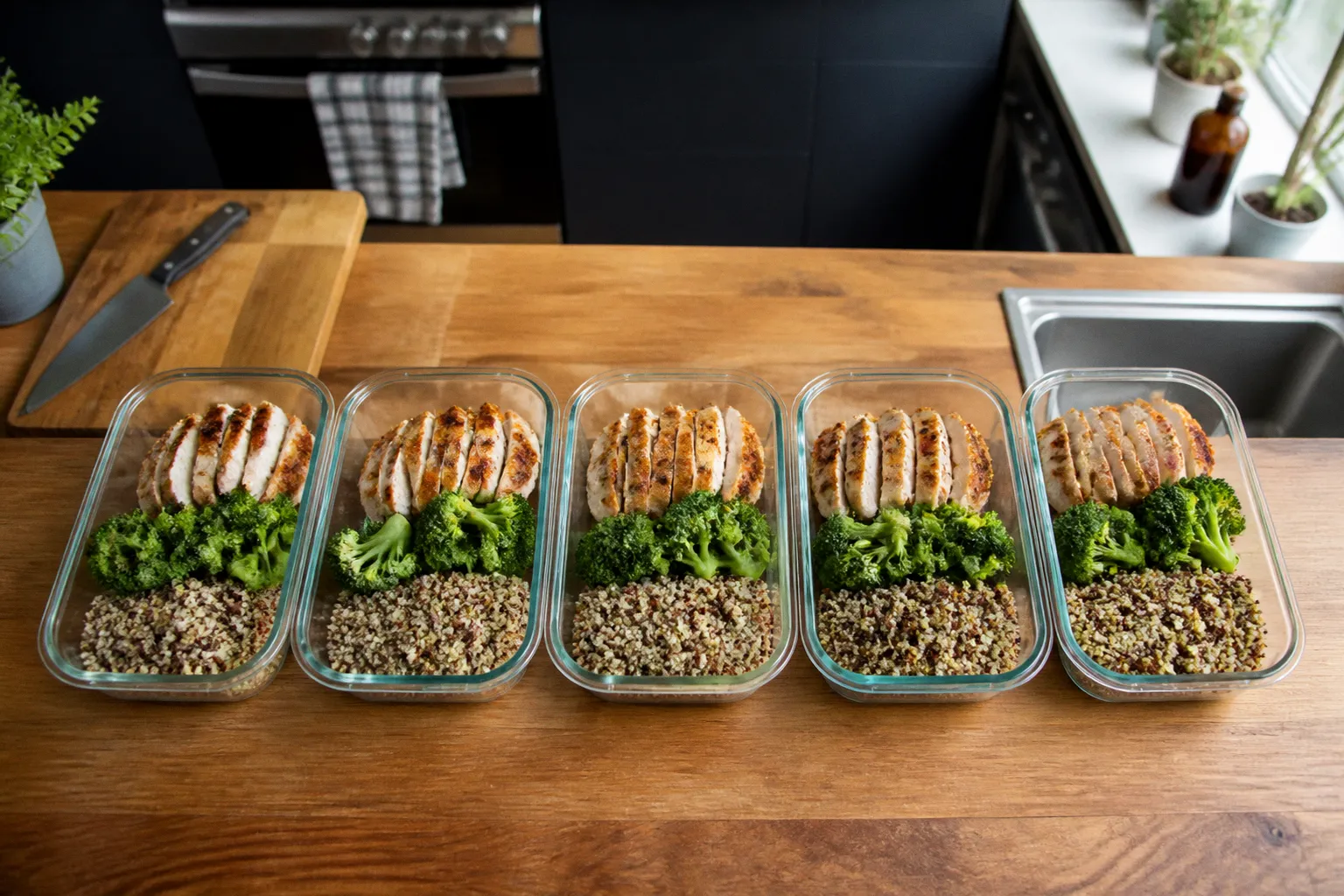
The target is a sufficient daily dose, distributed across meals, with carbohydrates placed where they support glycogen restoration.
For most people pursuing muscle gain or structured recovery, daily protein falls between 1.6 and 2.2 g per kilogram of body weight. A post-workout meal should generally provide 20–40 g of high-quality protein. The exact requirement depends on body mass, training volume, total energy intake, and the composition of the meal. The physiology is not complicated. The execution usually is.
High protein meal prep for muscle recovery should therefore solve five problems:
1. Establish the daily protein baseline.
2. Distribute that protein across the day.
3. Select sources that provide usable amino acids without excessive preparation.
4. Pair protein with complex carbohydrates after training.
5. Build a weekly system that survives work, travel, and appetite variation.
1. Establish the daily protein baseline before planning recipes
Meal prep starts with a number. Not with a recipe.
Use body weight in kilograms and apply the relevant protein range:
- 1.6 g/kg is a practical lower boundary for muscle gain and recovery.
- Up to 2.2 g/kg may be appropriate when training demands are high, energy intake is restricted, or the priority is preserving lean tissue.
- The result is a daily target, not a compulsory amount for one meal.
For example, a 75 kg individual using a target of 1.8 g/kg would require approximately 135 g of protein per day. That number can be divided across four feedings at roughly 30–35 g each, with a smaller residual amount placed in a snack or added to a meal.
Do not select a target based only on the current training session. A hard lower-body workout does not require abandoning the weekly structure. Muscle protein remodeling continues beyond the session. The relevant variable is repeated daily intake.
Convert the target into meals
A daily target is useless if it does not become a meal structure. Use the number to define the minimum protein contribution of each feeding.
A simple distribution might look like this:
| Daily protein target | Number of feedings | Approximate protein per feeding |
|---|---|---|
| 100 g | 3 | 30–35 g |
| 120 g | 4 | 25–35 g |
| 150 g | 4 | 35–40 g |
| 180 g | 5 | 30–40 g |
These are planning ranges, not laboratory requirements. Meal composition, digestion, appetite, and food availability will shift the result.
The error is usually one of two extremes:
- protein is concentrated in one oversized evening meal;
- protein is scattered through low-protein snacks that create the appearance of intake without providing a meaningful dose.
A meal containing eggs, Greek yogurt, poultry, fish, dairy, or another substantial source should be identifiable as a protein feeding. A small amount of protein hidden inside oats or vegetables may contribute to the total, but it should not be counted as the primary recovery input unless the portion is sufficient.
Your recovery target is a daily system. The post-workout meal is one input, not a rescue operation.
Adjust energy intake separately
Protein does not determine the entire muscle-gain diet. Total energy intake remains relevant.
A surplus of approximately 300–500 calories above total daily energy expenditure is commonly used as a starting range for gaining muscle. This is not a universal prescription. It is a planning parameter. If body mass, gym performance, and recovery are not moving in the intended direction, the full intake must be reassessed rather than adding random protein products.
For fat loss, the calculation changes. Protein may remain high to support lean-mass retention, while carbohydrate and fat intake are adjusted to create the deficit. The same high protein meal prep ideas can be used in either phase. Portion size determines the energy outcome.
2. Distribute protein across the day instead of front-loading or back-loading it
Protein distribution affects how often muscle protein synthesis receives a meaningful stimulus. Consuming most of the day’s protein in one lopsided meal is less efficient than dividing it across regular feedings.
The available evidence indicates that more even distribution can increase muscle protein synthesis by up to 25% compared with concentrating the majority of protein in a single meal. That does not mean every meal must contain exactly the same amount. It means the day should not consist of a low-protein breakfast, a low-protein lunch, and an enormous dinner.
A functional structure is:
- first meal: 20–40 g;
- second meal: 20–40 g;
- post-workout meal: 20–40 g;
- final meal or snack: enough to close the daily target.
This can be reduced to three larger meals if appetite and schedule make four feedings impractical. The principle remains: each main meal should provide a defined protein dose.
Use the training session as an anchor
The workout determines where one meal sits in the schedule. It does not determine whether the rest of the day is organized.
If training occurs in the morning, prepare a meal that can be eaten immediately afterward or transported to work. If training occurs at midday, the post-workout meal may be lunch. If training occurs in the evening, dinner can provide the recovery dose without requiring a separate shake.
The post-workout opportunity lasts several hours. There is no strict 30-minute anabolic window that turns an otherwise adequate meal into a failure if it is eaten later. Timing still matters operationally because hunger, fatigue, and work schedules create predictable points of failure. Prepare the meal before the session. Do not rely on decision-making after it.
A distribution checklist
Build each day around these mechanical requirements:
- The first substantial meal contains a clear protein source.
- Lunch is not based only on grains, vegetables, or a small amount of meat.
- The post-workout feeding contains 20–40 g of high-quality protein.
- The final meal closes the gap to the daily target without requiring an excessive serving.
- Snacks are used to solve a quantity problem, not to replace all main meals.
- The same structure works on training and rest days, with carbohydrate portions adjusted as needed.
3. Select whole-food sources that can survive preparation
A meal prep system fails when the food is technically nutritious but operationally unusable after storage. Muscle recovery does not require exotic ingredients. It requires repeatable access to protein with adequate portion control.
Whole-food sources such as eggs, poultry, fish, and dairy support muscle protein remodeling after exercise. They also make the protein content of a meal easier to estimate than mixed snack foods.
Use several sources across the week rather than relying on one. Different foods provide different textures, fat levels, preparation demands, and storage behavior. Variety is not decoration. It reduces the probability that the plan collapses from appetite fatigue.
Practical source categories
Poultry and lean meat
Chicken, turkey, and lean beef work well in bowls, wraps, salads, and rice-based meals. Their protein density allows you to build a substantial meal without making the entire plate dependent on dairy or supplements.
Fish and seafood
Fish provides protein with different fat profiles and preparation characteristics. Canned fish is useful when cooking time is limited. Fresh or frozen fish can be used for dinner portions, but storage and reheating require more attention than with poultry.
Eggs
Eggs are versatile and useful for breakfast preparation. They can be combined with additional egg whites or dairy when a higher protein dose is required without making the meal excessively large.
Dairy
Greek yogurt, cottage cheese, kefir, and other high-protein dairy products are convenient for breakfast, snacks, and final meals. They require no reheating and can be combined with fruit, oats, or nuts. Check tolerance and choose the fat level based on the rest of the meal.
Legumes and soy foods
Beans, lentils, tofu, and tempeh provide protein alongside carbohydrates or fiber. They can form part of a recovery meal, but the total protein of the serving must be calculated realistically. A legume-based meal may require a larger portion or a second protein source to reach the intended target.
Protein supplements
A shake can be useful when appetite, schedule, or transport is limiting. It is not mandatory. Whole-food protein can support effective recovery without a supplement. The supplement should solve an access problem, not conceal a poorly structured diet.
Match the source to the meal
The best source is the one that can be prepared, stored, and consumed without friction.
| Meal situation | Suitable protein sources | Main constraint |
|---|---|---|
| Portable breakfast | Greek yogurt, cottage cheese, eggs, prepared oats with added dairy | Requires cold storage unless shelf-stable ingredients are used |
| Office lunch | Poultry, lean meat, fish, tofu, lentils | Must reheat without destroying texture |
| Immediate post-workout meal | Prepared chicken, turkey, dairy, eggs, fish, or a shake | Must be available before leaving the gym |
| Evening meal | Fish, poultry, lean meat, tofu, eggs, dairy | Portion should fit total daily energy intake |
| No-cook snack | Greek yogurt, cottage cheese, kefir, ready-to-eat dairy | Limited by refrigeration and individual tolerance |
Avoid treating “clean eating” as a food category. The useful distinction is between foods that provide the required protein and foods that do not. A meal can use basic supermarket ingredients and still meet the objective. A meal can also be labeled healthy while supplying an insufficient protein dose.
4. Pair protein with complex carbohydrates after training
Protein provides amino acids for tissue remodeling. Carbohydrates restore glycogen depleted during exercise. A post-workout high-protein meal should usually contain both, especially when training volume is high or another session is scheduled within the next day.
Complex carbohydrate sources include rice, potatoes, oats, whole-grain pasta, beans, lentils, and similar minimally processed foods. The choice is less important than the total composition and its tolerance. A food that produces gastrointestinal distress is a poor recovery food regardless of its nutritional reputation.
A practical post-workout plate contains:
- a measured portion of poultry, fish, eggs, dairy, tofu, or another protein source;
- a carbohydrate base such as rice, potatoes, oats, or legumes;
- vegetables or fruit for fiber and micronutrient coverage;
- fats in an amount that fits the meal and does not make digestion unnecessarily slow before the next activity.
The protein target remains 20–40 g. Adding more protein beyond that range does not produce a linear increase in post-workout muscle protein synthesis. If the meal needs more energy, increase the carbohydrate or fat component according to the broader plan. Do not turn every recovery meal into a protein-loading event.
Three meal templates
These are templates, not fixed prescriptions. Portion sizes should be adjusted to body mass, energy requirements, and the daily protein calculation.
Chicken, rice, and vegetable bowl
Use cooked chicken or turkey as the primary protein. Add rice or potatoes as the carbohydrate base. Add vegetables and a sauce that does not make the meal difficult to store.
This is the most stable option for batch preparation. It reheats predictably and can be divided into several containers. If appetite is low after training, reduce the volume of vegetables and use a more compact carbohydrate portion. The protein target still governs the meal.
Greek yogurt, oats, and fruit
This works as breakfast or a post-workout meal when chewing a full savory meal is impractical. Use Greek yogurt or another high-protein dairy base, add oats or another carbohydrate source, and include fruit.
The common mistake is allowing oats, fruit, and nuts to dominate while the dairy portion remains too small. The meal then becomes carbohydrate- and fat-heavy with inadequate protein. Build the meal around the protein source first.
Fish, potatoes, and greens
Fish supplies protein, potatoes provide carbohydrate, and greens add volume and micronutrients. This combination is suitable for dinner or a prepared lunch.
Use the fish type and fat content to determine how much additional oil or sauce is appropriate. A high-fat fish combined with substantial added fats may increase meal energy quickly. That is not inherently a problem. It is a problem only when the total intake no longer matches the objective.
Carbohydrates after training are not a compromise to muscle gain. They are part of the recovery input when glycogen restoration matters.
5. Build the weekly prep around decisions you can repeat
A muscle recovery meal prep plan should reduce decisions. It should not create a second training program in the kitchen.
Prepare components rather than forcing seven identical meals. Cook two protein sources, one or two carbohydrate bases, and several vegetables. Then assemble different combinations across the week. This maintains the protein target without making every container identical.
A workable weekly structure includes:
1. Choose the daily protein target. Multiply body weight in kilograms by the selected protein factor.
2. Divide the target across three to five feedings. Set a minimum protein contribution for each main meal.
3. Select two to four primary protein sources. Include at least one option that requires no reheating.
4. Prepare carbohydrate bases in parallel. Use rice, potatoes, oats, pasta, beans, or lentils according to training demand and tolerance.
5. Assign the post-workout meal before the training week begins. Do not leave this meal to chance.
6. Store portions in a form that matches the schedule. A meal that cannot be transported or reheated is not prepared.
7. Review the system at the end of the week. Identify where protein was missed, where portions were excessive, and which foods were abandoned.
Example of a four-feeding structure
Assume the daily target is 140 g. The meal plan does not need to contain identical servings, but it should make the total attainable:
- breakfast: approximately 30–35 g;
- lunch: approximately 30–35 g;
- post-workout meal: 20–40 g;
- dinner or evening snack: the remaining amount needed to reach 140 g.
If breakfast contributes only 15 g, the remaining meals must absorb the deficit. That may be feasible, but it creates a larger evening requirement. Repeatedly missing the first meal is not a timing preference. It is a distribution problem.
Control storage and food safety without overcomplicating the plan
Prepared meals should be cooled, stored, and transported according to standard food safety practice. Exact shelf life varies by ingredient, preparation method, storage temperature, and container handling. Do not assume that every recipe remains suitable for the same number of days.
Use practical controls:
- separate wet sauces from foods that become soft;
- store fish and dairy according to their shorter tolerance for poor temperature control;
- freeze portions that will not be consumed within the appropriate storage period;
- label containers by meal and date;
- keep a no-cook protein option available for schedule disruption.
This is where many high protein meal prep ideas fail. The plan is designed for an ideal week, then discarded after one missed cooking session. A backup meal is not optional if consistency is the objective.
Protein prep for fitness: what to measure and what to ignore
Macro tracking can be useful, but it should track the variables that change the outcome. Measure total daily protein and total energy intake when gaining or losing body mass. Track carbohydrate intake more closely when training volume is high or performance depends on glycogen availability.
Do not spend equal effort measuring every herb, vegetable, or condiment if the primary protein target is not being met. Precision applied to the wrong variable is still poor control.
Use a simple audit:
- Is the daily protein target defined?
- Does each main meal contain a substantial protein source?
- Is one 20–40 g serving positioned after training?
- Are carbohydrates present when glycogen replenishment is a priority?
- Can the meals be transported and consumed under real schedule conditions?
- Does the weekly energy intake support the stated goal?
The plan should also be evaluated against performance. If training quality declines, recovery worsens, and body mass changes rapidly in the wrong direction, the issue may be total energy intake rather than protein. If protein is already within the planned range, adding more is not the automatic solution.
The implementation protocol
Use this sequence for the next preparation cycle:
1. Calculate body weight in kilograms and select a protein target between 1.6 and 2.2 g/kg.
2. Divide that target across the number of meals you can execute consistently.
3. Assign 20–40 g of protein to the meal after training.
4. Select whole-food sources from at least two categories, such as poultry and dairy or fish and legumes.
5. Add a complex carbohydrate source to the post-workout meal.
6. Prepare enough components for the actual week, not the theoretical week.
7. Keep one portable or no-cook protein option available.
8. Review adherence and performance before changing the target.
High protein meal prep for muscle recovery is not a collection of recipes. It is an allocation system. Set the daily dose. Distribute it. Pair it with the carbohydrate required by the training load. Remove the points where access fails. Then repeat the protocol until the diet operates without negotiation.