How a 15-Minute Daily Routine Can Help Preserve Bone Density After 40
According to Fit&Well, certified strength and conditioning coach Mark Harris has outlined a 15-minute protocol built around the two mechanical drivers of bone maintenance — axial loading and ground…
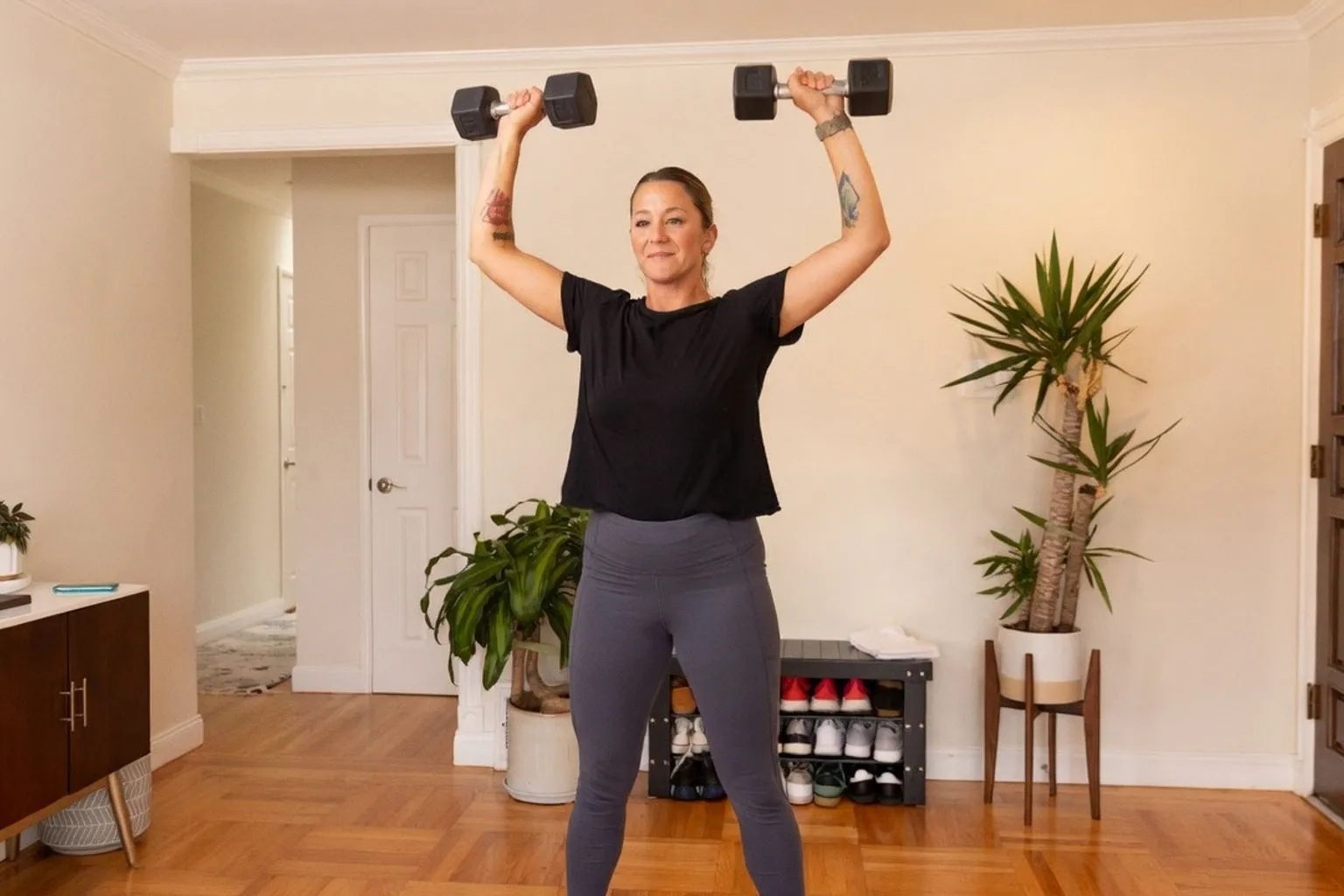
Bone density does not fail overnight. Around age 40, the remodeling ratio shifts: the body begins absorbing old bone tissue faster than it produces new tissue, and the loss accelerates through the postmenopausal years. According to Fit&Well, certified strength and conditioning coach Mark Harris has outlined a 15-minute protocol built around the two mechanical drivers of bone maintenance — axial loading and ground reaction force — that anyone can execute at home with a single dumbbell or kettlebell.
The Mechanism
Bone is mechanosensitive tissue. It responds to two specific inputs: mechanical tension, where muscles pull against bone during resistance work, and impact, where forces travel through the skeleton as the feet strike the ground. Without those inputs, osteoblast activity drops below resorption rate, and mineral density declines. Harris frames the two stimuli as an alarm system — a signal that pushes the body's bone-building cells to lay down new tissue and reverse the loss curve. His protocol stacks both inputs into a single sequence:
- Goblet squat. A weight held at the chest drives compressive force through the hips and femur — the two regions most vulnerable to age-related density loss, especially during and after menopause. The load also recruits the glutes and quadriceps, reinforcing the structural demand on the lower-body skeleton.
- Overhead press. Vertical pressing creates axial loading, where the weight travels down through the arms and into the spine. That vertical line of force forces the body to maintain upper-body bone density while also building shoulder strength and core stability.
- Pogo hops. Low-amplitude, rhythmic bouncing on the balls of the feet. The goal is not maximum height. It is repeated impulse transmission through the ankles, legs, hips, and spine — ground reaction force, delivered cleanly and consistently.
The Protocol
Three rounds. Three exercises. Approximately 15 minutes total.
- Goblet squat: 8–12 reps
- Overhead press: 8–12 reps
- Pogo hops: 20–30 seconds
Rest as needed between exercises; the circuit design keeps the heart rate elevated without compromising load on the prime movers. Keep the hops tight — small, quick ankle rebounds, not maximal jumps. Tempo and volume matter less than consistency across sessions. Harris holds a level 4 personal trainer qualification with additional certifications across HYROX, triathlon, and weightlifting coaching, and serves as an ambassador for Mirafit, a home strength equipment brand.
What to Watch
Bone density responds slowly, and the stimulus must be repeated. Two sessions per week is the minimum threshold for a meaningful mechanical signal; three is stronger. If you carry a history of osteopenia, joint replacement, or cardiovascular condition, get clinical clearance before axial-loading the spine. The session is short, but the biological response is cumulative — the value is in adherence across months, not intensity in any single workout. Treat the 15 minutes as a clinical dose, not a warm-up.