Three Essential Home Gym Movements to Combat Fitness Decline After 40
According to a piece published in Fit&Well, Mark Harris — a level 4 personal trainer, strength and conditioning coach, and Mirafit weighted vest ambassador — has narrowed post-40 training to three…
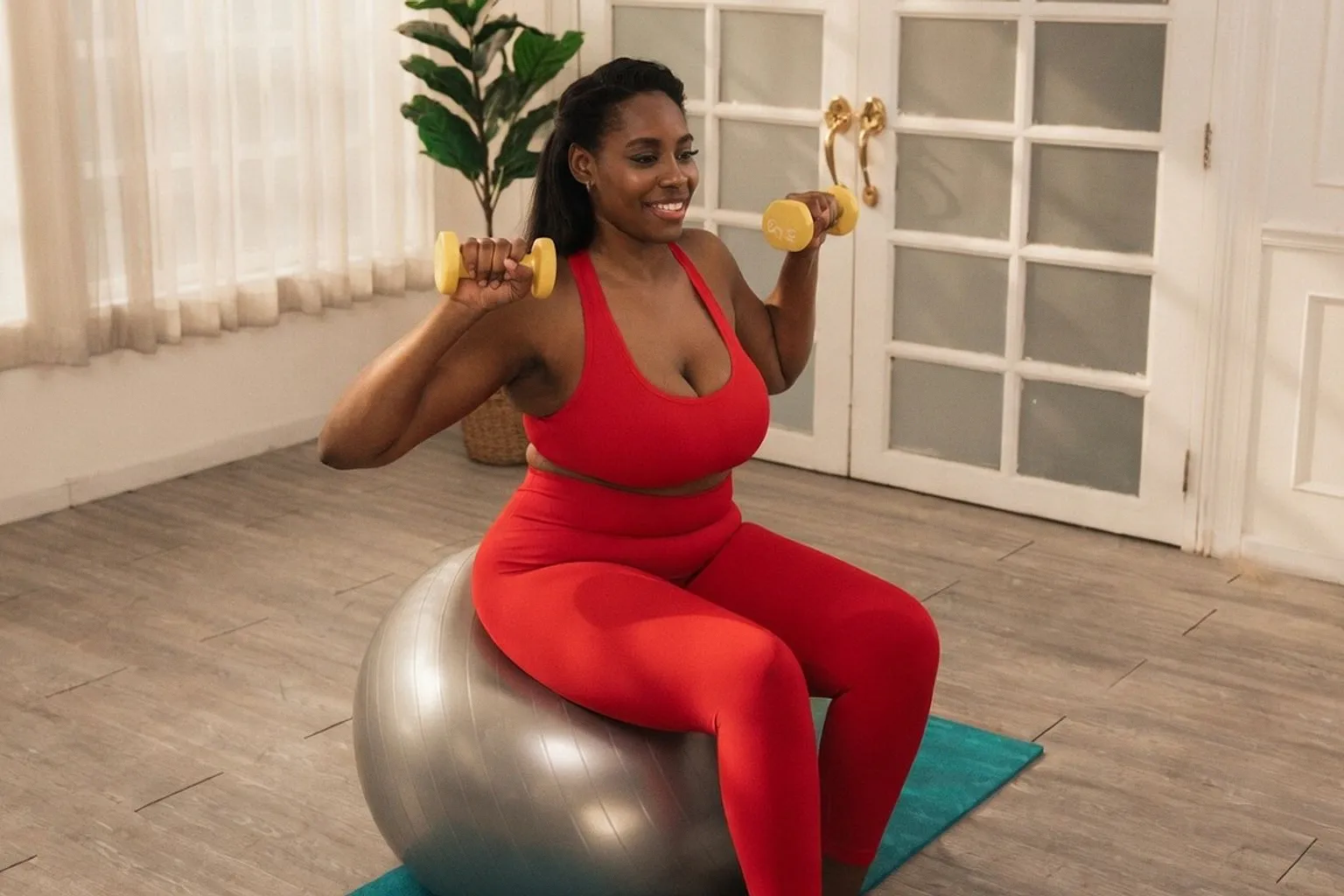
According to a piece published in Fit&Well, Mark Harris — a level 4 personal trainer, strength and conditioning coach, and Mirafit weighted vest ambassador — has narrowed post-40 training to three movements that compress strength, mobility, and power work into a minimal home gym setup. The circuit he designed targets the specific declines that compound after the fourth decade: muscle loss, joint mobility loss, and a rapid drop-off in rate of force production.
The Three Movement Patterns
Each exercise maps to a specific decline curve:
- Squat to standing. Rising from a sofa, a chair, or a car uses the same gluteal, quadriceps, and hip-mobility chain the squat trains. Deep squats — or standing from a low surface without upper-body assist — preserve hip and ankle range while loading the prime movers at length.
- Overhead press. Static sitting stiffens the shoulders and rounds the thoracic spine. Pressing a load overhead through full elevation recruits the deltoids, triceps, and upper-back stabilizers, forcing the glenohumeral joints through the range that posture collapse takes away. The transfer to daily tasks is direct.
- Fast step-ups. Power — rate of force development — decays faster than absolute strength after 40. Trip recovery depends on speed, not maximum load. The step-up trains fast-twitch fibers and the reactive capacity that prevents falls.
The Training Economy
The three exercises split along the contractile spectrum. The squat loads slow-twitch stabilizers and trains joint range. The overhead press addresses upper-extremity volume loss and shoulder capsule mobility. The fast step-up targets the fast-twitch deficit. Covering all three in one circuit produces more adaptation per minute than three general-purpose grinders.
A weighted vest — Mirafit or equivalent — extends the squat curve without forcing the torso out of position. A pair of dumbbells or a kettlebell covers the press. A step box at 6 to 18 inches sets the step-up height. Floor space for a full squat depth and vertical clearance for an unrestricted overhead press are the only spatial requirements.
Implementation Protocol
Run the three movements back-to-back as a continuous circuit. Rest 45 to 60 seconds at the end of each full round before starting the next. Three to four rounds is a working session.
Tempo on the step-up matters: drive concentric under one second, lower eccentric over two to three. The goal is rate of force, not jump height. On the press, maintain full overhead elevation; partial range defeats the joint mobility work. On the squat, preserve heel contact and avoid lumbar flexion as load climbs. When any movement stops producing a stimulus, add resistance or slow the eccentric — not sets.