Mastering Kettlebell Fundamentals: A Trainer-Led Guide to 11 Essential Movements
Men's Fitness has published a kettlebell guide for beginners built around PT-led breakdowns of 11 key exercises.
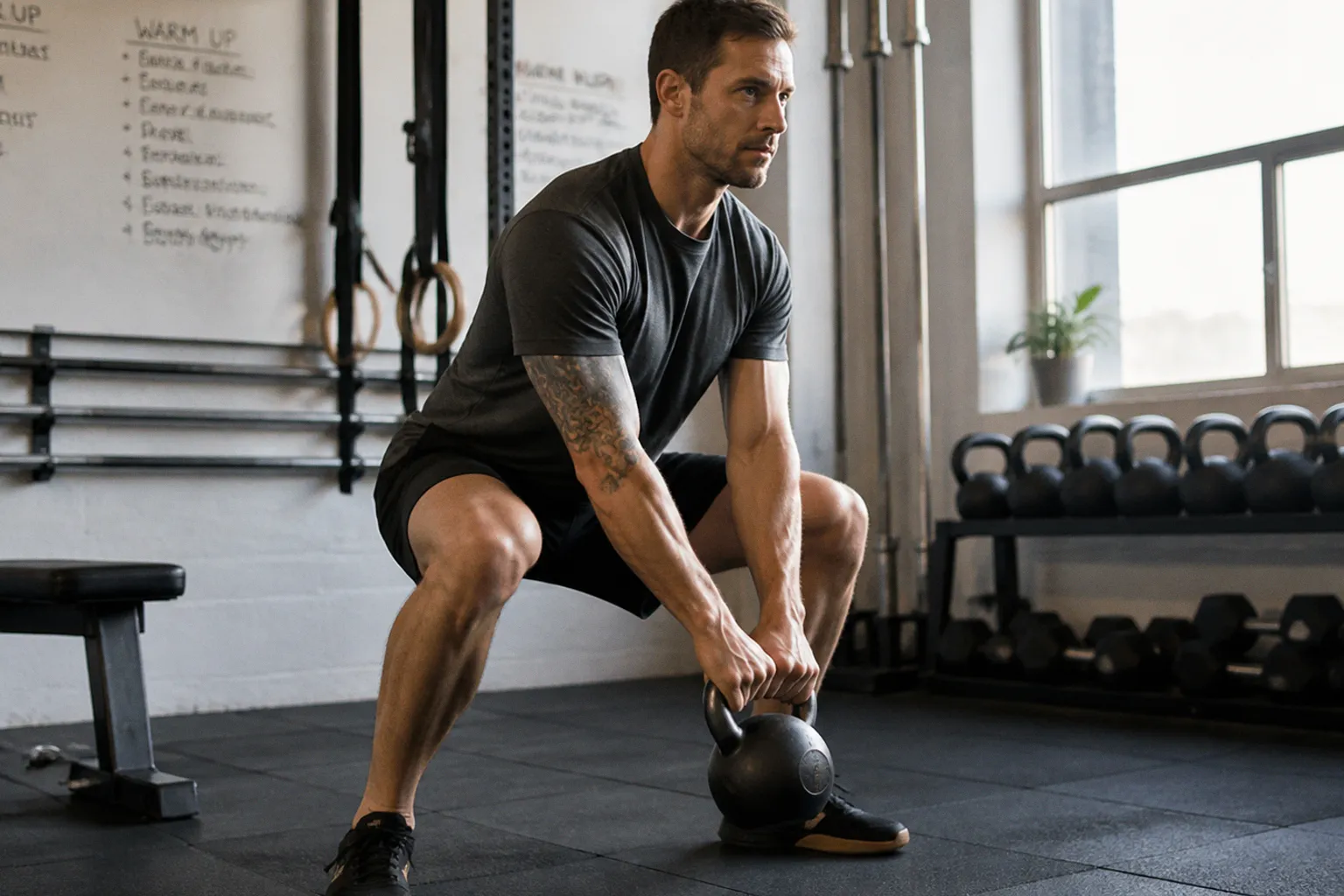
The release lands at a moment when most trainees approach kettlebell work with dumbbell logic — loading the arms instead of loading the hips — which produces compensations in the lumbar spine and a grip that fails long before the posterior chain fatigues. A mechanically sound introduction is overdue.
What the Guide Covers
Per the mensfitness.co.uk publication, the material is structured as a beginner entry point: eleven exercises, each explained by a qualified personal trainer. The exact exercise list is not available in the source snippet, but the framing positions it as foundational rather than advanced. The MD Anderson beginner guide, published days earlier, reinforces the same baseline prescription: at least two days per week of resistance work, structured in sets and reps, with load reduced when clean technique cannot be sustained through eight repetitions.
The Mechanics Most Beginners Skip
Kettlebell training is not a free-weight category — it is a hinge-and-brace category. Three mechanical demands separate competent kettlebell work from compensatory patterns:
- Hip hinge initiation. Power originates at the hip, not the low back. A kettlebell swing with a quad-dominant drive shifts shear load to L4-L5.
- Anterior core bracing. Intra-abdominal pressure must be established before the eccentric phase. No brace, no posterior chain force transfer.
- Shoulder packing for overhead work. Presses and snatches require a retracted, externally rotated scapula. An unpacked shoulder under load is a rotator cuff injury in slow motion.
Grip is the limiting variable most trainees underestimate. The forearm fatigues before the working muscle, truncating set volume and forcing postural breakdown. Use chalk. Use double-underscore grip work in warm-ups. Do not strap the bell until you can hold a hard set with bare hands — strapping masks the grip deficit that is limiting your working sets.
Implementation Protocol
Start where the force requirement is lowest and the motor pattern is most forgiving:
1. Deadlift before swing. Establish the hinge with a kettlebell deadlift. Two sets of ten. Flat spine, vertical shins, bell traveling along the anterior tibialis.
2. Goblet squat before front squat. Load the anterior trunk to teach upright posture under load. The weight position forces thoracic extension without coaching.
3. Halo before press. Shoulder mobility and scapular control, loaded and measurable. Sub-maximal load only.
4. Add ballistic work last. Swings and cleans require the brace, hinge, and grip to be automatic. Premature ballistic loading is the primary mechanism of acute injury in beginner kettlebell trainees.
Match the MD Anderson cadence: two resistance sessions per week minimum, eight-rep technical minimum, reduce load before adding reps. The kettlebell is a tool, not a shortcut. Mechanics determine whether it builds force or builds a referral list.