Why Runners Need Unilateral Strength Training to Improve Race Day Performance
Running loads one limb at a time through full hip extension, knee stabilization, and ankle plantarflexion—yet most runners train strength bilaterally.
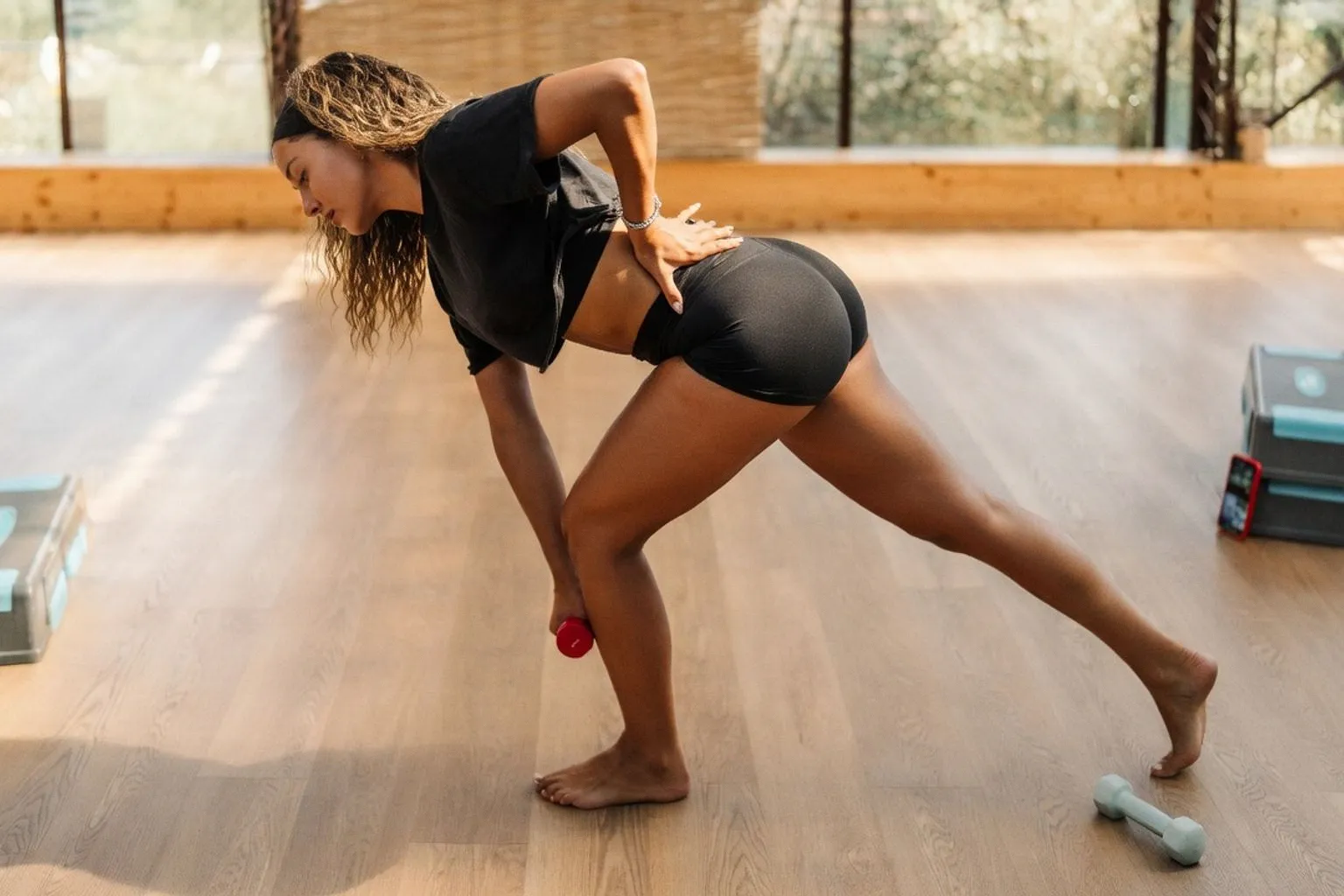
According to Kate Howe, Head Coach at Orangetheory Fitness, a five-exercise single-leg protocol addresses this mismatch directly, targeting glutes, hamstrings, calves, and core without depleting the energy reserves required for mileage. For athletes logging serious weekly volume, unilateral strength work is the structural variable between a controlled stride at mile one and compensatory mechanics at mile twenty.
Unilateral Loading: The Biomechanical Case
"Running happens one leg at a time, so it makes sense to train strength that way," Howe states. Her protocol consists entirely of single-leg bodyweight movements. The single-leg Romanian deadlift loads the posterior chain through hip hinge while demanding pelvic stability under asymmetric tension. Progression: hold a kettlebell in the hand opposite the planted leg, lowering to mid-shin. The single-leg deadlift with knee drive adds a coordination component that replicates the stance-to-swing transition. A glute bridge variation targets the gluteus medius and maximus while enforcing unilateral knee and pelvic control. Single-leg calf raises prepare the gastrocnemius-soleus complex for repeated landing and push-off cycles. A core stability exercise closes the sequence, building the trunk rigidity needed for coordinated stride mechanics.
Howe's stated objective is reinforcement, not depletion. "The goal is not to completely fatigue your body as you still have miles to get in," she notes. "These exercises complement your running by helping you build the strength, stability and control you need to feel strong with every stride."
Eccentric Demand: The Fatigue Variable Flat Training Ignores
Downhill running introduces a force profile that flat-terrain sessions never replicate. According to ultrarunner and coach David Roche, course record holder at the Life Time Leadville 100 (15:12:30), repeated eccentric contractions—quads lengthening under braking force—accumulate thousands of repetitions over a sustained descent. This is the mechanism behind late-race leg failure, whether at mile 80 of a hundred-miler or mile 22 of a marathon.
The first exposure to this stress triggers what research terms the repeated bout effect: protective neuromuscular adaptations that reduce muscle damage on subsequent exposures. The nervous system distributes load more effectively across muscle groups. Structural changes occur in muscle fibers, tendons, and the extracellular matrix. Inflammatory response becomes better regulated. "You can't simulate mile 80, but you can get very close to it in a 20-mile run with lots of steep and fast downhills," Roche says. He notes that even recreational marathon runners benefit from this approach, as the accumulated impact over 26.2 miles produces the same eccentric fatigue mechanism at a smaller scale.
Protocol for Integration
- Single-leg strength work: Place on non-consecutive days, ideally post-easy-run or on a cross-training day. Never precede a quality running session with this protocol.
- Volume guidance: Keep sets moderate. Howe's design is explicitly not about reaching failure—the objective is strength and control, not hypertrophic response.
- Form cue: During the single-leg Romanian deadlift, keep the raised foot pointing downward to prevent rotational torque through the hips.
- Downhill sessions: Introduce one per training block. Begin with moderate grade and controlled pace. Monitor quad soreness at 24–48 hours post-session to calibrate future volume—Roche notes that significant delayed soreness after the first exposure is expected and indicates the eccentric stress was sufficient to initiate adaptation.
- Progression sequence: Master bodyweight single-leg movements with consistent pelvic alignment before adding external load. Introduce kettlebell only when balance and control are stable through full range of motion.