Uneven glute strength: can single-leg moves fix it?
Here’s the part nobody selling you a glute program wants to admit: if you’ve been grinding out barbell back squats and hip thrusts for months and one side still looks like it skipped leg day…
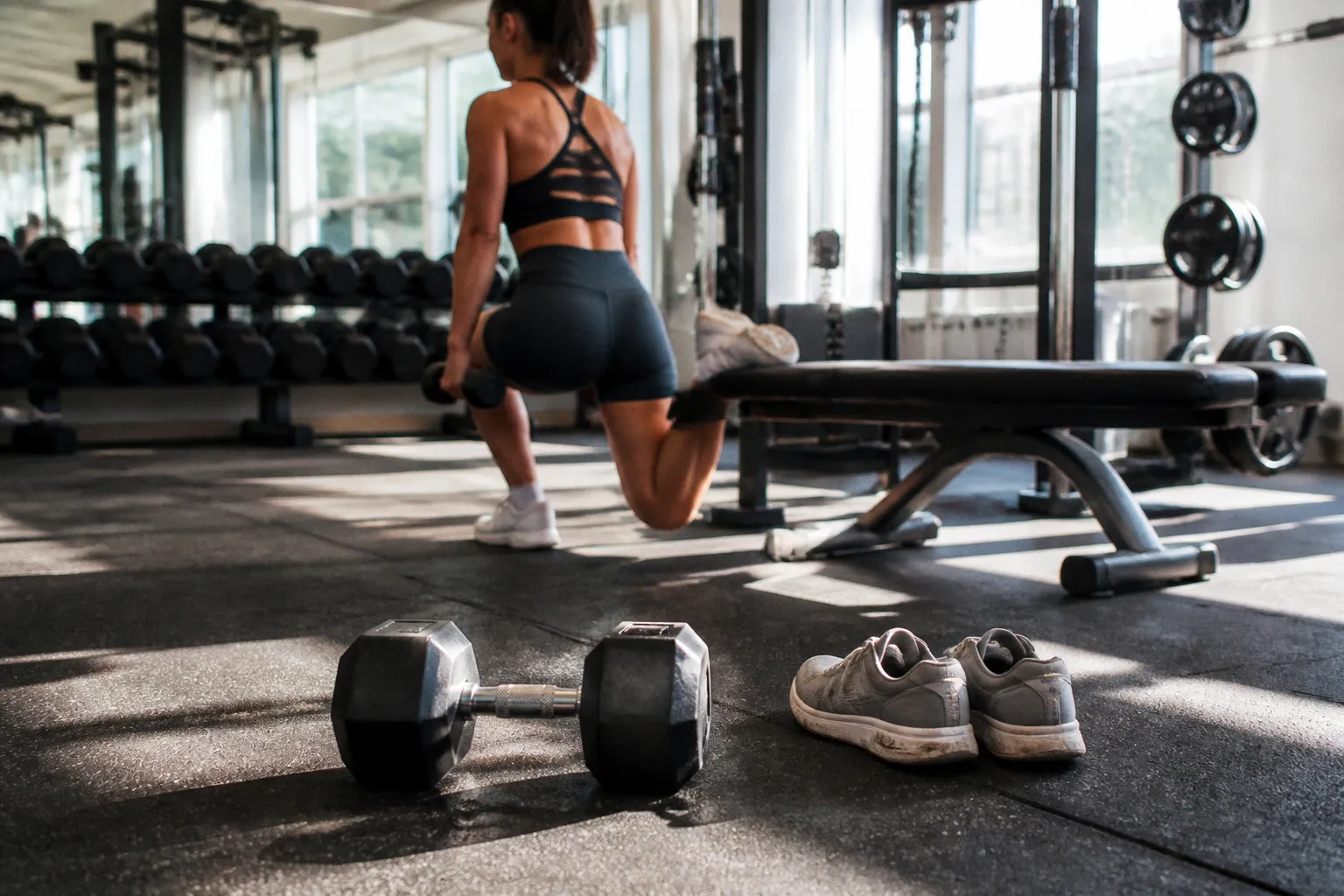
The Lie Your Squat Is Telling You
Here’s the part nobody selling you a glute program wants to admit: if you’ve been grinding out barbell back squats and hip thrusts for months and one side still looks like it skipped leg day, bilateral work might be hiding the problem rather than solving it.
When both legs move together, the stronger or better-coordinated side can quietly contribute more. You still complete the rep. The bar still goes up. The set still looks productive from the outside. But the load may not be shared evenly between your hips, and the weaker glute gets fewer opportunities to do demanding work.
Your strong side has been carrying the relationship, while your weaker side has been allowed to coast.
That doesn’t mean every uneven-looking glute reflects a strength deficit. Muscle shape, pelvic anatomy, training history, movement habits and even how you stand can all affect what you see in a mirror. But if the difference also shows up in control, range of motion or performance, it is worth investigating rather than automatically adding more weight to a two-legged lift.
You don’t need a fancy assessment to start noticing the pattern. Try a controlled single-leg hip thrust or single-leg glute bridge on each side. Pay attention to whether one hip rises more slowly, whether the pelvis rotates, whether the working leg trembles earlier or whether the range of motion becomes noticeably shorter.
That may be a sign of a functional asymmetry: one side is having more trouble producing or controlling force in that particular position. It is not, by itself, a diagnosis. It also doesn’t tell you whether the difference comes from the glute, the hamstrings, the trunk, the foot, the hip joint or the way you are setting up the exercise.
And no, doing more two-legged glute bridges is not guaranteed to even things out. Bilateral training can be useful, but it gives your body more room to distribute the work in its preferred way. If one side keeps taking over, the stronger side may continue receiving the cleaner, heavier share of the stimulus.
Why Bilateral Lifts Can Hide the Difference
When both feet are planted, your nervous system is free to organize the movement however it can. Usually that is a good thing. Your body finds a way to complete the task, and both sides contribute according to their current capacity, coordination and position.
The catch is that “the rep was completed” does not necessarily mean “both glutes did the same amount of work.”
A stronger side may produce more hip extension. A more stable foot may give the body a better base. A small shift in weight can move the center of pressure toward one leg without making the deviation obvious. You might even feel both glutes working while one is still doing more of the job.
This is why a bilateral hip thrust can look symmetrical while the person performing it is subtly pushing harder through one foot. A squat can look solid while one hip shifts, one knee tracks differently or one side reaches depth through a different strategy. The movement is not fake. It is simply not as informative about left-to-right capacity as a well-controlled unilateral exercise can be.
Single-leg work changes the question. Instead of asking whether you can move a load with both legs, you ask whether each side can control a similar task on its own.
That can reveal:
- whether one side loses pelvic position sooner;
- whether the knee moves inward as fatigue builds;
- whether one hip reaches extension without the lower back taking over;
- whether balance, foot pressure or trunk control limits the movement;
- whether one side needs more time to produce force;
- whether the difference appears only under load or is already present with bodyweight.
If both legs are working at the same time, the stronger side may be doing more than you realize. Taking one leg out of the equation can make the difference easier to see.
That is not the same as saying unilateral work is the only valid assessment or the only useful way to train. It is one tool that makes side-to-side comparison more direct. A coach’s movement assessment, video from different angles, bilateral strength work, balance testing and a medical evaluation can all add information that a single-leg exercise cannot provide.
The useful idea is not “bilateral lifts lie.” It is that bilateral lifts can conceal compensation when your goal is to compare sides.
What’s Actually Doing the Work
Single-leg glute exercises are not interchangeable. They challenge different parts of the hip and different parts of your movement strategy. If you treat them all as identical, you can spend weeks doing the wrong variation for the problem you are trying to address.
Gluteus maximus: hip extension and force production
The gluteus maximus is the large muscle responsible for powerful hip extension. It contributes when you stand up from a squat, drive the hips forward in a deadlift, rise from a split squat or extend the hip in a thrust.
Bulgarian split squats, single-leg hip thrusts, reverse lunges and single-leg Romanian deadlifts can all challenge it, but the demands are not the same.
A single-leg hip thrust reduces the balance requirement and puts more attention on hip extension. It can be useful when you want to compare how each side produces force without turning the exercise into a full-body coordination contest.
A Bulgarian split squat adds more balance, knee movement and trunk control. It may expose an asymmetry that does not appear during a bridge, but it also gives you more possible reasons for a weaker performance. If one side struggles, that does not automatically mean the glute itself is weak.
A single-leg Romanian deadlift asks the hip to extend while the body controls a hinge on one support leg. It can show differences in hamstring tolerance, foot stability, hip control and balance as much as differences in glute strength.
Gluteus medius: keeping the pelvis from wandering
The gluteus medius sits on the outer surface of the hip. Among its jobs is helping control the pelvis when one leg is off the ground or when the body is moving over one leg.
If your pelvis drops during a single-leg stance, your knee moves inward during a step-up or your trunk leans dramatically to one side, the gluteus medius may be part of the story. But again, treat the observation as information rather than a final verdict. The foot, ankle, hip mobility, trunk position and motor control can all influence what you see.
Heavy hip thrusts mainly emphasize hip extension. They do not automatically train the side-to-side pelvic control needed for walking, running, stairs or a single-leg landing. That is why a program can improve the size or strength of the gluteus maximus while leaving a visible wobble in single-leg movements.
The answer may involve both:
- hip extension strength from the gluteus maximus;
- frontal-plane control from the gluteus medius and the surrounding hip musculature;
- a stable foot and ankle position;
- enough trunk control to keep the pelvis from rotating or tipping.
The imbalance might not live exactly where you think it lives.
Strength, control and appearance are different measurements
A glute can look smaller and still perform well. A glute can look similar in size and still produce less force or control the pelvis less effectively. You can also have a left-right difference in endurance without a major difference in maximum strength.
That distinction matters because the goal should not be to punish the side that looks different. It should be to improve what the side can do: produce force, control the joint, tolerate training and contribute to the movement without pain.
The Exercises Worth Your Time
A few single-leg movements are genuinely useful for glute imbalance correction. None is magic, and none can identify the cause of an asymmetry by itself. Choose the variation that matches the quality you are trying to train.
| Move | Primary target | What it can reveal | Difficulty |
|---|---|---|---|
| Bulgarian split squat | Glute max, quads and hip control | Differences in drive, balance, depth and pelvic control | Moderate |
| Single-leg Romanian deadlift | Glute max, hamstrings and trunk control | Posterior-chain coordination, foot stability and hinge control | Moderate to high |
| Single-leg hip thrust | Glute max with relatively low balance demand | Side-to-side differences in hip-extension control and tolerance | Easy to moderate |
| Reverse lunge | Glute max, quads and deceleration | Control during stepping, stance stability and confidence under load | Easy to moderate |
| Step-up | Glute max, quads and glute medius | Knee tracking, pelvic control and the ability to drive from one leg | Easy to moderate |
| Single-leg glute bridge | Glute max with bodyweight | Basic control, pelvic rotation and early fatigue | Easy |
Single-leg hip thrust
The single-leg hip thrust is a practical starting point because it keeps the movement relatively simple. Your upper back is supported, balance is less demanding than in a split squat, and you can compare sides without immediately adding a heavy external load.
Set the working foot so the knee is not drifting wildly toward the chest or away from it at the top. Keep the ribs from flaring, bring the pelvis up under control and pause briefly at the top if you can do so without arching the lower back.
The useful comparison is not just how many reps you can force out. Look at:
- whether the pelvis stays level;
- whether the range of motion is similar;
- whether one side relies on a lower-back arch;
- whether the hamstring cramps immediately;
- whether the final few reps remain controlled.
If the weaker side gives you eight clean reps and the stronger side could do fifteen, matching the stronger side’s number is not automatically productive. The extra repetitions may simply reinforce the difference.
Bulgarian split squat
The Bulgarian split squat is more demanding and more revealing, but it is also easier to perform badly. The rear foot is elevated, the front leg does most of the work, and the exercise asks for strength, balance and confidence at the same time.
Start with bodyweight or light dumbbells. Use a range of motion you can control rather than dropping as low as possible and losing the pelvis. Keep most of your attention on the front leg: a stable foot, a controlled knee path and a steady torso.
If one side feels dramatically weaker, first check whether the setup is actually the same. The distance from the bench, the angle of the rear foot, the amount of forward torso lean and the depth of the rep can all change the exercise. A small setup difference can look like a large strength difference.
Single-leg Romanian deadlift
This is not just a glute test. It is a test of whether you can hinge while maintaining balance and controlling the pelvis.
Keep the standing foot active rather than collapsing onto the inside edge. Reach the free leg back as the torso inclines forward, and stop the descent when your back or pelvis starts to rotate. The best rep is the deepest controlled rep, not the one that makes the dumbbell travel closest to the floor.
If one side wobbles, rushing to add weight usually makes the feedback less useful. Use a wall, rack or fingertip support if necessary. Assistance is not cheating here; it can let the hip do its job instead of forcing your balance system to dominate the exercise.
Step-ups and reverse lunges
Step-ups are valuable when you want to see how one leg produces force from a relatively fixed position. Box height matters. Too low, and the movement may not challenge the hip very much. Too high, and you may compensate by pushing off the floor with the trailing leg or pulling yourself up with momentum.
Use a height that allows the working leg to drive the body upward without a dramatic pelvic shift. Make the lowering phase deliberate. The step down often reveals more than the step up: one side may struggle to control the pelvis or knee even when it can complete the ascent.
Reverse lunges tend to be easier to control than forward lunges because the stepping leg travels back rather than catching the body moving forward. They are a useful bridge between basic single-leg strength and more demanding split-squat variations.
Programming Without Breaking Yourself
Once you decide to train the weaker side, the temptation is predictable: add more exercises, more days and more punishment. That is usually how a manageable difference becomes an irritated hip, cranky knee or tired lower back.
The aim is enough unilateral work to provide a clear training stimulus, not so much that every session becomes a test.
For single-leg stability drills, roughly two to three sets of five to eight controlled repetitions per side can be a reasonable starting range. Keep the load light enough that you can see and feel what the pelvis, knee and foot are doing.
For unilateral hip thrusts and bridges, a working range of around ten to twenty repetitions per leg can suit many people, with three to four total sets across the week. You do not need to use that exact range, and you do not need to train every set to failure. A few technically strong repetitions left in reserve can be more useful than a final set where the stronger side takes over and the pelvis starts twisting.
For glute medius-focused work, side-lying hip abductions, supported single-leg holds and side-plank variations can all be useful. You might use fifteen to twenty controlled repetitions of an abduction exercise or timed holds in the thirty-to-sixty-second range, depending on the variation and your ability to keep the pelvis stacked. The number matters less than whether the movement stays where you intended it to stay.
The weaker-leg-first rule
Start the unilateral exercise on the side that feels less capable. That gives you a realistic reference for the day, because fatigue has not yet distorted the comparison.
Then use the weaker side to set the dose for the stronger side:
1. Start with the weaker leg.
2. Stop the set when technique or range of motion begins to change.
3. Match the stronger side to the same clean repetitions, load or hold time.
4. Do not automatically add extra work to the stronger side.
5. Increase the challenge only when both sides can meet the current standard with control.
This is not a law of physiology. It is a practical way to avoid giving the already dominant side even more volume.
You can also give the weaker side a small amount of additional practice, such as an extra low-fatigue set of a simple bridge or an isometric hold. But more is not always better. If the side is struggling because of poor coordination, adding fatigue may make the pattern noisier rather than cleaner.
How often should you train it?
Unilateral work can appear several times per week, but the right frequency depends on the exercise, load, recovery and what else is in your program. A bodyweight bridge and a loaded Bulgarian split squat do not create the same demand.
A simple weekly structure might include:
- one more demanding unilateral strength exercise, such as a split squat or step-up;
- one lower-fatigue hip-extension exercise, such as a single-leg bridge;
- a small amount of pelvic-control work;
- bilateral lifts kept in the program at an appropriate load.
You do not need to turn every lower-body exercise into a single-leg exercise. That can make training unnecessarily tiring and may reduce the amount of quality strength work you can do. Use unilateral movements where they answer a question or address a limitation, then keep bilateral training for building overall strength and loading capacity.
Where This Goes Sideways
Unilateral work is useful, but it is also unforgiving. Here are the common ways people make the feedback less useful.
Opening the hips. During a single-leg hip thrust or split squat, the knee may drift inward while the pelvis rotates outward. That can change which tissues are carrying the load. You may not feel pain; you may simply feel that the exercise never reaches the glute you intended to train. Before abandoning the movement, check your foot position, range and pelvic control.
Arching the lower back. This often appears near the end of a set. As the glute tires, the ribs flare and the lower back creates the impression of extra hip extension. Keep the pelvis controlled and finish the rep without chasing height that you cannot own. A lower range with a steady trunk is still a useful repetition.
Pushing off with the wrong leg. Step-ups and split squats make it easy to let the trailing leg contribute more than you realize. Keep the setup consistent and make the working leg responsible for the movement. If you need to push hard from the floor to complete the rep, the box may be too high or the load may be too ambitious.
Treating balance as a glute score. A single-leg Romanian deadlift can be limited by the foot, ankle or vestibular system before the glute reaches its true strength limit. Support yourself when needed. The purpose is to train and observe the hip, not to win a circus audition.
Skipping the medius work. If you only hammer hip extension and ignore side-to-side pelvic control, the visible difference may change while the wobble remains during walking, running or stairs. The gluteus maximus and gluteus medius contribute to different tasks. They deserve different exercises.
Expecting symmetry in six weeks. There is no universal timeline for an uneven glute strength problem. Progress depends on the size and cause of the difference, your training history, how consistently you practice, your recovery and whether pain is limiting the movement.
Minor left-right asymmetries are common. The goal is not a mathematically identical body or a mirror image from every angle. A better target is more even, controllable output: similar range of motion, similar technique, improved confidence and less obvious compensation.
And then there is the structural question. A true leg-length difference, a joint issue, a previous injury or another anatomical factor may contribute to how you move. Unilateral exercises can still improve strength and control around the hips, but they may not remove every source of asymmetry. Research and observation alone cannot tell you that a structural component is present in every case, and unilateral training cannot be assumed to resolve it on its own.
If the difference is persistent, worsening, associated with pain or accompanied by a clear change in gait, get an assessment from a qualified clinician or physical therapist. That is not a failure of your program. It is a sign that the question may be bigger than exercise selection.
Doing only unilateral work forever. Bilateral lifts are not dead. They simply should not be your only tool when one side is repeatedly taking over. Single-leg work can expose and help address a functional gap; bilateral work can then help you rebuild total-body strength and handle heavier loads with a more balanced strategy.
Drop bilateral training entirely and you may lose useful practice with bracing, force production and loading both legs together. The goal is not to choose a team. It is to make both sides more capable, then use the right tool for the task in front of you.
The Verdict
Single-leg exercises can help improve uneven glute strength, especially when the difference is functional and shows up as inconsistent control, force production or endurance from one side to the other.
That comes with an important asterisk: “fix” should mean closing a meaningful performance gap, not producing a perfectly identical left and right side. Appearance and function do not always change at the same pace, and not every asymmetry comes from the glutes themselves.
If bilateral glute work has not addressed the difference, unilateral exercises are worth adding because they make side-to-side comparison easier and give each leg a chance to work without the other quietly taking over. They are not the only valid assessment or programming method, but they are a practical part of a broader approach.
Pick one or two single-leg glute exercises that match the problem. Start with the weaker side. Keep the stronger side to the same clean standard. Use a load that lets you control the pelvis, knee and foot. Add gluteus medius work when the issue includes pelvic wobble or poor single-leg stability. Keep bilateral strength work in the program instead of treating it as the enemy.
After several weeks of consistent training, retest the same movement under the same conditions. Compare control, range, tempo and effort—not just the number of repetitions. If the gap is narrowing, the plan is doing its job.
If it is not narrowing, the answer may be programming, recovery, technique, pain, a limitation elsewhere in the kinetic chain or a structural factor that needs a different kind of assessment. Do not keep grinding the same routine for months simply because the internet promised that one exercise would make both sides match.
Asymmetries are not a character flaw. They are information. Unilateral work can help you read that information more clearly and train the side that needs attention. It cannot, and does not need to, explain everything by itself.