Core strengthening methods: which one is right for you?
The best core workout is not necessarily the one that creates the strongest burn or produces the highest number in an EMG study.
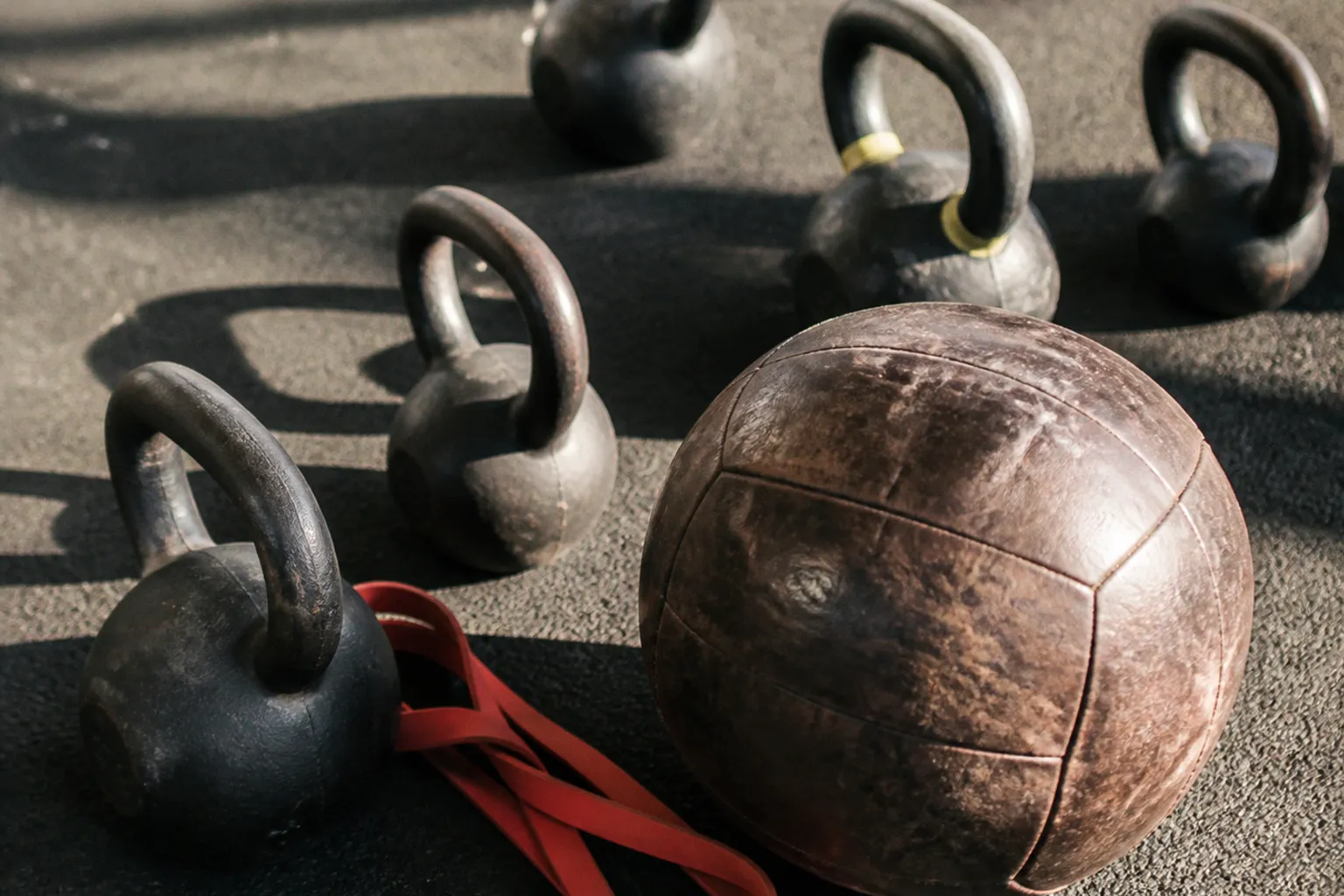
A useful core strengthening methods comparison starts with a more practical question: do you need better spinal endurance, more visible abdominal muscle, stronger movement under load, or simply a steadier base for everyday training?
Those goals overlap, but they are not identical. A plank, a Pilates sequence, a bicycle maneuver, and a loaded carry all challenge the trunk differently. Some emphasize resisting movement. Others create movement through the spine and hips. One option may be appropriate when your back needs a lower-load stability approach, while another is better when you are ready to build strength and power.
We can make the choice much simpler by separating core stability from core strength, then matching the method to the job.
The first distinction: stability is not the same as strength
Your core includes more than the rectus abdominis—the muscle commonly associated with a visible six-pack. The trunk also relies on the internal and external obliques, transverse abdominis, erector spinae, and deeper stabilizing muscles around the spine and pelvis.
These muscles do not all contribute in the same way. Some help create movement. Others help control it. During a squat, a run, a reach, or a change of direction, the core often works less like a prime mover and more like a transmission system: it helps transfer force between the upper and lower body while keeping unnecessary motion under control.
That is why a strong core is not simply a core that can perform endless crunches.
Stability-focused training usually asks you to resist extension, rotation, or side-bending. Planks, side planks, bird-dogs, and modified curl-ups fit here. They are often useful for building endurance and control with relatively low spinal movement.
Strength-focused training creates more direct resistance for the trunk muscles. Loaded carries, cable-based anti-rotation exercises, controlled leg raises, and dynamic abdominal movements can progressively challenge the muscles through greater force demands.
Neither category wins automatically. If your posture collapses during a deadlift, adding more intense abdominal flexion may not solve the problem. If you can hold a plank comfortably but struggle to control a loaded carry or hanging knee raise, your next step may need to involve more dynamic or external resistance.
Core stability vs. core strength exercises
| Training emphasis | What the exercise asks you to do | Examples | Most useful when |
|---|---|---|---|
| Spinal endurance | Hold a controlled position without losing alignment | Side plank, bird-dog, modified curl-up | You need a reliable foundation and better trunk control |
| Anti-extension stability | Prevent the lower back from arching excessively | Plank, dead bug variations | You lose ribcage and pelvis control during movement |
| Anti-rotation stability | Resist twisting while the limbs move or a load pulls you sideways | Bird-dog, suitcase carry, cable press-out | You need more control during walking, lifting, or sport |
| Dynamic abdominal strength | Produce and control trunk movement against resistance | Bicycle maneuver, controlled leg raise | You want a more demanding abdominal strength stimulus |
| Deep stabilizer training | Coordinate breathing, pelvic control, and smaller stabilizing muscles | Pilates-based exercises, focused isometrics | You are rebuilding control or prefer low-impact precision |
| Integrated strength | Keep the trunk stable while the whole body produces force | Loaded carries, squats, split squats | You want core strength to transfer into full-body training |
This distinction also protects us from a common mistake: choosing an exercise because it looks difficult rather than because it matches the outcome we want.
What EMG studies can—and cannot—tell us
Electromyography, or EMG, measures electrical activity in a muscle. In practical terms, it can show which exercises create a high level of muscle activation during the movement. That makes it useful when comparing exercises, but it is not a complete scoreboard for long-term results.
A high EMG reading does not automatically prove that an exercise will build more muscle, improve posture more effectively, or reduce back discomfort. The research itself leaves an important question open: we do not yet know whether higher surface EMG activation consistently translates into greater long-term hypertrophy across every core training method.
Still, EMG findings offer helpful direction.
Studies comparing isolated core stability exercises with integrated movements such as lunges have found greater peak and mean activation in muscles including the rectus abdominis, obliques, and erector spinae during the isolated exercises. That makes sense. When the exercise is designed specifically around trunk control, the core does not have to share as much of the attention with the legs and upper body.
An ACE-sponsored biomechanics study also found that the bicycle maneuver and captain’s chair leg raise produced higher abdominal activation than a standard floor crunch. The reported figures were substantial: the bicycle maneuver reached 248% of the standard crunch’s rectus abdominis activity, while the captain’s chair leg raise reached 310% for the external obliques.
Those numbers are useful for understanding exercise demand. They are not a promise that everyone should immediately perform the most intense variation available.
The practical translation is straightforward:
1. Use activation research to identify exercises that genuinely challenge the target muscles.
2. Adjust the exercise to your current control, mobility, and tolerance.
3. Progress through better technique, longer controlled sets, more resistance, or a more demanding variation.
4. Judge success by how well the method supports your goal—not by the EMG number alone.
A beginner who cannot maintain pelvic control during a leg raise may receive more benefit from a modified curl-up or dead bug than from forcing a more advanced movement. Training quality is part of the stimulus.
High activation is a useful clue, not a final verdict. The right exercise is the one you can perform well enough to progress.
Stability first: why the McGill Big Three remain useful
The McGill Big Three—modified curl-up, side plank, and bird-dog—were designed to improve endurance in the core stabilizers while minimizing spinal compressive load. Their value is not that they create the most dramatic sensation. Their value is that they teach the trunk to stay organized under manageable demand.
This makes the routine a strong starting point when your main priorities are:
- better spinal endurance;
- improved control of the pelvis and ribcage;
- a low-complexity introduction to core training;
- support for a gradual return to exercise;
- stronger anti-rotation and anti-extension habits.
The modified curl-up is different from a traditional full sit-up. Instead of repeatedly flexing the entire spine, you maintain a more controlled position and limit the movement. The side plank trains the lateral core and asks the body to resist side-bending. The bird-dog combines trunk stability with controlled movement of the limbs.
A commonly used approach with the McGill Big Three is to emphasize short, approximately 10-second endurance holds rather than allowing form to deteriorate during a long, exhausting effort. That short duration is not a sign that the exercise is too easy. The intention is to accumulate quality work while keeping the spine and pelvis controlled.
For general fitness, core training two to three times per week is a reasonable frequency. You do not need to train the trunk hard every day to make progress. The muscles also participate in many lower-body and full-body movements, so recovery matters—especially when your sessions include squats, deadlifts, carries, or high-volume athletic work.
How to use a stability-first progression
Begin with a variation that allows you to keep the following under control:
- ribs that are not flaring aggressively upward;
- a pelvis that does not tip forward or rotate;
- breathing that remains steady instead of becoming forced;
- a spine that is not moving simply because fatigue has arrived.
Then progress one variable at a time. You might increase the number of controlled repetitions, add another quality set, extend the total time under tension, or move to a more demanding variation. The goal is not to turn every exercise into a test of willpower. The goal is to make your trunk more dependable.
This approach is particularly useful for people who feel that their “abs are weak” but actually struggle with coordination. Strength often becomes easier to build once the body knows how to distribute tension.
Dynamic power: when bicycles and captain’s chair leg raises make sense
Stability exercises teach us to resist unwanted motion. Dynamic exercises ask the core to create and control movement. That difference matters when your goal includes stronger abdominal contraction, improved hip-to-trunk coordination, or greater tolerance for demanding training.
The bicycle maneuver is a good example. It combines trunk flexion and rotation with alternating leg movement, so it requires more coordination than a standard crunch. In the ACE comparison, it produced higher rectus abdominis activation than the standard crunch and also challenged the obliques.
The captain’s chair leg raise creates a different demand. The upper body is supported while the legs move, increasing the need for abdominal and pelvic control. The same study reported particularly high external oblique activity compared with the standard crunch.
But these movements are not automatically better for every beginner. They can become messy quickly. The hips may start doing most of the work, the lower back may arch, or the neck may tense as you try to complete more repetitions.
For that reason, dynamic core training works best when we treat it as a progression rather than a punishment.
Choose the dynamic option that matches your control
The bicycle maneuver may suit you if:
- you can maintain a controlled trunk position while alternating the legs;
- you want a bodyweight movement with both flexion and rotation;
- you can move slowly enough to avoid pulling on the neck;
- you are ready to coordinate multiple actions at once.
The captain’s chair leg raise may suit you if:
- you can control the pelvis rather than swinging the legs;
- you have access to the equipment;
- you want a more demanding lower-abdominal and oblique challenge;
- your shoulders and grip tolerate the supported position.
Neither exercise needs to be performed at high speed. Slower repetitions often reveal the real challenge: keeping the ribs, pelvis, and legs coordinated while the abdominal muscles remain engaged.
Traditional full sit-ups deserve a more careful place in the conversation. They create greater lumbar spinal flexion and involve the hip flexors more heavily than static isometric holds such as planks. That does not make every sit-up harmful, but it does mean the movement is not the universal answer for core strength or back comfort.
If full sit-ups irritate your lower back or you cannot control the descent, choose a variation that gives you more support and less spinal motion. There is no prize for selecting the hardest exercise before you own the basics.
Pilates versus strength training for the core
Pilates-based core stabilization training occupies a useful middle ground. It is not simply stretching, and it is not a substitute for every form of progressive resistance training. Its strength lies in precise control, breathing, timing, and coordination between the deeper stabilizers and larger muscles.
Research on Pilates-based stabilization has reported increases in muscle thickness, contraction timing, and contraction ratios in deep stabilizing muscles such as the transverse abdominis and internal obliques. These findings help explain why Pilates can feel deceptively demanding. The work is often less about moving a heavy load and more about maintaining a precise relationship between the spine, pelvis, breath, and limbs.
Pilates may be especially appealing if you:
- prefer low-impact training;
- are learning to coordinate breathing with trunk control;
- want to improve movement quality and body awareness;
- need a gradual bridge into more demanding strength work;
- enjoy structured sequences rather than isolated repetitions.
Strength training has a different advantage: it makes progressive overload easier to measure. You can increase the load on a carry, use a stronger resistance band, add resistance to a cable movement, or progress from a supported to an unsupported variation.
For many people, the most sustainable answer is not Pilates or strength training, but Pilates-informed control inside a broader strength program. A well-organized week might include focused stability work, lower-body strength training, and a small amount of dynamic abdominal work. Each part supports a different quality.
A practical comparison
| Method | Main strength | Limitation | Best role in a balanced plan |
|---|---|---|---|
| Pilates-based core work | Precision, breathing, deep stabilizer coordination | Progressive loading can be less obvious | Build control and movement awareness |
| Planks and side planks | Endurance and resistance to unwanted movement | Isometric strength alone does not cover every goal | Establish a stable foundation |
| McGill Big Three | Spinal endurance with controlled loading | Not a complete hypertrophy program | Start or rebuild core capacity |
| Bicycle maneuver | High dynamic abdominal and oblique demand | Technique can deteriorate with speed and fatigue | Add coordinated trunk movement |
| Captain’s chair leg raise | Strong abdominal and oblique challenge | Requires equipment and pelvic control | Progress dynamic core strength |
| Loaded carries | Full-body integration and bracing | The core stimulus depends on posture and load management | Transfer trunk strength into real movement |
The right combination depends on what the rest of your training already includes. If your workouts contain heavy lower-body exercises, you may need less additional volume and more precision. If you mostly perform seated or low-load workouts, a gradual strength progression may be more useful than adding another long mobility sequence.
Stable surfaces versus unstable surfaces
Unstable-surface training is often presented as a shortcut to “more core activation.” The underlying idea is reasonable: when the support changes beneath you, your body may need to recruit more muscles to maintain balance.
Research comparing stable and unstable surfaces has found increased EMG activity across key core muscles—including the rectus abdominis, external and internal obliques, erector spinae, and lumbar multifidus—when exercises are performed on unstable surfaces.
That is a meaningful finding, but it needs context.
More activation does not make an unstable surface necessary. It also does not mean the unstable version is automatically superior for every training objective. A wobble board, exercise ball, or unstable pad can reduce the amount of external force you are able to produce. If your goal is maximal strength, power, or progressive loading, a stable surface may allow you to use better technique and more resistance.
Use instability when the instability itself serves the goal—for example, when you are working on balance, body awareness, or control under changing support. Do not add it simply because the exercise looks more advanced.
Stable surfaces are usually the better starting point when:
- you are learning the movement;
- you need to build strength with external resistance;
- your balance is limiting the target muscle stimulus;
- you are returning from a period of inactivity;
- you want to compare progress from week to week.
Unstable surfaces may be useful when:
- the basic version is already controlled;
- balance and proprioception are part of your goal;
- you can maintain alignment without compensating;
- the exercise is being used as a targeted progression rather than a novelty.
A stable plank performed with excellent ribcage and pelvic control is more productive than an unstable plank where the body is simply trying not to fall.
Selecting the best core workout for posture and daily movement
Posture is not a single position you hold perfectly all day. It is your ability to organize the body across different positions and tasks. That means the best core workout for posture usually includes endurance, breathing, movement control, and strength—not one magic exercise.
If you tend to overarch your lower back, anti-extension exercises may be a useful starting point. If you rotate or shift during single-leg movements, anti-rotation work and bird-dog variations may help you build awareness. If you lose alignment when carrying groceries, walking uphill, or lifting from the floor, integrated exercises such as carries and controlled lower-body strength work may transfer more directly.
A simple selection process can keep the decision practical:
1. Name the main limitation. Is it endurance, control, pain-free range of motion, or force production?
2. Choose the least complicated exercise that addresses it. Complexity is not the same as effectiveness.
3. Use a stable surface first. Earn instability through control rather than adding it immediately.
4. Stop the set when alignment changes. The last technically sound repetition is more valuable than several rushed ones.
5. Progress gradually. Increase challenge only when breathing and positioning remain reliable.
6. Pair focused core work with full-body strength. Your trunk needs to function while the hips, legs, shoulders, and arms are moving.
This is also where bodyweight strength training and resistance band exercises can fit well. A banded press-out, side plank progression, or controlled dead bug can provide a meaningful challenge without requiring a full gym setup. The band should create a demand you can resist—not pull you so far out of position that the exercise becomes a struggle for survival.
Building a balanced weekly approach
For general fitness, two or three weekly core sessions can be enough when they are consistent and appropriately challenging. A session does not need to be long. What matters is that it covers the qualities you are trying to develop and leaves enough recovery for the rest of your training.
A balanced rotation might look like this:
- Session one: stability and endurance. Use a modified curl-up, side plank, and bird-dog with controlled, short holds.
- Session two: dynamic abdominal strength. Include a carefully scaled bicycle maneuver or supported leg-raise variation.
- Session three: integration. Use a carry, a lower-body movement with deliberate bracing, and a Pilates-based control exercise.
You do not need to use every method in the same workout. In fact, trying to combine every core exercise you know often creates fatigue without a clear training effect.
A better plan gives each exercise a job. The McGill Big Three can build a stable base. Pilates can refine timing and control. Dynamic exercises can challenge the abdominal muscles through movement. Loaded carries can teach the trunk to stay strong while the rest of the body works.
That is the central idea behind a useful core strengthening methods comparison: the methods are not competing for one permanent winner. They solve different problems.
What to do if your back or neck starts taking over
Core training should feel demanding, but it should not require you to ignore sharp pain, escalating discomfort, or repeated loss of control. When the lower back takes over, reduce the range of motion, slow the exercise, bend the knees, or return to a more supported variation.
If the neck becomes tense during bicycle maneuvers or crunch-based movements, reduce the range and avoid pulling the head forward. If leg raises cause the pelvis to tip and the lower back to arch, switch to a smaller movement or a bent-knee variation.
The correct response is not always to stop training entirely. Often, we need to change the dose:
- fewer repetitions;
- shorter holds;
- more rest between sets;
- a smaller range of motion;
- a stable surface instead of an unstable one;
- more support for the head, shoulders, or pelvis.
If you are managing diagnosed back pain, recovering from an injury, or experiencing symptoms that radiate into the limbs, exercise selection should be individualized with a qualified healthcare professional. General research can guide a training framework, but it cannot replace an assessment of your specific presentation.
Your core does not need more punishment. It needs a clear task, a manageable dose, and enough consistency to adapt.
The most useful method is the one you can progress
So, which core strengthening method is right for you?
Choose the McGill Big Three if you need a low-complexity foundation for spinal endurance and control. Choose Pilates-based work if coordination, breathing, and deep stabilizer timing are your main priorities. Choose dynamic movements such as the bicycle maneuver or captain’s chair leg raise when you can control the pelvis and want a stronger abdominal challenge. Choose loaded and integrated exercises when you want core strength to transfer into squats, carries, sport, and daily movement.
Use unstable surfaces selectively. They can increase muscle activation, but they are not a requirement for a stronger core, and they are not automatically the best path for progressive strength.
For your very next meal, the smallest actionable win is simply to plan one balanced choice before hunger makes the decision for you. For your very next workout, use the same principle: pick one core exercise that matches your current goal, perform it with steady breathing and clean alignment, and finish while you still own the movement. That is how strength becomes sustainable—and how a scattered ab routine turns into training with direction.