5 Essential Bodyweight Exercises for Seniors to Build Functional Strength
As Tom's Guide reports, NCSF and AFAA certified trainer Jacob Siwicki, co-founder of Siwicki Fitness and a former top 1% globally ranked Equinox group fitness instructor, has published a…
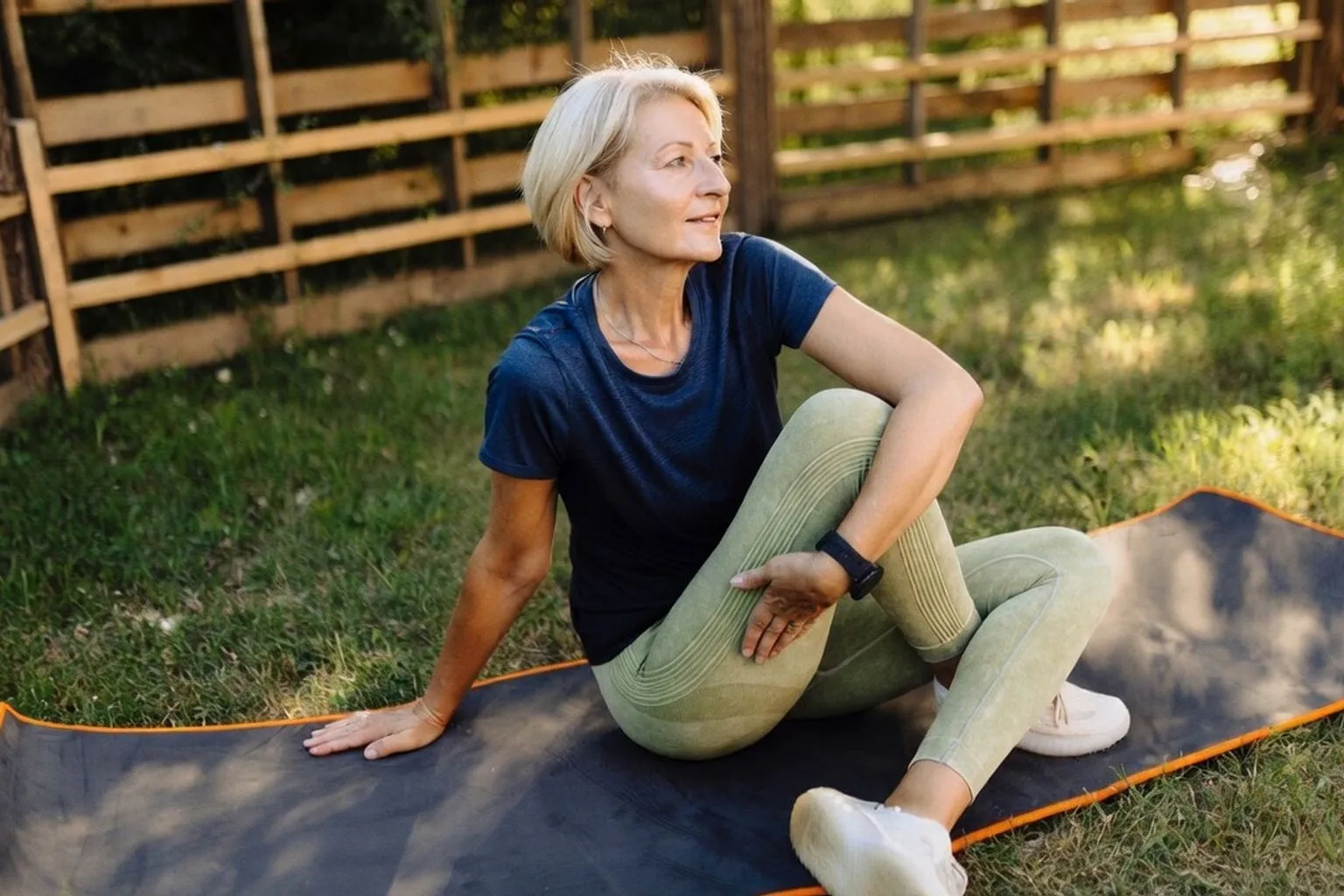
Strength training addresses three compounding risks of aging: fall probability, bone density loss, and progressive muscle decline. For beginners returning from extended breaks—or older adults new to structured exercise—external load is unnecessary. As Tom's Guide reports, NCSF and AFAA certified trainer Jacob Siwicki, co-founder of Siwicki Fitness and a former top 1% globally ranked Equinox group fitness instructor, has published a five-movement bodyweight protocol built for this exact population.
The Siwicki Protocol: Five Bodyweight Movements
The circuit targets sagittal-plane stability, anti-gravity control, and unilateral balance.
- Plank. Co-contraction of core, back, shoulders, and quadriceps. Beginners drop to the knees or elevate the hands to reduce lumbar shear. Siwicki describes the plank as giving a "strong core and a stable back" while recruiting shoulders and quads simultaneously.
- Pushups. Adds concentric chest, shoulder, and triceps recruitment on top of the plank. Wall or countertop variations reduce load for deconditioned tissue.
- Wall sit. Per Siwicki, "bodyweight squats are good when someone is first starting, but after the first week or two, they will probably need to add some weight." His bodyweight substitute: back flat against the wall, knees at 90 degrees, isometric hold.
- Crunches. Isolates the rectus abdominis without the hip-flexor dominance of full situps. "You lie on your back, squeeze your core, lift slightly, and then relax. That is it," he explains.
- Single-leg kickback (T-position). Hip hinge with one leg planted creates isometric demand on the glute medius and contralateral erector spinae. Wall or chair contact for safety. "They are trying to create an uppercase T with their body. The bottom of the T is the leg that stays on the ground."
A Pilates Counterpoint: Armani's Core Mechanics
In a parallel Woman & Home piece, Pilates instructor Claudia Armani—with 15 years of clinical experience—outlines three movements targeting a different demand profile: proprioception and segmental spinal articulation rather than gross strength.
- Bridge. Supine hip extension. Decompresses lumbar vertebrae, lengthens hip flexors, recruits the glute max. Per Armani: "builds spinal and body awareness, spinal articulation, and core engagement."
- Abdominal curl. Enforces thoracic flexion and lower-abdominal scoop. A Pilates ball maintains the C-curve. "It helps build abdominal strength and thoracic spinal flexibility."
- Box swimming (Superman). Prone extension activating erector spinae, rhomboids, and posterior deltoids. "Strengthens your back muscles, improves coordination and stimulates core awareness and proprioception."
The mechanical distinction is not cosmetic. The Siwicki circuit develops strength and isometric endurance. The Armani protocol develops controlled eccentric lengthening and spinal mobility. Both belong in a beginner's rotation; neither substitutes for the other.
Implementation Protocol
Short warm-up. Thirty seconds per movement. Three full circuits. When the final ten seconds of any isometric become subjectively easy, increase load—or substitute a more demanding variation. Wall or chair contact during balance work is a safety mechanism, not a sign of weakness. Anyone recovering from an acute injury should consult a qualified clinician before initiating load.
A separate Women's Health piece notes that Jane Seymour, at 75, maintains her training capacity through Pilates and Gyrotonic work, though the article does not detail her specific programming.