Build Resilient Legs for Running and Hiking With This Six-Move Dumbbell Routine
According to a Fit&Well feature, personal trainer and serial ultramarathon runner Sam Tomlinson — who recently completed Ultra-Trail Snowdonia by UTMB, covering 100km and 6,500m of elevation in 26…
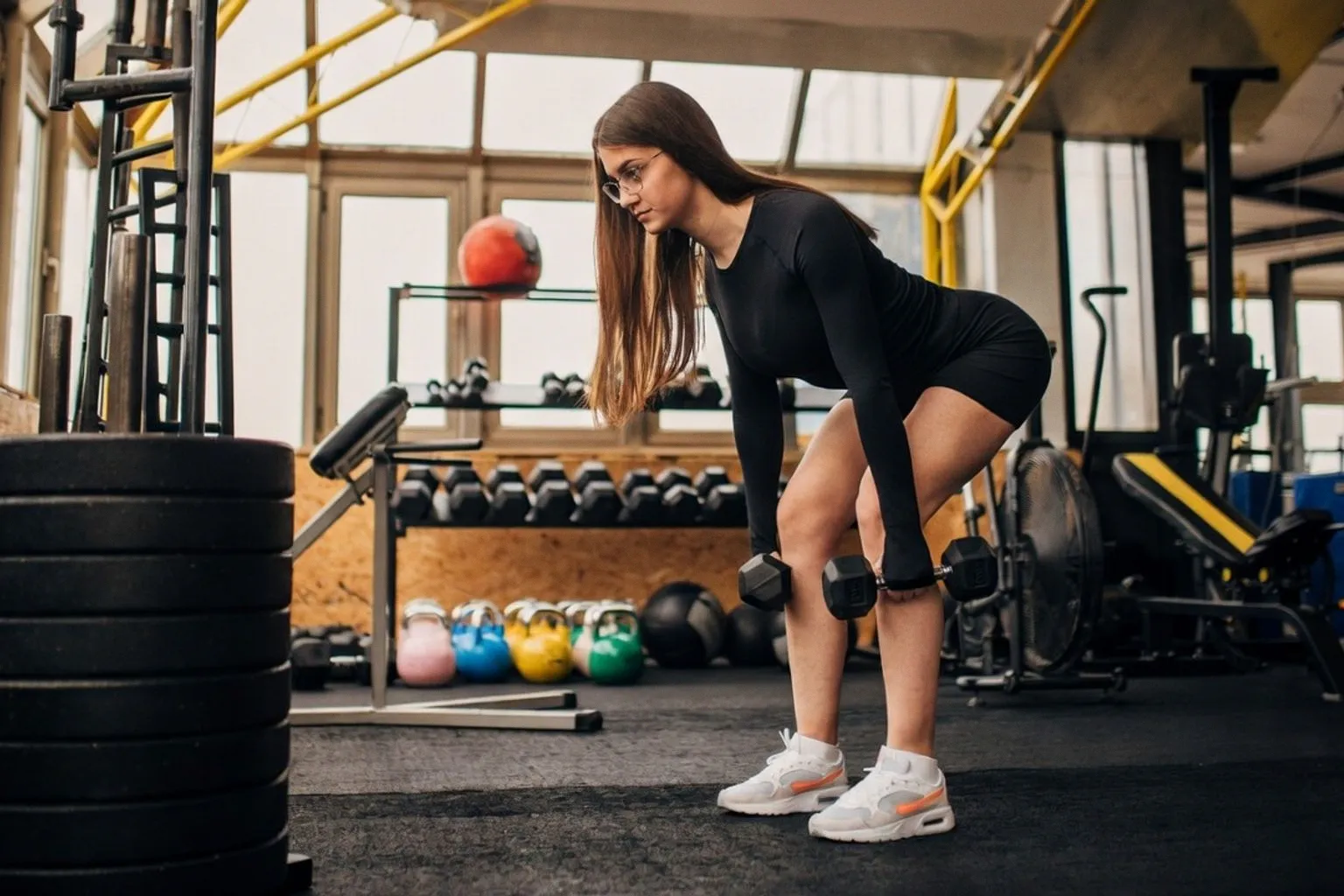
Run volume alone does not produce the structural tolerance required for sustained mileage or technical terrain. According to a Fit&Well feature, personal trainer and serial ultramarathon runner Sam Tomlinson — who recently completed Ultra-Trail Snowdonia by UTMB, covering 100km and 6,500m of elevation in 26 hours — treats running as primarily an endurance stimulus that fails to load the propulsive and stabilising tissues of the lower limb adequately. His answer is a six-move lower-body protocol requiring only dumbbells and a mini band.
Movement Architecture
The session stacks bilateral and unilateral patterns across three paired blocks. Each block runs three times, exercises back to back, with one to two minutes of rest between blocks. Total session time lands between 25 and 35 minutes.
- Block 1 — Squat and Romanian deadlift. Bilateral patterns recruit the large hip and thigh extensors through a full range of motion in the sagittal plane. Regression: squat to a bench or box behind you to enforce depth control. Progression: increase dumbbell load or add a two-second pause at the bottom of each rep to elevate time under tension.
- Block 2 — Reverse lunge and single-leg bridge. Unilateral work trains force absorption and production through one limb at a time — the exact demand profile of running and hiking gait. Regression: hold a stable surface for balance and reduce rear-knee travel. Progression: add dumbbells by the sides to increase axial load.
- Block 3 — Banded lateral walk and calf raise. Lateral walks load the hip abductors and external rotators that control frontal-plane knee tracking and pelvic position as fatigue accumulates. Calf raises target the gastrocnemius–soleus complex and Achilles tendon, which absorb and return a large share of force at every foot strike. Regression for the calf raise: bilateral stance first, then unilateral. Progression: hold a dumbbell or perform from a step edge to increase heel drop and working range.
Protocol for Implementation
Schedule the session on a running rest day or directly after a short, easy run. The lower limb recovers rather than competes with another high-impact load. Begin with one session per week. Progress to two sessions only as recovery capacity demonstrably improves, and increase load gradually to maintain overload. Tomlinson notes that consistency with this leg strength work played a major part in how well his body tolerated the demands of his strongest ultra to date — a usable data point for anyone scaling mileage, elevation, or terrain difficulty.