The Essential Five-Move Core Circuit to Optimize Your Running Form
According to Fit&Well, the five-move protocol replaces traditional ab-focused work with glute, hip, lower-back, and deep-trunk loading.
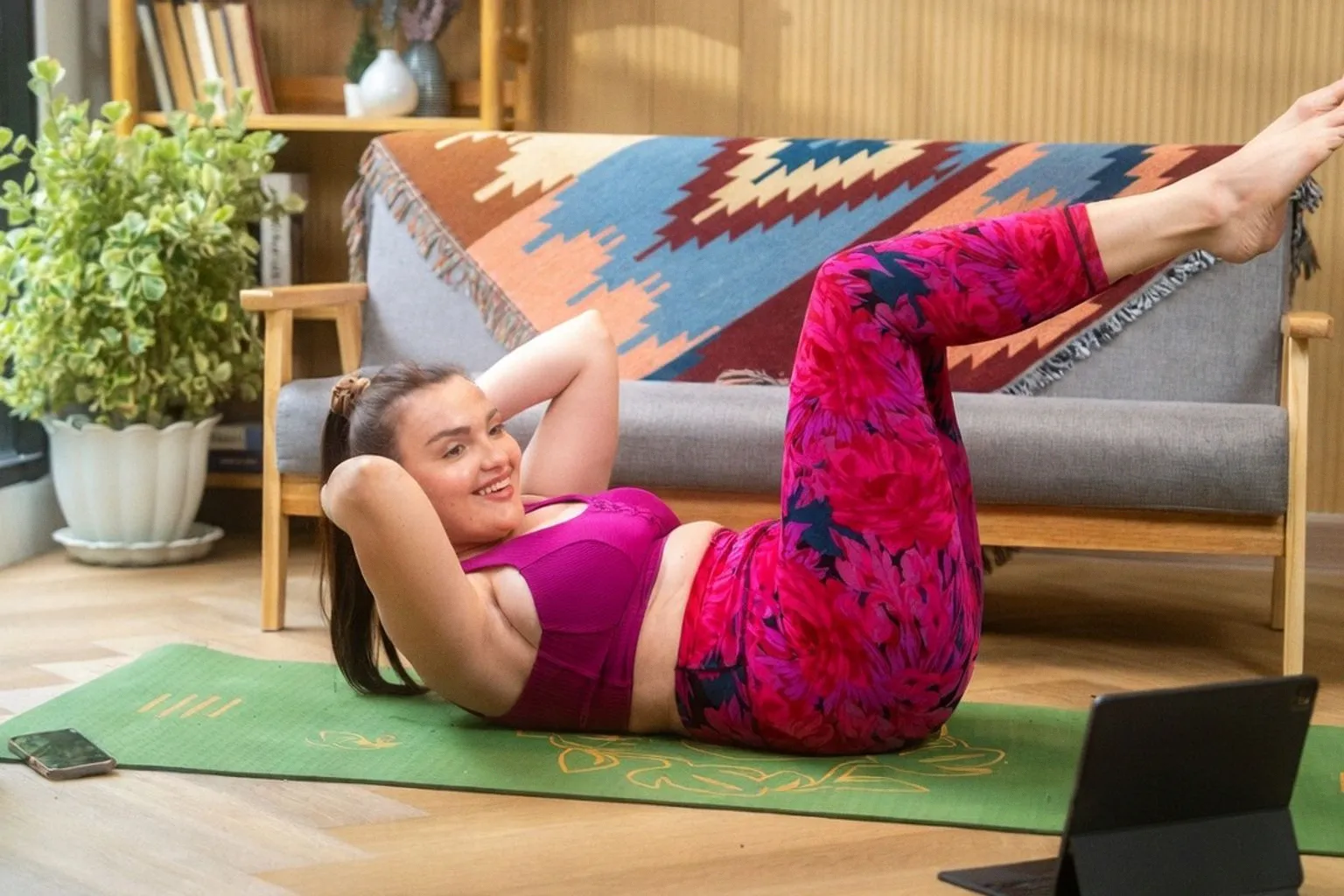
A core circuit promoted by UK-based trainer Sam Tomlinson targets the trunk and hip stabilizers responsible for pelvic control during single-leg landings. According to Fit&Well, the five-move protocol replaces traditional ab-focused work with glute, hip, lower-back, and deep-trunk loading. For runners, the payoff is sagittal- and frontal-plane stability that keeps each stride mechanically clean.
The Stabilization Problem in Repetitive Gait
Running reduces to a sequence of single-leg impacts. Each ground contact delivers a ground reaction force that, without adequate lateral trunk and hip control, drops the contralateral pelvis and rotates the lumbar spine. Tomlinson frames core training for runners as anti-drop and anti-rotation work, not flexion-extension crunching — the target tissues are glute medius and maximus, the lateral trunk complex (quadratus lumborum, obliques), the deep trunk stabilizers, and the lumbar extensors.
The cost of weak lateral and posterior chain control: visible hip drop, energy leaks through the kinetic chain, and compensatory trunk lean. Endurance athletes frequently present with strong rectus abdominis but underdeveloped stabilization — a profile that holds up at low mileage and fails under fatigue. Exercise selection here prioritizes anti-extension and frontal-plane demand over spinal flexion volume.
The Five-Move Circuit
The protocol, as reported by Fit&Well, runs as a circuit after an easy run, once or twice weekly. Three rounds. Approximately 10 seconds between moves. One minute between rounds. Each move ships with a regression and a progression matched to current capacity.
- Anti-extension hollow hold — Regression: knees drawn toward the chest to off-load the lumbar spine. Progression: arms extended overhead, legs lowered closer to the floor.
- Side plank with hip abduction — Regression: bottom knee grounded. Progression: top leg lifted and held away from the bottom leg for added frontal-plane demand.
- Mountain-climber variation — Regression: knees lowered to the floor, hips held low. Progression: tempo slowed, brief pause just above the floor at each rep.
- Plank shoulder taps — Regression: knees grounded, scapulae engaged via palm pressure. Progression: feet brought closer together to reduce the base of support.
- Hip extension / bridge pattern — Regression: both feet on the floor. Progression: isometric hold at lockout, or a dumbbell loaded across the hips.
Implementation Protocol
- Frequency: 1–2 sessions weekly, placed after an easy run.
- Volume: 3 full rounds, 10-second inter-move rest, 1-minute inter-round rest.
- Progression rule: regress to maintain neutral spine and full breath control before adding load or range. Advance only when the regression no longer challenges anti-extension or frontal-plane control.
- Stop conditions: lumbar flexion compensation, breath holding, or visible pelvic rotation. These indicate the local stabilization system has failed — regress immediately.
Tomlinson holds a Level 3 personal training qualification through HFE (2014) and serves as an ambassador for realbuzz, a race-organization platform connecting runners with events since 2012. His competitive background includes ultramarathon finishes, most recently the 100 km / 6,500 m elevation Ultra-Trail Snowdonia by UTMB in 26 hours.