Compression boots: avoiding overpriced recovery gimmicks
Compression boots apply sequential pneumatic pressure to the lower limbs. They can reduce perceived soreness and temporary swelling. They do not reliably restore strength, power, or athletic output by the following day.
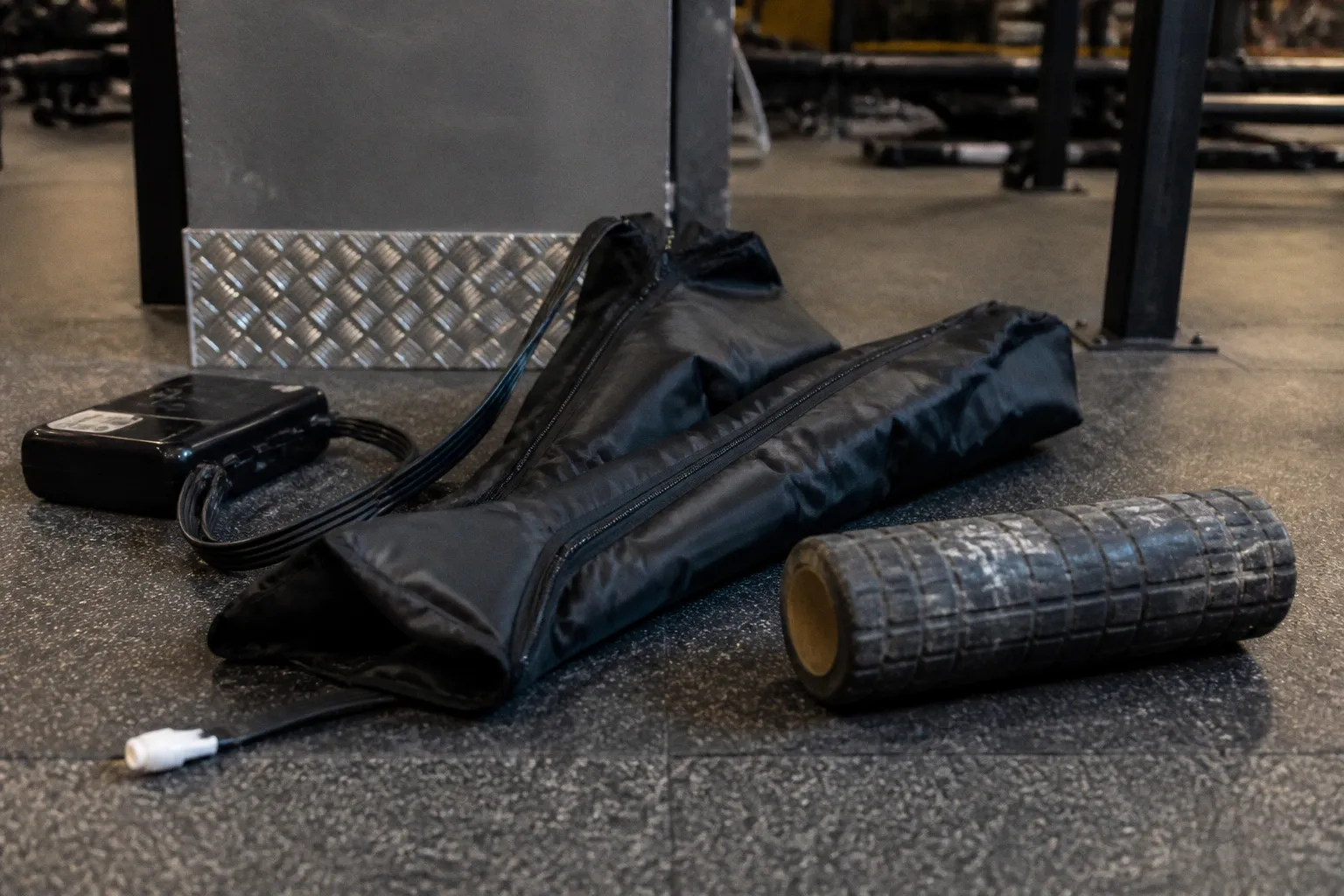
That distinction determines compression boots’ value for money. The devices cost roughly $300 to more than $1,200. The physiological mechanism is real. The stronger claims are not. If the purchase is based on faster muscle repair, toxin removal, or a measurable boost in next-day performance, the price is difficult to justify.
The physiology of pneumatic compression
Pneumatic compression boots contain air chambers that inflate and deflate in sequence. The pressure usually begins at the foot and progresses toward the thigh. This imitates the mechanical action of the muscle pump.
During movement, skeletal muscle contraction compresses veins. Valves direct blood toward the heart. When training stops, that pump effect decreases. Fluid can accumulate in the lower limbs, particularly after high-volume leg work, prolonged standing, travel, or repeated training sessions.
Compression boots apply external pressure to the limb. The intended effects are straightforward:
- compress superficial tissue and veins;
- encourage venous blood return;
- redistribute some interstitial fluid;
- reduce temporary lower-leg swelling;
- alter the sensory input associated with soreness and pressure.
The system does not rebuild damaged contractile tissue. It does not increase mitochondrial density during a 30-minute session. It does not extract a toxic substance from the quadriceps.
The common pressure ranges are useful for understanding what the machine is doing:
| Pressure range | Practical sensation | Typical use |
|---|---|---|
| 20–50 mmHg | Low, gentle compression | Mild massage sensation, introductory sessions, lower tolerance |
| 50–80 mmHg | Firm sequential compression | Common mid-range training and recovery use |
| 80–100+ mmHg | High, intense compression | More aggressive pressure; not automatically more effective |
Pressure is not a quality score. A higher setting creates a stronger mechanical stimulus. It does not prove a stronger recovery response. The relevant variables include the pressure profile, chamber timing, fit, session duration, user tolerance, and the physiological problem being addressed.
For most consumer protocols, sessions last approximately 20–30 minutes. Longer sessions are not automatically superior. The device is not a substitute for circulation created by walking, cycling, or repeated muscular contraction.
Do compression boots speed up recovery?
The answer depends on the definition of recovery.
If recovery means reduced perceived soreness, the answer is often yes. If recovery means greater force production, higher jump height, restored sprint speed, or improved maximal strength the next day, the effect is much smaller and may be absent.
This is where product marketing usually collapses several separate outcomes into one word. Recovery is not a single physiological variable. It includes:
- subjective soreness;
- limb swelling;
- range of motion;
- strength;
- power;
- coordination;
- connective-tissue tolerance;
- readiness to repeat a specific training task.
Compression boots can influence the first two. They have much less authority over the others.
A person may report that the legs feel less heavy after a session. That can be useful. Reduced discomfort may improve willingness to walk, complete mobility work, or perform the next planned session. But the change in sensation should not be interpreted as evidence that the muscle has regained full function.
Compression boots can modify the recovery experience without materially changing the recovery capacity of the muscle.
The distinction matters in training programming. If a squat session produces soreness but preserves force output, reducing soreness has limited performance value. If lower-limb swelling interferes with movement or travel, fluid management has greater practical value. The device should be assigned to the problem it can plausibly address.
Soreness is not a performance test
Delayed onset muscle soreness, or DOMS, is a sensory response. It is not a direct measurement of muscle damage, glycogen status, or force capacity.
A lower soreness score can coexist with unchanged weakness. The reverse is also possible. An athlete can feel sore and still produce adequate performance after a warm-up. Using sensation as the only recovery metric creates a programming error.
For that reason, compression boots should not determine whether a high-load session is safe or productive. Use performance data instead:
- bar velocity at a standardized load;
- repetition quality;
- range of motion;
- unilateral strength symmetry;
- jump height or contact time;
- heart-rate response to a familiar workload;
- technical stability under submaximal load.
The boots may reduce discomfort around these tests. They do not replace the tests.
Separating recovery claims from recovery reality
The phrase “flush out toxins” should be removed from any serious discussion of pneumatic compression.
Lactate is not a poison that remains trapped in muscle until a recovery device removes it. It is a metabolic fuel and signaling molecule. Blood lactate concentration changes with exercise intensity and recovery kinetics. Walking, cycling, and normal circulation already contribute to its clearance. A pneumatic boot does not perform a special detoxification process.
The same applies to the claim that compression boots rapidly remove all metabolic waste. The lower limb is not a sealed container. Blood flow, lymphatic transport, respiration, hepatic metabolism, renal function, and ordinary movement all participate in recovery physiology.
A more accurate interpretation is narrower:
1. Sequential pressure changes the mechanical environment of the lower limb.
2. This can support venous return and alter fluid distribution.
3. The user may perceive less soreness or heaviness.
4. Objective next-day performance may change very little.
That is a legitimate use case. It is also a much less dramatic sales pitch.
Pneumatic compression boots side effects
The primary consumer issue is not that the boots are inherently dangerous. It is that users may apply excessive pressure, use an incorrect fit, or mistake discomfort for therapeutic intensity.
Potential problems include:
- numbness or tingling from excessive pressure;
- skin irritation from heat, sweat, or friction;
- discomfort behind the knee or at the groin;
- temporary color change in the foot;
- aggravation of an existing circulation problem;
- delayed recognition of pain, swelling, or injury because the device masks sensation.
Stop the session if the foot becomes cold, pale, blue, numb, or painful. A firm squeeze is expected. Neurological symptoms are not a performance marker.
Clinical contraindications require professional screening. A consumer device should not be used as an unsupervised solution for suspected deep-vein thrombosis, acute vascular disease, unexplained unilateral swelling, acute infection, or a recent vascular procedure. Pregnancy, significant cardiovascular disease, and known circulation disorders also warrant medical guidance before use.
This is not a reason to treat all compression technology as hazardous. It is a reason to stop pretending that the equipment is equivalent to a massage gun or a foam roller. Pneumatic pressure acts on tissue and circulation. The user needs a basic screening threshold.
The 2024 evidence: soreness changes more than performance
A 2024 meta-analysis by Maia and colleagues in Biology of Sport evaluated 17 studies of intermittent pneumatic compression. Most protocols used approximately 20–30 minutes of treatment at around 80 mmHg.
The pattern was consistent enough to be useful:
- perceived soreness showed a moderate reduction;
- objective muscle-function changes were trivial to small;
- the data did not establish a major improvement in next-day athletic performance.
The result is not a failure of the device. It is a correction of the claim.
A small effect may be valuable when the intervention is inexpensive, convenient, and low-risk. The same effect becomes less attractive when the equipment costs four figures and requires storage, charging, setup, and regular use.
The research also does not establish that expensive models produce stronger physiological outcomes than mid-range systems. Premium products may include more chambers, app controls, battery operation, preset programs, higher build quality, or better fit. Those are usability features. They are not proof of superior tissue recovery.
What the evidence does not show
Current evidence should not be converted into conclusions it cannot support. It does not show that compression boots:
- substantially increase next-day maximum strength;
- restore sprint or jump performance in a reliable way;
- permanently remove soreness;
- eliminate muscle damage;
- improve long-term adaptation when used chronically;
- outperform all forms of active recovery;
- deliver additional physiological benefits simply because pressure is higher;
- remove toxins or permanently eliminate lactate.
The long-term question remains open. There is limited evidence that repeated use over multiple months creates performance gains beyond standard recovery methods. A single session can change perception. That does not establish a training advantage.
Analyzing the price gap
Consumer recovery boots generally occupy a range from approximately $300 to more than $1,200. The price difference is large. The measurable physiological difference is not established.
A useful comparison separates hardware from outcome.
| Feature | Budget or mid-range system | Premium system |
|---|---|---|
| Basic sequential compression | Usually available | Available |
| Pressure adjustment | Often available across low to high ranges | Often broader or more granular |
| Chamber count | Fewer chambers in some models | More chambers in some models |
| Control method | Wired controller or simple presets | App control, custom programs, wireless operation |
| Portability | May require a power outlet or larger controller | Often lighter or battery-assisted |
| Fit and materials | Functional variation between brands | Potentially better construction and sizing |
| Proven superior recovery effect | Not established | Not established |
| Typical price position | Around $300–$500 | Around $800–$1,200+ |
The table does not mean every mid-range product is equivalent. Fit, failure rate, warranty, pressure consistency, and replacement parts matter. It means the buyer should not pay for a physiological promise that the evidence does not support.
What justifies spending more?
A premium price can be rational when the purchase solves a real operational problem:
- the boots will be used during frequent travel;
- battery operation eliminates a consistent access problem;
- the user needs a specific chamber layout for fit;
- multiple people will share the device;
- warranty support and repair access have measurable value;
- the device is used frequently enough to justify convenience.
These are utilization arguments. They concern logistics, not muscle biology.
A premium model is difficult to justify when the only expected benefit is faster adaptation or a dramatic reduction in recovery time. The device may feel better. It does not become a high-return intervention because the controller has more presets.
In the current evidence base, premium compression boots buy convenience and interface features more reliably than they buy superior recovery physiology.
Cheap compression boots comparison: what to inspect
Price alone is a weak selection tool. A low-cost system can be adequate if it delivers consistent pressure, fits the limb, and has usable controls. A badly fitted boot can make the nominal pressure irrelevant.
Inspect the following:
- Chamber configuration. More chambers can create a smoother pressure gradient, but chamber count alone does not establish better results.
- Pressure range. The system should offer low and moderate settings, not only a maximum-intensity mode.
- Independent leg control. Useful when limb volume, injury history, or tolerance differs between sides.
- Sizing. Measure the thigh and calf. A boot that terminates below the intended region changes the pressure distribution.
- Session control. A timer and clear pressure display are more useful than decorative preset names.
- Power and portability. Battery operation matters only if the device will be used away from a stable outlet.
- Noise. An air pump that prevents work, sleep, or travel use has a practical cost.
- Warranty and replacement policy. Air bladders, hoses, connectors, and pumps are mechanical components.
- Return conditions. Fit problems are common enough to make this a financial variable.
- Cleaning. Sweat and compression garments create a hygiene issue when equipment is shared.
Do not use app sophistication as a proxy for pressure accuracy. A digital interface can display a number without proving that the cuff delivers that pressure consistently across the limb.
Strategic alternatives to expensive recovery hardware
Compression boots are not competing only against other boots. They are competing against low-cost actions that address the same bottleneck.
Active recovery
Low-intensity walking or cycling creates repeated muscular contraction. That directly engages the muscle pump. It also provides a modest cardiovascular stimulus and restores normal movement after a high-load session.
Active recovery is not automatically better. It can be a poor choice after severe fatigue, acute injury, or a session that already imposed excessive volume. But it is inexpensive, portable, and easy to scale.
Elevation and ordinary movement
Temporary lower-limb swelling after travel or prolonged standing is not automatically a training problem. Periodic walking, ankle movement, and changing position may address the mechanical issue without specialized equipment.
The required intervention depends on the exposure. A person who sits for several hours during travel has a different problem from a power athlete completing repeated high-volume sessions.
Sleep and energy availability
No boot can compensate for inadequate sleep or insufficient energy intake. Recovery requires substrate, endocrine stability, and neural restoration. The device can alter local sensation. It cannot supply carbohydrate, amino acids, or sleep-dependent central recovery.
This is not a slogan. It is resource allocation. Before spending $1,000 on pneumatic compression, identify whether the actual limitation is training load, sleep duration, food intake, hydration, or an unresolved injury.
Foam rolling and mobility work
Foam rolling can produce short-term changes in perceived soreness and range of motion. It does not permanently lengthen tissue or remove waste. Its value is immediate and local, similar to the useful part of compression boots: it can change how movement feels without necessarily changing the underlying tissue state.
Mobility work is more specific when range of motion is the limitation. Compression boots are not a substitute for restoring ankle dorsiflexion, hip flexion, or thoracic control.
Conventional compression garments
Elastic compression socks or tights are cheaper, lighter, and easier to use during travel. They do not provide the sequential pressure pattern of an IPC boot. They may still address the practical issue of lower-limb heaviness or swelling for some users.
The choice should follow the use case:
| Problem | First-line option to consider | Role for compression boots |
|---|---|---|
| Soreness after a hard leg session | Low-intensity movement, sleep, nutrition | Optional symptom-management tool |
| Temporary swelling after travel | Walking, ankle movement, elevation | Potentially useful if tolerated |
| Need for next-day power restoration | Load management and performance testing | Not a reliable primary solution |
| Limited range of motion | Targeted mobility and strength work | Indirect, not corrective |
| Chronic unexplained leg swelling | Medical assessment | Do not self-manage with a consumer device |
| Frequent travel with heavy legs | Movement breaks, conventional compression | Portable IPC may be convenient |
A strict implementation protocol
If the device is already owned or the purchase is justified by frequent use, apply it as a controlled recovery adjunct. Do not treat it as a performance-enhancing machine.
Before the session
- Confirm that there is no unexplained unilateral swelling, acute vascular symptom, skin infection, or recent vascular procedure.
- Check the boot size against the actual calf and thigh dimensions.
- Inspect the hoses, seals, and air chambers for damage.
- Start at a low or moderate pressure.
- Do not place the boot over a painful acute injury unless a clinician has specified the protocol.
During the session
- Use approximately 20–30 minutes as the initial exposure.
- Keep the pressure within a tolerable range. High pressure is not mandatory.
- Maintain normal skin temperature and sensation.
- Stop for numbness, sharp pain, coldness, marked discoloration, or worsening symptoms.
- Do not sleep in the boots unless the device and a qualified clinician specifically support that use.
After the session
- Record soreness separately from performance.
- Assess whether swelling or heaviness changed.
- Use a standardized movement or submaximal performance test if next-day readiness matters.
- Do not increase training load merely because the legs feel better.
- Compare the device against walking, cycling, elevation, or rest over repeated similar sessions.
The last step is the only reliable way to establish personal value. If the boots reduce symptoms but do not change training quality, they are a comfort tool. That may be sufficient. It is not the same as a performance intervention.
The final buying decision
Compression boots are not useless. They have a plausible mechanical action, and the available evidence supports reductions in perceived soreness. They may also help manage temporary lower-limb swelling. Those are narrow outcomes with practical value in the correct context.
The problem is the price-to-claim ratio. A $300–$500 system may provide the core function. Spending $800–$1,200 or more may improve portability, fit, controls, and durability. It has not been shown to create a superior recovery response simply because it is more expensive.
The correct purchase rule is strict:
1. Define the symptom: soreness, swelling, heaviness, or a performance deficit.
2. Separate perception from measurable function.
3. Test lower-cost interventions first when they address the same mechanism.
4. Select pressure and fit before brand status.
5. Pay more for usage logistics, warranty, and durability—not detox claims or guaranteed performance.
6. Reassess the device by training output, not by sensation alone.
Compression boots can be worth the money when they are used frequently and solve a specific logistical problem. They are poor value when purchased as a shortcut around sleep, nutrition, load management, or clinical evaluation. The hardware is real. The inflated promise is the gimmick.
FAQ
Do compression boots speed up muscle recovery?
Do compression boots remove toxins or lactate?
Are expensive compression boots more effective than cheaper models?
How long should a compression boot session last?
When should compression boots not be used without medical guidance?
More products
 SodaSlimUSD79
 Belly Button BlissUSD59