Foam rolling lower back: is it safe for pain relief?
Every gym floor has one: a foam roller parked next to a stretching mat, drawing in stiff-backed office workers and overzealous lifters like a magnet. The pitch is the same everywhere. Achy lower back? Roll it out. Tight hamstrings from sitting all day?
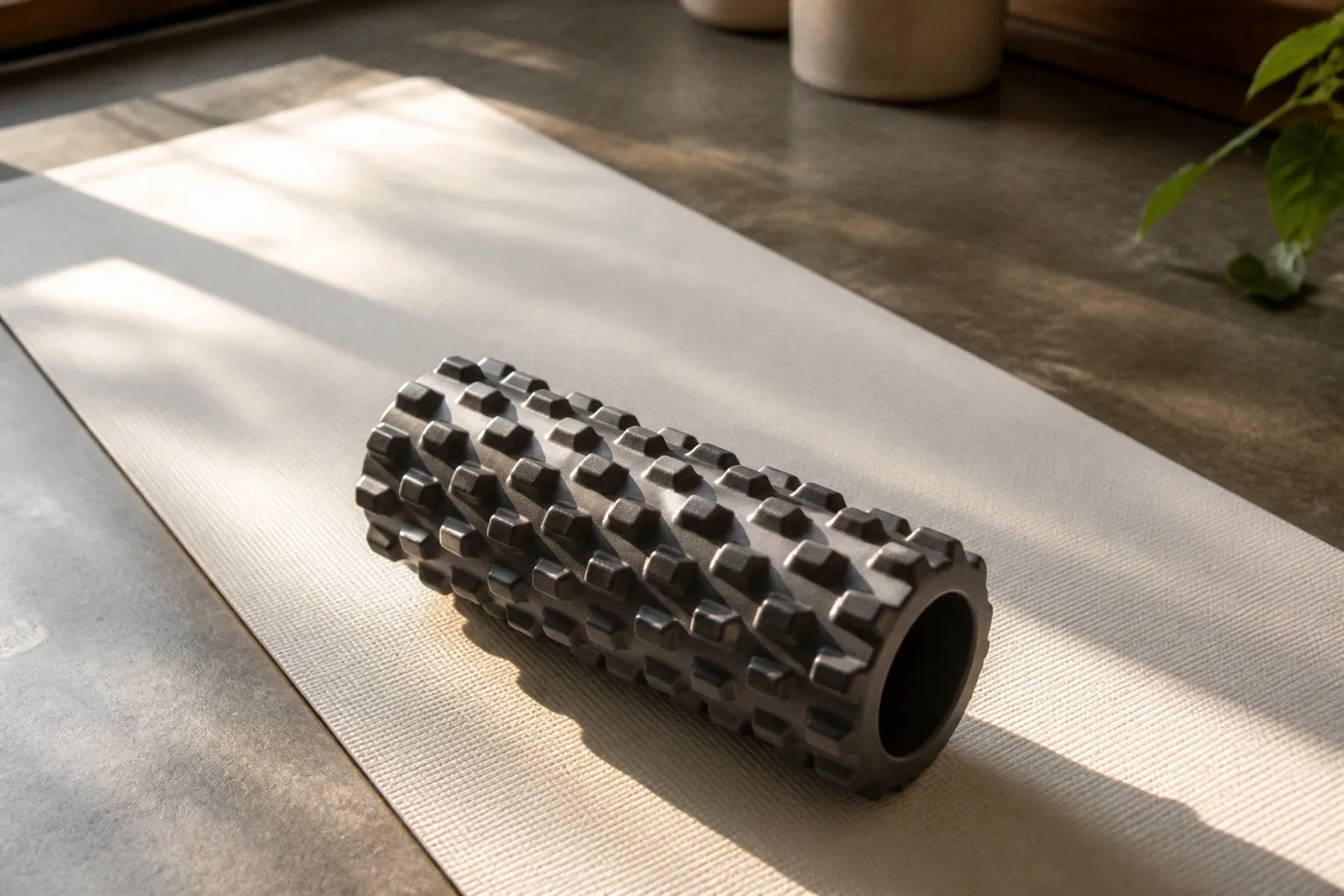
Roll them out. Stiff spine after a long flight? You guessed it — roll it out.
The problem is that “lower back” is often used to describe an entire neighborhood: the lumbar spine, the muscles beside it, the pelvis, the glutes, and the upper part of the hips. Those areas do not all respond to pressure in the same way. Rolling the glutes may be useful. Rolling the mid-back may improve how the spine moves. Dropping your full body weight onto a roller placed directly under the lumbar vertebrae is a different proposition.
I have watched this advice circulate for years, and as a recovery specialist who has spent more time on the floor of physical therapy clinics than I care to admit, I can tell you that the most common version of it is also the least thoughtful. Direct lumbar rolling looks harmless enough on an Instagram reel. For some people, it produces nothing more than an unpleasant few minutes. For others, it can aggravate an already sensitive back, provoke muscle guarding, or turn a manageable ache into a problem that needs proper assessment.
So is foam rolling the lower back safe? Not in the way most people do it. The better approach is to work around the lumbar spine: the glutes, the hips, the hamstrings, the thoracic spine, and, with care, the muscles along the side of the trunk. The aim is not to punish the painful area until it surrenders. It is to reduce the surrounding workload without adding unnecessary compression to the spine.
The Biomechanical Risks of Direct Lumbar Compression
When you lie back on a foam roller and position it across your lower back, you place the lumbar spine into a combination of extension and compression. The roller pushes the lower back forward as your body weight presses down from above. The exact sensation depends on the roller, your position, your spinal curve, and how much weight you allow onto it, but the basic mechanical problem remains: a dense cylinder is supporting a region that is designed to move, not serve as a bridge between your shoulders and pelvis.
The lower back already carries substantial load during ordinary activities. Standing, walking, lifting, running, and even sitting require the lumbar spine and its surrounding muscles to manage force. A roller does not automatically make that force therapeutic. Adding pressure can make the position more provocative, particularly if you are already dealing with an irritated joint, disc-related symptoms, reduced spinal tolerance, or pain that travels into the leg.
The lumbar spine was built to move and transfer force. It was not built to become a weight-bearing shelf for a hard cylinder.
The small facet joints at the back of the vertebrae help guide spinal movement. When the lumbar spine is pushed into extension, those joints can become more compressed. That does not mean every brief extension position is dangerous; the spine moves into extension constantly. The issue is the combination of extension, sustained pressure, and body weight applied to a painful or sensitive area.
The same goes for the discs. A foam roller is not going to “crush” a healthy disc in the dramatic way some online explanations suggest, but an aggressive position can increase symptoms in someone whose disc or surrounding tissues are already irritated. The useful question is not whether the roller is capable of producing a sensational injury. It is whether the exercise gives you a clear benefit without making your symptoms worse. Direct lumbar rolling often fails that test.
The familiar explanations about “breaking up fascia” do not improve the argument. A roller can temporarily alter how a muscle feels and moves. It may change your tolerance to pressure, reduce the sensation of stiffness, or make a region feel easier to move. Those effects do not require compressing the vertebrae underneath it. The muscles beside the lumbar spine are better addressed through movement, controlled loading, or carefully chosen soft-tissue work than by forcing the entire trunk onto a hard roller.
There is also a simple practical problem: people tend to chase sensation. If the lower back feels tight, they keep rolling until it feels tender, numb, or temporarily loose. That temporary looseness is not proof that the underlying problem has been solved. Sometimes it is just the nervous system turning down the alarm for a short period. If the area feels worse later, the roller has not delivered a useful recovery session; it has simply given you a more complicated starting point.
Why the Lumbar Spine Lacks Protective Support
The lumbar spine is different from the thoracic spine in a way that matters for foam rolling. The thoracic vertebrae are connected to the rib cage, which provides additional structure around the mid-back. The lumbar vertebrae do not have ribs attached to them. They sit between the rib cage and the pelvis, with the surrounding muscles and connective tissues doing much of the stabilizing work.
That does not make the lumbar spine fragile. It makes it less suitable for the same direct rolling strategy that may feel reasonable across the mid-back.
In the thoracic region, the roller can sit beneath the upper and middle back while the shoulder blades, ribs, and surrounding muscles distribute the sensation. You can also control the movement by lifting or lowering the hips and shifting the roller a small distance at a time. In the lumbar region, the curve of the spine often causes the body to rock over the roller rather than settle evenly onto it. The result can be a concentrated pressure point, especially on a firm or textured model.
The bony landmarks you feel along the center of the back are not designed to be repeatedly loaded against a narrow, rigid surface. Much of the discomfort people experience is not a sign that the roller has found a magical knot. It may simply be pressure on bone, ligament, or sensitive soft tissue.
The contact area matters as well. A cylindrical roller supports the body along a relatively small strip. Your body weight is therefore not spread across a broad, forgiving surface in the way it might be during a hands-on massage or when lying on a padded table. The narrower and harder the roller, the less room you have to adjust the pressure.
The thoracic spine has a rib cage around it. The lumbar spine has more movement, more responsibility, and much less room for careless pressure.
People with a naturally pronounced lumbar curve may feel this even more strongly. The lower back arches over the roller, leaving the user to sink into extension before the surrounding muscles have had a chance to relax. Others compensate by holding their breath or bracing the abdominals. Neither response is a reliable sign of effective self-myofascial release.
This is why a safer foam-rolling setup usually keeps the lumbar spine supported indirectly. You can roll the thoracic spine above it, the glutes below it, and the hip muscles in front of it without making the painful lumbar segments the main contact point.
The Hidden Danger to Internal Organs and Spinal Nerves
The lower back is not just a stack of bones and large muscles. The kidneys lie toward the back of the abdomen, below the lower ribs and to either side of the spine. They are protected by surrounding tissues and muscles, but they are not covered by a rib cage in the same way as the organs in the chest.
That does not mean a foam roller will routinely injure the kidneys. It does mean the area is a poor target for aggressive, prolonged pressure, especially if you are using a very firm roller, placing most of your weight on it, or continuing despite sharp pain. A roller should never be used as a tool for digging into the area beneath the lower ribs.
The more common concern is not organ trauma. It is symptom aggravation. A person may mistake pain from the tissues around the spine for a tight muscle and respond by applying more pressure. The body may respond with guarding, increased soreness, or a pain pattern that is harder to interpret.
The lumbar region is also where nerve roots leave the spinal column and continue into the pelvis and legs. A problem in this area can sometimes produce symptoms beyond the back itself: tingling, numbness, burning, weakness, or pain that travels through the buttock and down the leg. A foam roller does not have to be the original cause of those symptoms to make them more noticeable. Repeated pressure and extension can irritate an already sensitive area.
This is where the popular idea of rolling the piriformis needs some restraint. The piriformis and other deep gluteal muscles can contribute to buttock discomfort, but pain that travels down the leg is not automatically a tight piriformis. It may involve the lumbar spine, a nerve root, the hip, or several structures at once. If rolling the buttock consistently reproduces electric, burning, or shooting symptoms, stop treating it as a simple muscle knot.
There are also symptoms that should not be handled with a foam roller experiment. Seek medical advice for new or worsening leg weakness, progressive numbness, loss of bowel or bladder control, numbness around the saddle area, fever, unexplained weight loss, significant trauma, or severe pain that does not behave like ordinary post-exercise soreness. Those signs require assessment rather than a harder roller.
For ordinary mechanical back pain, the warning signs are less dramatic but still useful. If the pain becomes sharper as you roll, spreads farther down the leg, lingers noticeably after the session, or is worse the following day, the technique is not earning its place in your routine.
Indirect Relief: Targeting Glutes and Hip Flexors Instead
The point of foam rolling is not to find the most painful structure and attack it until it goes quiet. It is to create a tolerable change in how a region feels and moves. With lower back discomfort, that often means working on the tissues around the pelvis rather than compressing the lumbar spine itself.
The glutes are a sensible place to start. They help control the position of the pelvis and contribute to hip extension. When they are sore, underused, or overloaded, the lower back may take on more work during walking, running, lifting, and standing. Rolling the glutes will not permanently correct pelvic mechanics, but it can make hip movement feel less restricted before mobility or strengthening work.
To roll the gluteus maximus, sit on the roller with both feet on the floor and your hands behind you. Shift your weight slightly toward one side, then move slowly from the upper part of the buttock toward the lower gluteal fold. Keep the motion small enough that you can control your position. You are not trying to roll from the sacrum to the hamstring in one dramatic pass.
For the side of the hip and gluteus medius, angle the body slightly rather than placing the roller directly over the bony point of the hip. The outside of the hip can be sensitive, and repeatedly grinding over the greater trochanter is more likely to irritate the area than improve it. Stay on muscular tissue and adjust your weight so the pressure remains manageable.
The deep external rotators, including the piriformis, can be reached by crossing one ankle over the opposite knee and leaning slightly toward the crossed leg. This position is more precise than simply dropping the full side of the pelvis onto the roller. If the sensation changes from muscular pressure to tingling or shooting pain, reduce the load or stop.
The hip flexors require even more care. The psoas sits deep in the abdomen and is not a sensible target for aggressive direct rolling. The front of the hip also contains sensitive structures that do not benefit from being compressed with a hard cylinder. If you work near the hip flexors, keep the pressure light and focus on the more superficial tissues around the upper thigh rather than trying to force the roller into the abdomen.
| Target | Why it may help | Safer setup |
|---|---|---|
| Gluteus maximus | May reduce the feeling of hip and buttock stiffness that makes the lower back work harder | Sit on the roller, support yourself with your hands, and shift weight gradually from side to side |
| Gluteus medius | Can be useful when the outer hip feels overloaded or tight | Angle slightly toward the side of the buttock; avoid rolling directly over the bony point of the hip |
| Deep gluteal muscles | May ease muscular buttock tension that can resemble, but does not prove, sciatic pain | Cross one ankle over the opposite knee and keep the pressure controlled |
| Hamstrings | Can make hip movement feel less restricted after prolonged sitting or training | Roll the back of the thighs while supporting some body weight with your hands |
| Thoracic spine | May improve upper-back extension and reduce the temptation to compensate through the lumbar area | Place the roller across the mid-back, keep the hips supported, and avoid letting the roller travel into the low back |
| Front of the hip | May address superficial hip-flexor and quadriceps tightness without targeting deep abdominal structures | Use light pressure on the upper thigh; do not press aggressively into the abdomen or lower ribs |
The old rule of spending a fixed amount of time on every region is not especially useful. Start with a short pass and reassess how you move afterward. A few slow passes may be enough. More pressure and more minutes do not automatically produce a better result.
Use a pressure level that allows relaxed breathing and steady movement. Mild discomfort can be acceptable; sharp pain, burning, numbness, and symptoms that travel are not. If you have to clench your jaw, hold your breath, or brace your entire trunk to tolerate the roller, the pressure is too high.
Results vary. Some people notice a temporary change in stiffness after one session; others feel little difference until rolling is paired with walking, mobility work, strength training, sleep, and changes to the activity that irritated the back in the first place. Foam rolling is an optional tool, not a guaranteed timeline. If lower back pain persists, keeps returning, or limits normal activity, a qualified clinician should assess it rather than relying on a routine that happens to feel productive.
Safe Techniques for the Quadratus Lumborum and Thoracic Spine
The quadratus lumborum, or QL, is a deep muscle along each side of the lower back. It connects the pelvis with the lower rib and lumbar spine and helps control side bending and pelvic stability. It is often blamed for one-sided back pain, particularly after prolonged sitting, carrying a load on one side, or repeated activity in an uneven position.
It is also easy to misidentify. The tender spot along the side of the lower back may involve the QL, the abdominal wall, the ribs, the hip, the spinal joints, or something outside the musculoskeletal system entirely. Tenderness alone does not tell you which structure is responsible.
That is why direct QL rolling should be conservative. Do not place the roller across the center of the lumbar spine and then rotate toward the side. Instead, lie on your side with the roller contacting the muscular area above the iliac crest, the bony ridge at the top of the pelvis. Keep the lower leg bent in front of you for stability and use your hands or the opposite foot to control how much weight reaches the roller.
The contact point should remain on the lateral trunk, not the kidneys, lower ribs, or spinal processes. Move slowly through a small range. You do not need to roll the entire side of the body from the pelvis to the armpit. If the position feels unstable, switch to a softer ball against a wall or use gentle side-bending and breathing instead.
Avoid pinning yourself onto a painful point and waiting for it to “release.” A tender spot is information, not an instruction to add more force. If the discomfort becomes sharp, spreads toward the abdomen or leg, or remains irritated after the session, leave the area alone.
The thoracic spine is generally a more practical place for direct rolling. Lie with the roller across the mid-back, support your head with your hands, and keep your hips either on the floor or only slightly lifted. Roll between the lower shoulder blades and the upper back. Do not allow the roller to drift down into the lumbar curve.
A few details make the thoracic technique more useful:
1. Keep the ribs from flaring dramatically as you extend over the roller. The movement should come from the upper back, not from forcing the lower back into a deeper arch.
2. Move in short sections rather than rolling rapidly from the neck to the waist. Speed makes it harder to notice whether you are pressing into the wrong area.
3. Keep the neck supported. The roller is not a substitute for a cervical spine device, and the head should not hang back without control.
4. Stop if you feel dizziness, numbness, sharp pain, or symptoms that do not stay local to the mid-back.
5. Follow the rolling with active movement, such as gentle thoracic rotations or a controlled reach, so the temporary change in mobility has somewhere to go.
The same principle applies to the hamstrings and glutes: use the roller to make movement more comfortable, then use movement to build capacity. If your back hurts because your training load, lifting technique, recovery, or daily posture needs attention, rolling alone will not solve the larger issue.
When Foam Rolling Is the Wrong Tool
Not every lower back problem is a mobility problem. Pain after a new workout may reflect normal muscle soreness, but pain after a fall, sudden twist, heavy lift, or collision deserves more caution. The same is true for pain that is constant at rest, wakes you repeatedly, or comes with symptoms outside the back.
An active disc flare, diagnosed spinal stenosis, significant spondylolisthesis, osteoporosis, recent spinal surgery, or a known fracture changes the conversation. You may still be able to exercise, but the correct choices should come from an individualized assessment rather than a generic rolling sequence.
Pregnancy, abdominal surgery, kidney conditions, and unexplained pain near the ribs or flank also warrant professional guidance before using substantial pressure around the trunk. A foam roller is an inexpensive object, not a diagnostic tool. It cannot tell you whether the sensation comes from a muscle, joint, nerve, organ, or referred source.
This is also why “no pain, no gain” is particularly poor advice here. A foam roller should not produce bruising, lingering soreness, numbness, or a growing area of sensitivity. Those responses are not evidence that the tissue is finally being reached. They are reasons to reduce the dose or stop.
Foam rolling is a maintenance tool, not a spinal adjustment. Treating it like the second one is how people end up with problems they did not have when they started.
The Verdict
The lower back is not automatically off-limits to all movement, stretching, or hands-on work. It is simply a poor place to apply uncontrolled body-weight pressure with a firm cylinder. Direct lumbar rolling combines extension, compression, and a limited contact area without offering a reliable advantage over gentler options.
The better play is to roll around the lumbar spine. Work the glutes, hamstrings, and carefully selected areas around the hip. Use the thoracic spine for extension work. If you address the quadratus lumborum, stay to the side, keep the pressure light, and do not treat every tender spot as a muscle that needs to be crushed.
There is no universal schedule that guarantees relief. Some people feel a short-term improvement; others do not respond to foam rolling at all. Results depend on the cause of the pain, the amount of pressure, the rest of the training routine, and whether the underlying issue has been addressed. Persistent or recurring symptoms deserve a proper assessment, particularly when pain travels into the leg or is accompanied by weakness, numbness, or changes in normal function.
So no — do not make the lumbar spine the main target of your foam roller. Foam roll around it, pay attention to how your symptoms behave afterward, and use the extra mobility as an opening for sensible movement and strengthening. That is how the roller earns its place in your kit again: not by overpowering the painful area, but by helping you work with the body you actually have.