Glute activation before running: is it necessary?
Another morning, another sea of runners shuffling through the parking lot at the trailhead, neon mini-bands stretched around their knees like they're preparing for an orthopedic limbo competition. You've seen them. I've seen them.
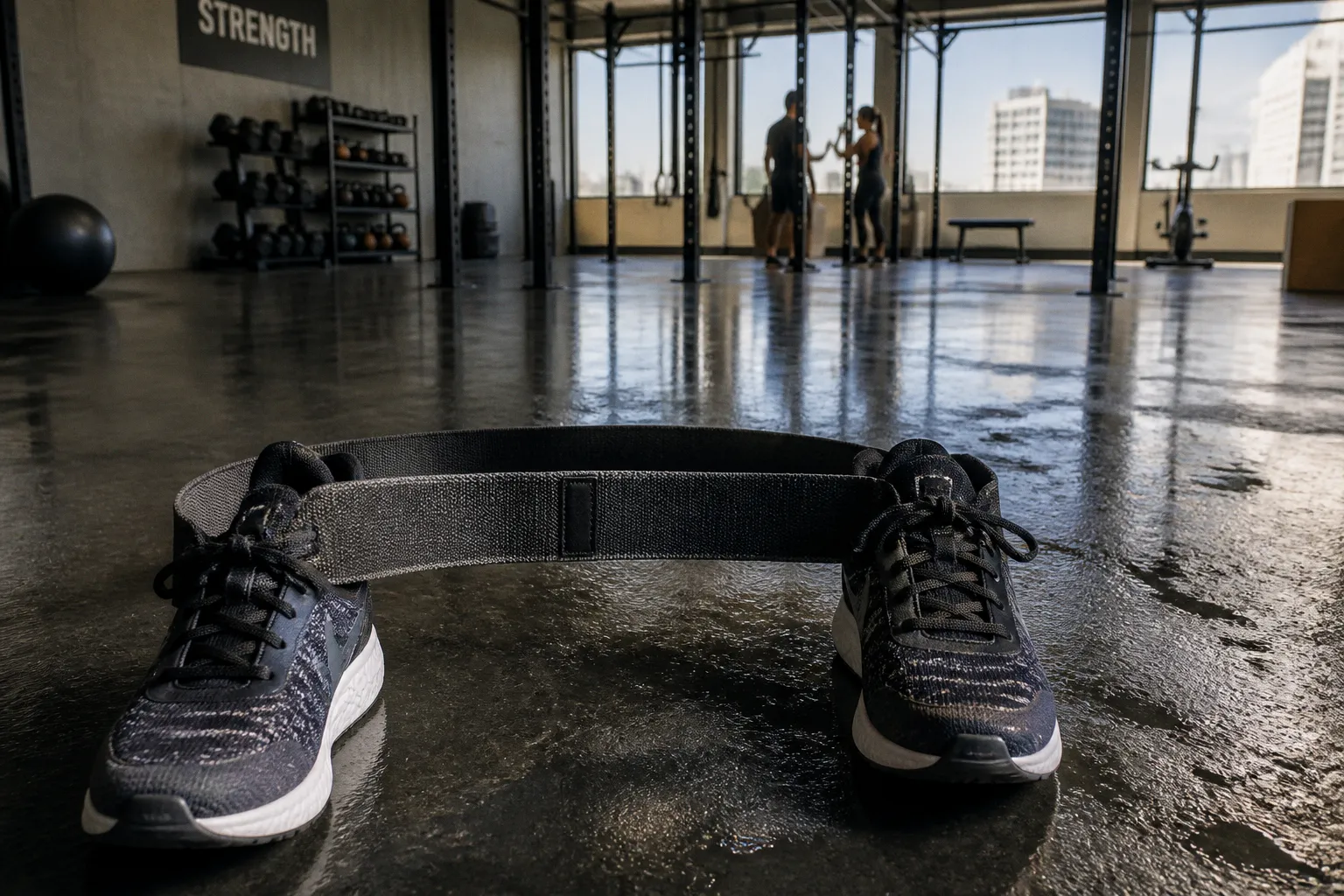
Some are doing it because an influencer with a ring light told them their glutes had fallen asleep. Others are doing it because skipping the routine supposedly means their IT bands will detonate at mile three.
Let me save you the suspense: for healthy runners, the necessity of glute activation before running is dramatically overstated. Your glutes do not go offline because you sat at a desk. They do not need to be rebooted with donkey kicks before they remember how to run. And a few minutes of banded walks is not the same thing as improving glute strength, correcting a movement problem, or preventing an injury.
That does not make glute work useless. It makes the timing and the claim matter. A structured strength program can be valuable. Targeted drills can have a place in rehabilitation. But for most runners, the pre-run ritual of clamshells, kickbacks, and lateral band walks is mostly a performance of preparation rather than preparation itself.
Your glutes are not dormant. They are already working; the real question is whether they are strong enough for the job you are asking them to do.
The Myth of Dormant Glutes: Why Your Muscles Are Always On
Here's the bit of fitness folklore that needs to die in a fire: the idea that sitting at a desk somehow puts your gluteus maximus into a coma, leaving it neurologically dormant until a resistance band arrives to perform CPR.
It's a tidy story. It explains back pain. It explains why your knees cave inward. It explains why your run feels sluggish. It gives you an obvious villain and an obvious five-minute solution. It also turns a complicated combination of strength, coordination, training load, fatigue, anatomy, and injury history into a problem that can supposedly be fixed with a strip of latex.
Walking requires your glutes. Running requires them even more. The muscle contributes to hip extension and helps control the position of the pelvis and thigh as you move through each stride. It is not sitting in some dark corner of your pelvis waiting for a side-lying clamshell to wake it up.
If your gluteus maximus had genuinely stopped working, you would not simply feel a little less stable during a run. Standing upright, climbing stairs, and propelling yourself forward would be profoundly affected. A runner who can stand, walk, and jog is not dealing with a glute that has vanished from the nervous system.
That does not mean every runner uses their glutes optimally. A muscle can be active without being especially strong, well-coordinated, or capable of producing the amount of force demanded by a particular task. It can also be active while other muscles compensate for its limitations. Those are real issues. They just are not the same thing as muscular amnesia.
Activation is not the same as strength
This distinction gets blurred constantly.
A warm-up drill may help you notice a muscle, rehearse a movement, or temporarily change how an exercise feels. That is not the same as increasing the muscle's maximum strength. Feeling a burn in the side of your hip during a banded walk does not prove that your gluteus maximus was previously asleep. It proves that you are asking a group of muscles to work against resistance in a particular position.
The same goes for the familiar instruction to “feel your glutes.” Sensation is useful information, but it is not a direct measurement of force production, running economy, or injury risk. You can feel a muscle working without making it meaningfully stronger. You can also perform a perfectly competent movement without experiencing a dramatic burn in the muscle an online coach has decided should be the star of the show.
What the science and basic training logic do support is that some people have relative weakness in their glutes compared with the demands of their sport or compared with other muscles involved in the task. That is a strength issue. It may also be a programming issue. The answer is usually progressive resistance training, better load management, improved coordination, or specific rehabilitation—not a last-minute attempt to switch the muscle on before a run.
Biomechanics of the Stride: Gluteus Maximus vs. the Soleus
This is where the pre-run activation industry tends to simplify the body into a cartoon. The glutes are presented as the engine of running, while everything below the hips becomes supporting equipment. Actual running biomechanics are less flattering to that story.
Different muscles contribute at different points in the stride. The gluteus maximus is a powerful hip extensor. It helps manage the hip and pelvis, particularly when the leg is behind the body and the runner is transitioning through stance. The calf muscles, including the soleus, handle enormous demands at the ankle and contribute substantially to storing and returning elastic energy during ground contact. The hamstrings help with late-swing control and hip extension. The quadriceps help absorb and redirect force through the knee.
One comparison often gets repeated without much care: the gluteus maximus may reach a peak force of roughly 1.8 times body weight during running, while the soleus has been reported at approximately 6–8 times body weight. That is a comparison of peak muscle force, not total mechanical work performed across the stride. Peak force tells us how high the force rises at a particular moment; it does not, by itself, tell us how much work a muscle performs over the entire run.
The difference still matters. It shows why the soleus deserves more attention in conversations about running mechanics and performance. But it cannot be converted into the claim that the soleus performs three or four times as much work as the glutes during the same run. That conclusion requires a different analysis, including force over time, muscle length changes, joint work, and the specific running conditions being studied.
| Muscle | Example of reported peak force during running | Main contribution |
|---|---|---|
| Gluteus maximus | Approximately 1.8× body weight | Hip extension and control of the pelvis and thigh |
| Soleus | Approximately 6–8× body weight | Ankle plantarflexion, force transfer, and propulsion during stance |
| Hamstrings | Variable across speed and stride phase | Late-swing deceleration and assistance with hip extension |
| Quadriceps | Variable across speed and terrain | Knee control, shock absorption, and force acceptance |
The table is not a ranking of which muscle “matters” and which one does not. Running is not a single-muscle event. A high peak force in the soleus does not make the glutes irrelevant, just as a strong gluteus maximus does not eliminate the need for capable calf muscles.
It does, however, challenge the idea that every runner with a vague feeling of heaviness or instability needs an urgent glute activation circuit. A difficult run can reflect accumulated fatigue, poor recovery, an abrupt increase in mileage, insufficient calf capacity, limited ankle motion, inefficient pacing, or simply the fact that running is hard. The answer is not automatically a band around your knees.
Peak force is not the same as total work, and a muscle being important does not make it the only muscle worth training.
The Reality of Post-Activation Potentiation and Low-Load Drills
The defense team for pre-run glute activation usually rolls out one of two arguments. The first is the muscle-activation argument: your glutes are supposedly asleep, so you need to wake them up. We have already dealt with that one.
The second is post-activation potentiation, often discussed alongside the broader concept of post-activation performance enhancement. The basic idea is that a previous muscle contraction can temporarily influence the force or power you produce afterward. The phenomenon is real. The social-media version of it is usually much less precise.
The response depends on several moving parts: the intensity and type of the conditioning exercise, the time allowed for recovery, the athlete's training status, the test being performed, and the balance between potentiation and fatigue. A heavy or explosive movement may create a useful short-term effect for some athletes, but it may also leave them tired if the dose is wrong. A light mini-band circuit is unlikely to create the same stimulus as a demanding, high-force contraction.
That does not mean every low-load drill is physiologically meaningless. It means you should stop calling every warm-up exercise potentiation. Twenty side-lying clamshells with a light resistance band may help you rehearse hip control or give you a familiar movement routine. They do not automatically produce a measurable improvement in running performance, and they are not a substitute for strength training.
There is some interesting evidence around low-load gluteal warm-ups, but the details matter. One study published in 2015 reported acute improvements in force production after a low-load glute warm-up when an approximately eight-minute rest period separated the warm-up from the performance test. That is a very specific protocol. It is not evidence that doing banded walks immediately before every easy run will make you faster. It also does not establish that the effect will be meaningful for every runner, every type of running, or every warm-up sequence.
The practical mistake is taking a narrow finding and turning it into a universal ritual. A protocol that produces a small short-term change under controlled testing conditions is not automatically worth inserting into a crowded morning routine. If the exercise makes you feel coordinated and does not create fatigue, there is little harm in using it. But there is also no reason to pretend that it has the same training effect as loaded hip thrusts, squats, split squats, or deadlifts performed consistently over time.
The difference between rehearsal and adaptation
A useful way to think about pre-run drills is to separate immediate preparation from long-term adaptation.
Immediate preparation can include:
- raising body temperature;
- moving the joints through the ranges needed for the session;
- rehearsing the rhythm and coordination of running;
- gradually increasing speed before harder efforts;
- identifying discomfort before it becomes a problem.
Long-term adaptation requires repeated exposure to an appropriate training stimulus and enough recovery to respond to it. That is where stronger glutes are built. The change comes from progressive loading over weeks and months, not from making a muscle burn for thirty seconds before you leave the house.
If a banded drill helps you feel more organized before a run, use it as a coordination drill. Just label it honestly. You are not resuscitating a dormant muscle, and you are not building substantial strength in the space between tying your shoes and starting your watch.
Why Your Warm-Up Should Focus on Dynamic Movement Instead
If you want a warm-up that prepares you for running, start with the demands of running. You need movement, rhythm, gradual loading, and a sensible transition from rest to the pace you intend to hold.
Dynamic warm-ups are the boring, unsexy answer, which is probably why they do not dominate the algorithm. They do not involve a prop you can sell. They do not require a branded activation sequence. They simply move your body through positions and speeds that resemble the session ahead.
Depending on the run, that might include leg swings, walking lunges, high knees, skips, hip circles, or short progressive strides. You do not need to perform every drill in the catalogue. An easy twenty-minute run may need little more than a few minutes of walking and relaxed jogging. A speed session or race effort deserves a more deliberate progression.
Dynamic movement can help you:
- increase circulation and raise tissue temperature;
- explore hip, knee, and ankle motion before loading them repeatedly;
- rehearse coordinated, rhythmic movement;
- gradually expose the nervous system to faster ground contact;
- notice stiffness, pain, or asymmetry before the workout becomes demanding.
The important word is dynamic. This does not mean bouncing aggressively into end ranges or turning the warm-up into a workout of its own. It means controlled movement that prepares rather than exhausts you.
A 2023 study by Rauseo and colleagues examined a protocol combining dynamic warm-up exercises with glute resistance exercises and assessed movement patterns and landing biomechanics after a single session. The study did not find significant single-session changes in those biomechanical outcomes. That result does not prove that the dynamic component produced the benefits, and it does not prove that the resistance component had no effect. Because the components were combined, the study cannot cleanly assign a benefit—or a lack of benefit—to one part of the protocol.
The more defensible takeaway is narrower: adding a glute-resistance section to a dynamic warm-up did not produce significant immediate changes in the measured movement patterns or landing biomechanics in that study. That is useful information, but it is not a verdict on every band exercise or every runner. It is also not proof that dynamic warm-ups are magic. It simply gives us less evidence for treating a single pre-run resistance circuit as essential.
A practical glute warm-up before a run
For most healthy runners, a short progression is enough. Adjust it to the session, the weather, your current training state, and how your body feels that day.
1. Walk or jog easily for a few minutes. Start with low intensity instead of asking cold tissues to handle immediate speed.
2. Add front-to-back leg swings. Use a wall or post for balance and keep the movement controlled. The goal is motion, not a competition to see who can swing highest.
3. Add lateral leg swings if they feel useful. Keep your pelvis relatively steady and avoid forcing the range.
4. Use walking lunges or a few controlled reverse lunges. A reach overhead can add movement through the trunk without turning the drill into a balance test.
5. Introduce a short period of high knees, marching, or skips. Choose the version that matches your experience and the demands of the workout.
6. For a faster session, add progressive strides. Begin relaxed and build speed gradually rather than sprinting from a standstill.
You may notice that this sequence includes plenty of glute involvement without treating the glutes as a separate mechanical system that needs to be switched on. The hip extensors are working during lunges, skips, strides, and running itself. The warm-up does not need to isolate them to prove that they exist.
For an easy run, strides may be unnecessary. For a demanding interval session, they can be useful. For a return from injury, the appropriate sequence may be more individual and should reflect the advice of the clinician or coach managing that return. Good warm-ups are not judged by how many exercises they contain. They are judged by whether they prepare you for the work without creating extra fatigue.
When Targeted Glute Work Actually Matters for Runners
Now here's where I have to be honest with you, because I am not in the business of pretending one approach fits everyone.
Pre-run glute activation as a universal ritual? Mostly noise. Targeted glute strengthening as part of a broader training plan? That is a different conversation entirely.
Runners can absolutely benefit from stronger glutes. The gluteus maximus is a powerful hip extensor and contributes to controlling the pelvis and thigh during running. The gluteus medius and other hip muscles also help manage single-leg stance. If testing, training history, or a clear movement assessment indicates that your hip musculature is not meeting the demands placed on it, strengthening it makes sense.
The difference is where this work happens. Pre-run activation is about preparing for a session, rehearsing a movement, or making a particular pattern feel familiar. Strength training is about applying enough load and volume to create adaptation. One is a warm-up. The other is training. They are not interchangeable.
A useful strength session for a runner might include a combination of:
- a bilateral hip-dominant movement, such as a deadlift or hip thrust;
- a single-leg exercise, such as a split squat or step-up;
- a knee-dominant movement, depending on the rest of the program;
- calf strengthening, especially when the training plan already places substantial demands on the lower leg;
- trunk and pelvic control work where it addresses a specific limitation rather than serving as decorative exercise.
The exercise selection is less important than the progression. The load, repetitions, range of motion, technique, and recovery should gradually challenge you. If the same tiny band and the same twenty repetitions have been part of your routine for months, the exercise may still be useful for movement practice, but it is unlikely to be doing much to increase maximum strength.
Situations where targeted work may be appropriate
There are also specific contexts in which glute drills before running can make more sense:
- Returning from an injury. After an ankle, knee, or hip problem, a clinician may use simple drills to rehearse a movement pattern, build confidence, or assess how you respond before progressing to running.
- Rehabilitation under professional supervision. A physical therapist may prescribe a particular glute exercise for a clearly identified strength, control, or tolerance issue. In that setting, the exercise is part of an individualized plan, not a universal rule for all runners.
- A specific, observable movement limitation. If a coach or clinician has identified a consistent problem during single-leg stance, landing, or running mechanics, targeted work may help address it. The intervention should be tied to the finding rather than chosen because a video promised that it would prevent every possible injury.
- A personal response that is genuinely useful. Some runners feel more coordinated after a small amount of low-fatigue activation work. That is a valid reason to keep it, provided the drill is not painful, exhausting, or replacing more important training.
Even in these situations, the phrase “activation” can create confusion. The aim may be improved control, tolerance, confidence, or rehearsal. Those are worthwhile goals. None requires the claim that the muscle was previously asleep.
What to do if your glutes feel weak during a run
If your hips feel tired or unstable, do not immediately assume you need a longer pre-run routine. Look at the whole training picture.
Have you increased mileage or intensity recently? Are you running hard on insufficient recovery? Is the problem present only late in long runs, or from the first few minutes? Does it appear on hills, during speed work, or only when you are fatigued? Is there pain, a noticeable limp, or a change in your stride? Are you doing any progressive strength work at all?
Those questions are more useful than asking whether you completed three sets of banded clamshells.
If the issue is persistent, painful, or accompanied by a clear change in movement, get an assessment from a qualified professional. A runner may need strength work, a change in training load, a technique adjustment, or a broader evaluation of the ankle, knee, hip, and back. The glutes may be involved, but they are not automatically the entire diagnosis.
The Verdict
So, do runners need glute activation before running? For the vast majority of healthy runners, no—not as a mandatory ritual, an injury-prevention panacea, or a performance hack.
Your glutes are already contributing to every step. They are not confused, switched off, or waiting for a mini-band to remind them what their job is. A few low-load drills may help you feel prepared, rehearse a movement, or follow a routine you enjoy. That is enough. They do not need a grander explanation.
If you want stronger glutes, build them with a real strength program that progresses over time. Use hip thrusts, squats, split squats, deadlifts, step-ups, and other well-chosen exercises according to your goals and training history. Give the work enough load, enough consistency, and enough recovery to matter. That is where strength is built—not in the five minutes before you head out the door.
For your run itself, prioritize a warm-up that matches the session. Walk or jog easily, move through comfortable ranges of motion, and add progressive strides when the workout calls for speed. Pay attention to how your body responds. If a brief band drill makes you feel better and does not tire you out, keep it. If it takes ten minutes, creates fatigue, or makes you anxious about running without it, you are probably giving it more authority than it deserves.
The glute activation before running necessity is therefore fairly simple: healthy runners generally do not need to wake up their glutes, because their glutes were never asleep. They may need stronger muscles, better programming, or a more thoughtful warm-up. Those are real solutions. They just happen to be less marketable than a neon band and a dramatic caption.