Core training paths: which method fits your fitness goal?
If your core routine is a collection of crunches, planks, and hopeful guesses, the problem may not be effort. It may be direction.
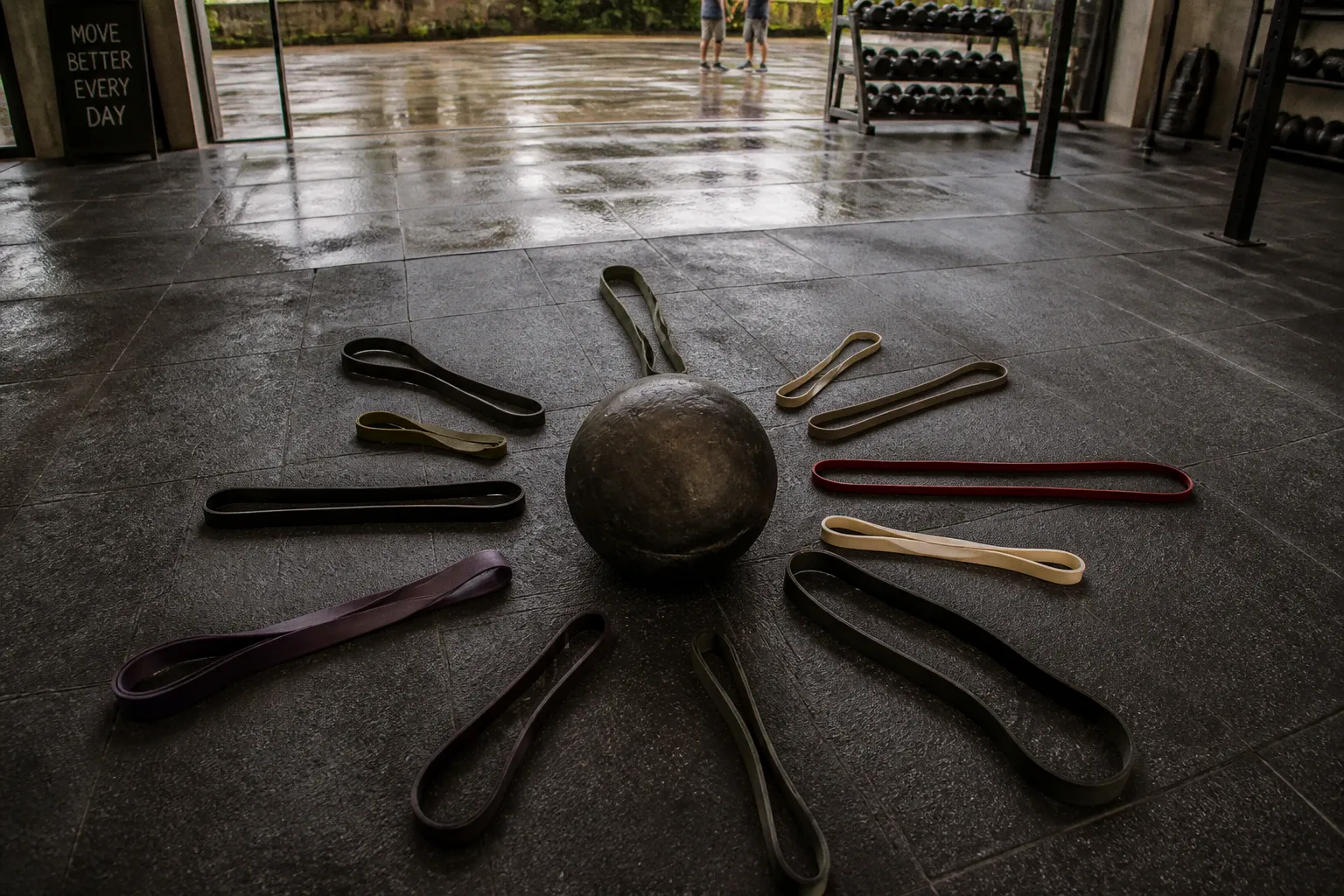
The best core strengthening exercises by fitness goal are not the same for someone building visible abdominal muscle, someone trying to lift more safely, and someone returning to movement after persistent low back discomfort.
A plank can be useful. So can a Pilates sequence, a hanging leg raise, a loaded carry, or a banded anti-rotation press. But each one trains the trunk in a different way. When we match the method to the outcome, core work becomes more efficient, easier to progress, and much less likely to turn into another exhausting routine with no clear result.
Your core is more than your abs
We often use the word “core” as shorthand for the rectus abdominis—the muscle associated with the six-pack. That is one part of the picture, but it is not the whole system.
The core is better understood as the lumbopelvic-hip complex. It includes the deep stabilizers and the larger muscles that control movement around your spine, pelvis, and hips:
- The diaphragm and pelvic floor contribute to pressure management and trunk support.
- The multifidus and transverse abdominis help create deep spinal stability.
- The rectus abdominis and internal and external obliques generate and resist trunk movement.
- The glutes help control the pelvis and transfer force through the hips.
- The hip flexors assist with leg and trunk motion, although they can dominate some ab exercises when technique and loading are poorly matched.
That is why “strong abs” and “strong core” are not always interchangeable. You may have good endurance in a front plank and still struggle to resist rotation while carrying a suitcase. You may be able to perform many sit-ups but lose pelvic control during a squat or a run.
A useful core program gives us several jobs to train:
1. Create movement, such as spinal flexion or rotation.
2. Resist movement, such as extension, rotation, or side bending.
3. Transfer force between the upper and lower body.
4. Maintain control while the limbs move independently.
5. Coordinate breathing, pressure, and posture under effort.
This broader view also makes exercise selection less confusing. We are no longer asking, “Which ab exercise is best?” We are asking, “Which function needs more capacity?”
A strong core is not simply a muscle that works hard. It is a system that keeps your hips, ribs, and spine organized while the rest of your body produces force.
Hypertrophy and stability require different training signals
One of the most common mistakes in ab training is expecting every exercise to create the same adaptation. Static holds, slow control drills, weighted flexion, and athletic bracing all have value, but they do not send the same message to the body.
If your goal is visible abdominal muscle
Muscle growth requires more than feeling a burn. The target muscles need meaningful tension, a useful range of motion, and a progression plan. For abdominal hypertrophy, this usually means including movements that load the trunk through flexion or controlled hip-and-trunk motion.
Examples include:
- Weighted sit-ups performed with controlled spinal movement.
- Cable crunches progressed gradually over time.
- Reverse crunches with deliberate pelvic movement.
- Hanging knee or leg raises, provided you can avoid swinging.
- Stability-ball crunches, which allow a larger range of motion than a floor crunch.
A static plank can make your trunk work intensely, but it primarily develops local strength endurance. It is not a complete hypertrophy strategy by itself. If your goal is thicker, more developed abdominal musculature, we need some form of progressive loading rather than relying only on longer holds.
Progression does not have to mean adding weight every session. You can increase the challenge by:
- Adding a small amount of resistance.
- Moving through a larger controlled range.
- Reducing momentum.
- Pausing at the hardest point.
- Increasing repetitions within a planned range.
- Using a more demanding variation without losing pelvic or rib control.
We should also keep expectations realistic. Core exercises can develop the abdominal muscles, but visible definition depends on overall body composition as well. More ab work cannot selectively remove fat from the waist.
If your goal is stability and control
Stability work asks a different question: can you resist unwanted movement while breathing and keeping your position? The front plank, dead bug, bird dog, side plank, and bridge variations fit naturally here.
These exercises are especially useful when you are learning to coordinate the trunk with the hips and shoulders. They can also provide a lower-impact entry point for beginners who are not yet ready for loaded flexion or hanging exercises.
For a beginner core stability workout, start with movements where you can maintain:
- A steady breath rather than holding your breath.
- A stacked rib cage and pelvis.
- Slow limb movement without shifting through the low back.
- A level pelvis during unilateral exercises.
- A clear sense of where the effort is coming from.
A bridge hold of 10 to 30 seconds may be enough at first. The goal is not to make every hold painfully long. Once your position begins to deteriorate, extra seconds often become practice for compensation rather than practice for control.
If your goal is strength for lifting
Heavy squats, deadlifts, presses, and carries already challenge the core. In this context, your trunk often needs to resist motion while the hips and shoulders produce force.
Useful choices include:
- Front-loaded carries, such as a goblet or suitcase carry.
- Pallof presses and other band or cable anti-rotation drills.
- Dead bugs with resistance.
- Side planks and offset carries for anti-lateral flexion.
- Rollouts or body-saw variations for anti-extension, if your shoulders and pelvis can tolerate them.
- Front squats and overhead movements performed with appropriate coaching and load.
The supporting exercise should improve your main training rather than drain it. If a high-volume ab circuit leaves your trunk fatigued before deadlifts, the dose is probably poorly placed. We want enough stimulus to build capacity, not so much fatigue that it degrades the movement we are trying to support.
Pilates, bodyweight work, and weights: what each path does well
The question is not whether Pilates is better than weightlifting for the core. The more useful question is what kind of challenge each method provides and whether that challenge matches your goal.
| Training path | Main strength | Best fit | Common limitation |
|---|---|---|---|
| Pilates-based core work | Breathing, alignment, controlled spinal and hip movement | Beginners, mobility-focused training, body awareness, low-impact sessions | May need additional external load for maximal hypertrophy |
| Bodyweight stability work | Bracing, coordination, anti-extension, anti-rotation, movement control | Beginners, home training, foundational core strength | Progression can become vague if you only add repetitions or hold time |
| Resistance bands | Variable tension, anti-rotation, carries, portable training | Home workouts, travel, gradual progression, rotational control | Resistance can be difficult to quantify precisely |
| Free weights and cables | Progressive loading and high mechanical tension | Abdominal hypertrophy, strength development, advanced training | Technique and load selection matter; poor control can shift stress into the hips or low back |
| Compound lifts | Whole-body force transfer and trunk bracing | Athletic performance, lower-body strength, real-world lifting capacity | Core fatigue is not always easy to isolate or measure |
| Hanging and suspension work | Trunk control with moving limbs and shoulder involvement | Intermediate and advanced trainees | Swinging, grip limits, or hip-flexor dominance can obscure the intended work |
Pilates is valuable when your limiting factor is control. It can teach you to coordinate breathing, pelvis, ribs, and limbs without immediately adding heavy resistance. That foundation transfers well into other forms of training.
Weight training becomes more important when your goal includes measurable strength or muscle growth. A cable crunch can be progressed more clearly than a routine in which we simply try to hold a plank for another minute. That does not make the weighted exercise universally superior; it makes it better suited to a particular adaptation.
Resistance bands sit in a useful middle ground. A banded Pallof press, for example, gives you an external force trying to rotate your torso while you practice staying square. It is simple, portable, and easy to place at the end of a strength session or inside a home workout.
The practical answer is often a combination: use controlled bodyweight or Pilates-inspired drills to build coordination, then add resistance when the movement is stable enough to progress.
The eight movement patterns behind complete core training
A balanced core plan does not need eight exercises in every session. It does, however, benefit from recognizing the major ways the trunk can move—or prevent movement.
1. Flexion
Flexion brings the trunk and pelvis toward one another. Crunches, sit-ups, and some reverse crunch variations train this pattern.
For hypertrophy, flexion exercises become more productive when we can load them progressively and control both the shortening and lengthening phases.
2. Anti-flexion
Anti-flexion means resisting the tendency to fold forward. Front-loaded squats, deadlifts, carries, and certain plank variations train this quality.
This is a key demand in lifting. The core must help keep the spine and pelvis organized while the hips generate force.
3. Extension
Extension involves moving the spine or hips into a more open position. Back-extension exercises and some bridge variations may include this pattern, depending on how they are performed.
Extension is not automatically harmful, but repeated or excessive movement through the low back can become a problem when the hips are not contributing enough. We want the load distributed across the trunk and hips, not concentrated in one area.
4. Anti-extension
Anti-extension is the ability to prevent the ribs and pelvis from separating as the spine arches. Dead bugs, body saws, rollouts, and well-executed planks belong here.
If you feel a dead bug mostly in your low back, reduce the range of the legs or keep the knees bent. A smaller movement with control is a stronger starting point than a dramatic variation that turns into spinal compensation.
5. Rotation
Rotation is controlled turning through the trunk. Medicine-ball throws, cable chops, and carefully performed rotational movements can develop this pattern.
Rotation should be trained with a clear purpose and a load appropriate to your control. Fast movement is not automatically athletic movement; it needs coordination and a stable base.
6. Anti-rotation
Anti-rotation challenges you to resist being pulled into a twist. Pallof presses, offset carries, and unilateral loading are practical choices.
This pattern has an obvious real-life application. Carrying a bag on one side, stepping while holding an uneven load, or changing direction in sport all require the trunk to manage asymmetrical forces.
7. Lateral flexion
Lateral flexion involves bending the trunk to the side. Side bends and some loaded carries train the muscles responsible for this movement.
There is nothing inherently wrong with side bending. The question is whether the range, load, and volume fit your body and your goal.
8. Anti-lateral flexion
Anti-lateral flexion means resisting the pull into side bending. Side planks, suitcase carries, and offset exercises are strong options.
This pattern is easy to overlook because it may not look as dynamic as a crunch or twist. Yet it is often where we discover whether the pelvis and rib cage can remain connected while one side of the body works harder than the other.
Together, these patterns give us a map. We can use it to build a core routine that is more complete without turning every workout into a long list of disconnected exercises.
Matching the path to your actual goal
Your goal should determine what receives the most attention, not just which exercises are currently popular.
Goal: stronger, more visible abs
Prioritize loaded flexion and controlled hip-and-trunk movements two to four times per week, depending on your broader training load and recovery. Begin with a manageable amount of work and build gradually.
A simple structure could include:
- One loaded flexion exercise.
- One reverse crunch or hanging variation.
- One anti-extension drill.
- Optional loaded carry or anti-rotation work.
Use a repetition range that lets you maintain control and progress over time. The abdominal muscles respond to training principles much like other muscle groups: repeated exposure, sufficient tension, and recovery between challenging sessions.
The 2017 meta-analysis on resistance-training volume found that muscle growth generally increases as weekly volume rises toward roughly 10 to 20 sets per muscle group, although the ideal amount varies and eventually plateaus. We do not need to treat that range as a mandatory ab prescription. It is a reminder that more work is not automatically better and that a useful weekly dose should be built around your full program.
Goal: a stronger brace for compound lifts
Prioritize anti-extension, anti-rotation, and anti-lateral flexion. Your core work should teach you to keep the trunk steady while your arms and legs produce force.
Choose exercises that do not create excessive fatigue before your main lifts. Carries, Pallof presses, dead bugs, and side planks can work well as accessories. You can also build core strength directly through technically sound squats, deadlifts, presses, and rows.
Here, the quality of bracing matters more than chasing an impressive burn. We should be able to breathe, maintain position, and repeat the skill under gradually increasing demand.
Goal: athletic performance
Athletic movement rarely happens while lying still. Running, jumping, throwing, changing direction, and contact all require the trunk to transfer force efficiently.
A systematic review of 17 studies found that core stability influences athletic performance by helping prevent energy leakage during dynamic movements. In practical terms, the core provides a connection between the ground, the hips, the torso, and the upper limbs.
Athletic core training may include:
- Anti-rotation presses and carries.
- Rotational medicine-ball throws.
- Single-leg strength work.
- Loaded movements that challenge balance and force transfer.
- Plank variations with controlled limb movement.
- Hip mobility drills that allow the pelvis to contribute instead of asking the low back to do everything.
We still build from control. Speed and complexity belong later, once the basic positions are reliable.
Goal: low back support and movement confidence
Core stability training can be more effective than general exercise for reducing pain and improving back-specific function in people with low back pain. That is encouraging, but it is not a promise that one exercise will resolve every case.
If pain is persistent, worsening, radiating, or associated with numbness or weakness, professional assessment is the right next step. A physical therapist can help identify whether the main limitation is strength, mobility, coordination, load tolerance, or something else.
For general movement confidence, begin with low-threat variations: breathing-supported bracing, bridges, dead bugs, bird dogs, side planks from the knees, and controlled carries. Keep the range modest and increase the challenge only when the current version feels repeatable.
How to build a sustainable weekly plan
Core training often fails because it is treated as either an afterthought or a daily punishment. Neither approach is necessary.
For most people, two to four focused sessions per week provide enough frequency to practice and progress while leaving room for recovery. The sessions can be short, especially when your main workouts already include compound lifts.
A practical weekly rhythm might look like this:
1. Foundation session: dead bugs, bridges, side planks, and a controlled carry.
2. Strength session: cable crunches or weighted sit-ups, reverse crunches, and anti-rotation work.
3. Movement session: Pilates-inspired control drills, mobility work, and light rotational exercises.
4. Optional athletic session: carries, medicine-ball work, and unilateral strength movements.
You do not need all four sessions. Choose two to start, then decide whether the added work improves your training or simply adds fatigue.
Volume should also match the rest of your week. If you are already performing heavy squats, deadlifts, overhead presses, and loaded carries, your core is receiving substantial indirect work. A separate high-volume ab circuit may be unnecessary.
A useful progression model is:
- First, improve position and breathing.
- Then, increase range of motion.
- Next, add repetitions or time within that range.
- Finally, introduce external load, speed, asymmetry, or a more complex variation.
This order keeps the plan sustainable. It also gives us several ways to progress without assuming that every session must end with a heavier weight.
Common mismatches that slow progress
Using planks for every goal
Planks are excellent for anti-extension endurance and beginner control. They are not a complete substitute for loaded abdominal training, rotational work, carries, or dynamic movement.
If your only progression is holding longer, you may reach a point where the exercise develops endurance but no longer offers a strong new stimulus. Add load, change the leverage, introduce controlled movement, or select a different pattern.
Choosing advanced exercises too early
Hanging leg raises and rollouts look impressive, but they require more than abdominal strength. They demand shoulder control, grip endurance, pelvic control, and the ability to resist unwanted spinal movement.
If you swing, arch, or lose the rib-and-pelvis connection, regress the exercise. A bent-knee raise or dead bug can train the same general quality with better control.
Mistaking hip-flexor work for abdominal work
During leg raises and sit-ups, the hip flexors will contribute. That is normal. The issue is whether they are doing nearly everything while the pelvis tips forward and the low back takes over.
Slow the movement down. Reduce the range. Exhale during the harder portion. If necessary, use a variation that lets you feel and control the pelvis more clearly.
Treating discomfort as proof of effectiveness
A strong contraction and a manageable training challenge are useful. Sharp pain, pinching, persistent back discomfort, or symptoms that worsen after the session are different signals.
We do not need to earn progress through suffering. The best core plan is one you can repeat, recover from, and gradually advance.
Separating core work from the rest of the body
The core does not operate in isolation during most meaningful movement. Glute strength, hip mobility, shoulder control, and foot stability all influence how force travels through the body.
That is why a lower-body strength program, a well-executed carry, and a mobility drill can support core development even when they are not labeled as ab exercises.
The simplest route forward
Start by naming the goal in one sentence:
- “I want more abdominal muscle.”
- “I want to brace better during lifts.”
- “I want stronger movement control.”
- “I want to return to training with more confidence.”
- “I want my trunk to transfer force better for sport.”
Then select two or three movement patterns that serve that goal. Keep one exercise for control, one for strength or loading, and one for a complementary quality such as anti-rotation or carrying. Train them consistently for several weeks before changing everything.
For a beginner, that might mean a dead bug, a side plank from the knees, and a suitcase carry. For an intermediate lifter, it might mean a cable crunch, a Pallof press, and a front-loaded carry. For an athlete, it may include anti-rotation work, rotational throws, unilateral strength training, and dynamic trunk control.
The most effective core training path is not the most punishing one. It is the path that gives your body the right signal, at a recoverable dose, and makes progress easy to recognize.
For your very next meal and your next workout, keep the win small: eat enough to support your energy, then choose one core exercise that matches your actual goal. Perform it slowly enough to own the position. That is how a routine becomes a training plan.