Core workout gadgets that waste your time and money
Most core workout gadgets fail for one mechanical reason: they add complexity without creating a stronger training stimulus.
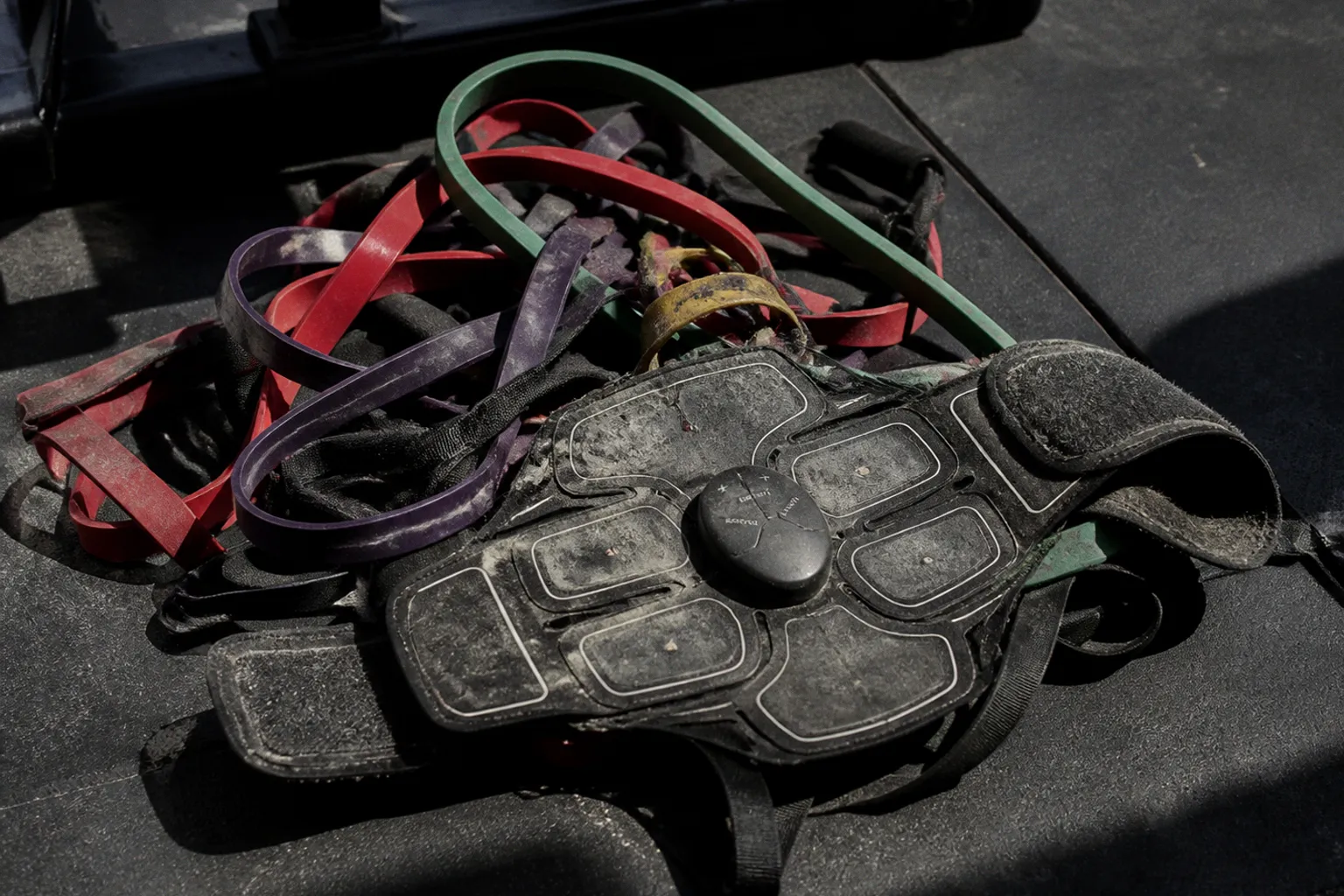
An EMS belt does not remove abdominal fat. A waist trimmer does not alter fat distribution. A motorized ab device does not become effective because it moves without your control. The device may create heat, electrical sensation, or repeated motion. None of those outcomes proves progressive loading, adequate muscle tension, or a hypertrophic response.
The core workout gadgets waste of money problem is not that every device is useless. Some tools can increase resistance or constrain technique. The problem is that marketing often substitutes novelty for load management. The result is predictable. You spend money on a device that cannot produce the adaptation it promises, then keep the same body composition and the same trunk strength.
Core training has three separate objectives:
- Increase the force capacity of the trunk.
- Improve control of the pelvis and rib cage under load.
- Reduce body fat through an energy deficit, if visible abdominal definition is the objective.
One device rarely addresses all three. Most address none of them adequately.
The mechanical test: what adaptation can the device produce?
A useful core exercise must expose the target tissues to a repeatable demand. That demand can involve spinal flexion, anti-extension, anti-rotation, lateral flexion, or hip flexion with pelvic control. The movement must then become more difficult over time.
This is progressive overload. It does not require a machine. It requires a measurable increase in one or more variables:
- External load.
- Lever length.
- Range of motion.
- Time under tension.
- Repetitions performed at a fixed technique standard.
- Reduced stability.
- Reduced assistance.
- Increased movement control.
A device that produces fatigue without progression is not a complete training system. It is a sensation generator.
The distinction matters because the rectus abdominis, external obliques, internal obliques, and deeper trunk musculature respond to force demands. They do not respond to branding. They do not respond to a screen displaying a countdown. They do not respond to local sweating as if sweat were a metabolic signal.
If the device cannot make the same movement harder in a controlled way, it has limited value as strength equipment.
This is the first filter. Apply it before considering price, portability, app integration, or claims about a six-pack.
EMS ab stimulators: electrical contraction is not abdominal training
Electrical muscle stimulation devices send current through the skin to produce involuntary contractions. In clinical settings, EMS can have a role in rehabilitation and muscle re-education. The clinical context is controlled. Electrode placement, current intensity, contraindications, and treatment objectives are defined.
Commercial ab stimulators remove most of that structure and add a weight-loss claim.
The U.S. Food and Drug Administration has not cleared or approved any EMS ab stimulator for weight loss, fat reduction, or obtaining six-pack abs. That point is not semantic. It defines the boundary between a device that may create muscle contraction and a device that has demonstrated the ability to change body composition.
An EMS belt may contract the abdominal wall. It does not create a meaningful energy deficit. It does not selectively mobilize subcutaneous fat from the abdomen. It does not lower visceral fat. It does not train the nervous system to stabilize the trunk during a squat, hinge, carry, or sprint.
The contraction is also not equivalent to a voluntary movement. With a conventional exercise, the nervous system selects and coordinates motor units according to joint position, external load, velocity, and task demand. The trunk must transmit force between the upper and lower body. An EMS belt bypasses much of that coordination.
What the device can and cannot do
| Claim or function | What the device may produce | What it does not establish |
|---|---|---|
| Electrical contraction | Local involuntary muscle contraction | Improved trunk coordination under load |
| Increased skin temperature | Heat and sweating under the electrodes | Fat oxidation at the abdomen |
| Repeated stimulation | A temporary fatigue response | Progressive strength development |
| Visible muscle twitching | Movement of the abdominal wall | A hypertrophic response |
| Short-term scale change | Possible fluid loss from sweating | Reduction in abdominal fat |
Commercial devices also carry practical risks. Unregulated electrical stimulators can cause skin irritation, burns, or electrical shocks. They may be unsuitable for people with implanted electrical devices or certain medical conditions. The exact risk depends on the device and the user. Marketing language does not replace medical screening.
The relevant question is not whether an EMS muscle stimulator can make the core twitch. It can. The relevant question is whether it improves the target outcome better than a controlled dead bug, plank variation, loaded carry, reverse crunch, or cable anti-rotation press.
For strength and body composition, the answer is not established by the available claims. The device should not replace active training.
Waist trimmers and sauna belts: water loss presented as fat loss
Waist trimmers work through compression and heat retention. The belt increases local sweating. The scale may move after use because the body has lost fluid. That change is temporary. Rehydration reverses it.
Sweating is a thermoregulatory response. It is not evidence of localized fat reduction. The body does not route subcutaneous abdominal fat to the skin because a belt is wrapped around the waist. It does not convert heat into a regional fat-loss signal.
This is the same spot-reduction error applied to a different product category. A six-week study of targeted abdominal training without caloric restriction found no significant reduction in abdominal fat. Training the trunk can improve strength and muscle development. It does not override energy balance.
The belt also changes mechanics. Compression can restrict abdominal expansion during breathing and alter how the rib cage and pelvis interact. That may be tolerable for short periods. It does not make the trunk stronger. If the belt is tight enough to limit respiration or bracing, it can reduce training quality.
The product has a narrow use case. It may provide external warmth or a subjective compression effect. Those are not the same as a change in tissue composition.
Use the scale correctly:
1. Weigh before and after wearing the belt if you want to observe the fluid effect.
2. Drink and eat normally afterward.
3. Observe that the lost mass returns.
4. Do not record the change as fat loss.
A waist trimmer is not a core strengthening exercise without equipment. It is an accessory that changes heat and pressure at the waist.
Ab rockers and motorized ab gliders: movement is not the same as stimulus
Ab rockers reduce the need to control the movement. Many designs place the user in a supported position and guide the torso through a limited path. This can make the exercise easier to start. It can also remove the mechanical demand that would otherwise train trunk control.
The issue is not that a guided path is automatically bad. Machines can be useful. The issue is the relationship between the path, the resistance, and the target muscles.
A device may move the trunk while the hip flexors perform much of the work. It may support the head and shoulders while reducing the demand on the abdominal wall. It may use a spring or motor to return the body to the starting position. In each case, the user receives motion without necessarily producing sufficient torque.
Torque is the rotational effect of force around a joint. For the trunk, the required torque depends on the load, the lever arm, and the position of the segments. If the device shortens the lever arm or assists the difficult phase, the abdominal demand decreases.
This is why a larger range of motion is not automatically better. A longer travel path can still produce low resistance at the position where the trunk must generate the highest torque.
EMG research sponsored by the American Council on Exercise found that devices such as the Ab Rocker produced significantly lower rectus abdominis activation than simple bodyweight movements, including bicycle crunches and captain’s chair leg raises. The implication is direct. A device can look more advanced and still create less demand.
The same principle applies to motorized ab gliders. If the motor supplies part of the movement, the motor is completing part of the work. The user may accumulate repetitions, but repetition count is not a substitute for force production.
Why the sensation misleads you
Ab devices often create:
- Repeated spinal flexion.
- Hip flexion.
- Passive support at the head or pelvis.
- A short range of motion.
- Rapid repetition.
- Local fatigue.
None of these features guarantees effective training. Local fatigue is especially unreliable. A muscle can become tired from poor leverage, restricted blood flow, or repeated low-force contractions. That does not mean the stimulus is sufficient for strength or hypertrophy.
Do not use the phrase “feel the burn” as a programming metric. It has no defined load, velocity, range, or technique standard.
A useful device should allow you to answer four questions:
- What joint action is being trained?
- Which tissue produces the required torque?
- How does the resistance increase?
- How will technique be judged when fatigue begins?
If the product documentation cannot answer these questions, the device is probably selling movement rather than training.
Ab rollers are different: the tool can work, but the progression is often mismanaged
Do ab rollers actually work? Yes, when the user can control the movement and the device is progressed according to leverage.
The ab wheel creates an anti-extension demand. As the wheel moves forward, the external moment acting to extend the lumbar spine increases. The abdominal musculature must generate torque to maintain pelvic and spinal position. The longer the lever, the higher the demand.
That is a legitimate training mechanism.
The problem is not the wheel. The problem is starting with a range of motion the trunk cannot control. The user extends too far, loses posterior pelvic control, increases lumbar extension, and finishes the repetition through spinal position rather than abdominal torque. The wheel has not become ineffective. The selected progression is beyond current capacity.
Begin with a kneeling rollout to a shortened range. The end position should be limited by the ability to maintain:
- Rib cage stacked over the pelvis.
- Posterior pelvic control.
- No abrupt lumbar extension.
- No shoulder collapse.
- Smooth return without hip flexion dominating the movement.
Progress by moving the wheel farther forward. Do not progress by adding speed. Do not chase a full range if the lumbar spine changes position before the shoulders reach the target.
A standing rollout is a separate strength demand. It requires substantial anti-extension capacity and shoulder control. It is not the default version for a beginner. It is an advanced progression.
The ab roller therefore belongs in a different category from an EMS belt or a waist trimmer. It can create a measurable mechanical challenge. It does not burn abdominal fat directly. It does not eliminate the need for lower-body and whole-body strength work. It is simply a low-cost tool for a specific trunk function.
What replaces the gadgets?
The replacement depends on the adaptation. Use the simplest exercise that provides the required force and allows progression.
For anti-extension
The trunk resists lumbar extension while the limbs move away from the body. Start with a dead bug. Progress by extending the limbs farther, using a longer lever, or adding resistance.
A plank can also train anti-extension, but the standard plank is not automatically superior. In the ACE muscle activation study, it ranked below several dynamic movements, including more demanding variations. The plank is useful when it is loaded or progressed. Holding the same position indefinitely is not a complete plan.
Useful progressions include:
- Dead bug with controlled heel tap.
- Long-lever plank.
- RKC-style plank with high intentional tension.
- Body saw.
- Kneeling ab-wheel rollout.
- Loaded carry with a strict rib-cage position.
For spinal flexion and pelvic control
The abdominal wall can produce controlled spinal flexion. Avoid treating all flexion as harmful or all flexion as useful. The appropriate dose depends on training history, load, range, and tolerance.
A reverse crunch can be effective when the pelvis actively posteriorly rotates rather than the hips simply swinging. A hanging knee raise becomes more abdominally demanding when the pelvis moves into posterior tilt at the top. A captain’s chair leg raise can provide a stable setup, but the same pelvic criterion applies.
Use these standards:
- Initiate the final phase with pelvic movement, not momentum.
- Keep the lumbar position under control.
- Stop before the hip flexors dominate.
- Lower under control.
- Increase range or load only after the current range is repeatable.
For anti-rotation
The trunk resists transverse-plane rotation. This function matters during carries, unilateral loading, cutting, and many sport tasks.
A resistance band or cable can provide a clear progression. The Pallof press is a basic option. Increase the distance from the anchor, use a longer lever, increase resistance, or add a step. The torso should remain square. The pelvis should not rotate toward the anchor.
Resistance bands are not automatically inferior to cables. They have a different resistance curve. Band tension increases as the band lengthens, so the hardest point often occurs near full arm extension. That can be useful if the user controls the position and does not compensate with trunk rotation.
For lateral flexion
The obliques and quadratus lumborum contribute to lateral trunk control. Side planks, suitcase carries, and controlled side bends can train this function.
The side plank becomes more difficult through:
- Longer lever position.
- Loaded top leg.
- Feet elevated.
- External load on the hip.
- Increased hold duration at a fixed technique standard.
A suitcase carry adds gait and load transfer. It also exposes asymmetries that a supported ab machine may conceal.
The simple exercise often wins because it is measurable
Bodyweight training is not automatically superior. It is superior to a gadget when it provides more useful resistance and better progression.
A bicycle crunch can create high rectus abdominis demand through repeated trunk flexion and rotation. A captain’s chair raise can challenge the abdominals when pelvic control is present. A dead bug can expose poor rib-pelvis coordination. A loaded carry can train the trunk while the hips, feet, and shoulders manage force transmission.
These movements are not magic. They are accessible, adjustable, and easier to evaluate.
The comparison should look like this:
| Training option | Main mechanical demand | Progression | Common failure |
|---|---|---|---|
| EMS belt | Involuntary local contraction | Poorly defined | Mistaking twitching for strength |
| Waist trimmer | Heat and compression | No meaningful strength progression | Recording water loss as fat loss |
| Ab rocker | Guided trunk motion | Often limited | Hip flexors or device assistance reducing abdominal demand |
| Motorized glider | Assisted repeated motion | Dependent on motor output | Accumulating repetitions without sufficient torque |
| Kneeling ab rollout | Anti-extension torque | Range, lever length, added load | Lumbar extension at end range |
| Dead bug | Anti-extension with limb movement | Lever length, load, tempo | Rib flare and loss of pelvic control |
| Pallof press | Anti-rotation torque | Resistance, distance, stance, step | Torso rotation toward the anchor |
| Suitcase carry | Anti-lateral flexion and gait control | Load, distance, unilateral demand | Trunk leaning toward or away from the weight |
The table exposes the central distinction. The effective options have a visible progression model. The weak options rely on sensation, heat, or assisted movement.
Why visible abs require more than an ab device
The rectus abdominis can become stronger and thicker through resistance training. That does not guarantee visibility. Abdominal definition depends on the relationship between muscle size, subcutaneous fat, fluid status, posture, and genetics.
Targeted abdominal training without caloric restriction did not produce a significant reduction in abdominal fat after six weeks in the cited Journal of Strength and Conditioning Research study. The result is consistent with basic physiology. Training a muscle does not force nearby fat tissue to supply the energy.
This does not make core training irrelevant to appearance. It can increase muscle thickness. It can improve pelvic position and trunk control. It can change how the abdomen is presented during movement. It simply cannot replace dietary management when fat loss is required.
Use a separate plan for each objective:
- Core strength: select trunk functions and progress resistance or leverage.
- Muscle development: use sufficient volume, controlled range, and proximity to technical failure.
- Fat loss: manage energy intake and total activity.
- Performance: integrate the trunk into squats, hinges, carries, presses, pulls, and locomotion.
An EMS belt is not a nutrition strategy. A sweat belt is not resistance training. An ab rocker is not a substitute for a progression plan.
A screening protocol for any core gadget
Before buying a device, assess the product as training equipment rather than as a lifestyle object.
1. Identify the movement
Does the device create flexion, extension, rotation, anti-rotation, or lateral flexion? If the answer is unclear, the exercise is difficult to program.
2. Locate the resistance
Where does the external force act? What is the lever arm? Does the device increase torque at the target joint, or does it simply guide the body through a path?
3. Remove the marketing claim
Replace statements such as “burn belly fat” or “activate your abs automatically” with a measurable question: what variable can be progressed next month?
4. Test technical control
Can you perform the movement without momentum, breath holding, lumbar compensation, or hip-dominant movement? If not, the device may be masking a capacity deficit.
5. Check the failure mode
When fatigue begins, does the target muscle lose force production, or does the machine continue moving your body? A useful exercise should make technical failure visible.
6. Estimate opportunity cost
The price is not the only cost. Time spent setting up, charging, cleaning, and using a low-value device displaces exercises that could be progressed. A ten-minute session with a dead bug, rollout progression, and suitcase carry may produce a clearer stimulus than a longer session with a motorized gadget.
7. Separate medical equipment from consumer equipment
Clinical EMS has defined applications and professional oversight. A consumer belt marketed for weight loss is a different product category. Do not transfer evidence from rehabilitation settings to commercial abdominal claims.
A core protocol without gadgets
Use this protocol two or three times per week, depending on the rest of the training plan. Keep the repetitions controlled. Stop a set when spinal or pelvic position changes.
1. Dead bug — 3 sets of 6–10 controlled repetitions per side. Exhale as the limb extends. Keep the rib cage from flaring.
2. Kneeling ab-wheel rollout or body saw — 3 sets of 5–10 repetitions. Use a range that preserves pelvic control.
3. Side plank — 2–3 sets of 20–40 seconds per side. Progress the lever before adding uncontrolled duration.
4. Pallof press — 3 sets of 8–12 repetitions per side. Pause at full arm extension without rotating.
5. Suitcase carry — 3 carries per side. Use a load that allows normal gait and a level pelvis.
The exact dose is subordinate to execution. If the dead bug is easy, lengthen the lever or add resistance. If the rollout causes lumbar extension, shorten the range. If the side plank produces shoulder or hip compensation, regress the position. Progress the mechanical demand, not the discomfort.
A separate lower-body program should include squatting, hinging, split-stance work, and loaded locomotion where appropriate. The trunk is not an isolated cosmetic region. It transfers force between the ground and the upper body. Core training becomes more relevant when it supports the tasks that the rest of the program demands.
Train the trunk to resist force, produce force, and transmit force. Do not train it to sweat under a logo.
The strict implementation rule
Keep a core gadget only if it passes all of these conditions:
- It creates a defined mechanical demand.
- You can perform the movement without compensation.
- The resistance or leverage can be progressed.
- The progression does not depend on heat, electrical sensation, or motor assistance.
- The device improves the training plan rather than replacing a better exercise.
An ab roller can pass. A resistance band can pass. A cable station can pass. A loaded carry can pass without any dedicated abdominal equipment.
An EMS belt marketed for fat loss does not pass. A waist trimmer does not pass. A motorized ab device that completes the difficult phase for you does not pass.
The correct response to ineffective core gadgets is not to search for a more expensive gadget. It is to define the trunk function, select a movement that exposes it, and progress the demand under a fixed technique standard. That is the complete protocol. Mechanics first. Marketing last.
FAQ
Do EMS belts actually help build abdominal muscle or burn fat?
Why do waist trimmers and sauna belts make me sweat if they don't burn fat?
Are ab rockers and motorized gliders effective for core strength?
How can I tell if a core gadget is worth using?
What is the best way to train the core without expensive gadgets?
More products
 Motion EnergyUSD49