Fitness tracking wearables: accuracy checks for heart rate data
Your fitness watch is lying to you. Not in some metaphorical, "wellness-industry-is-broken" way.
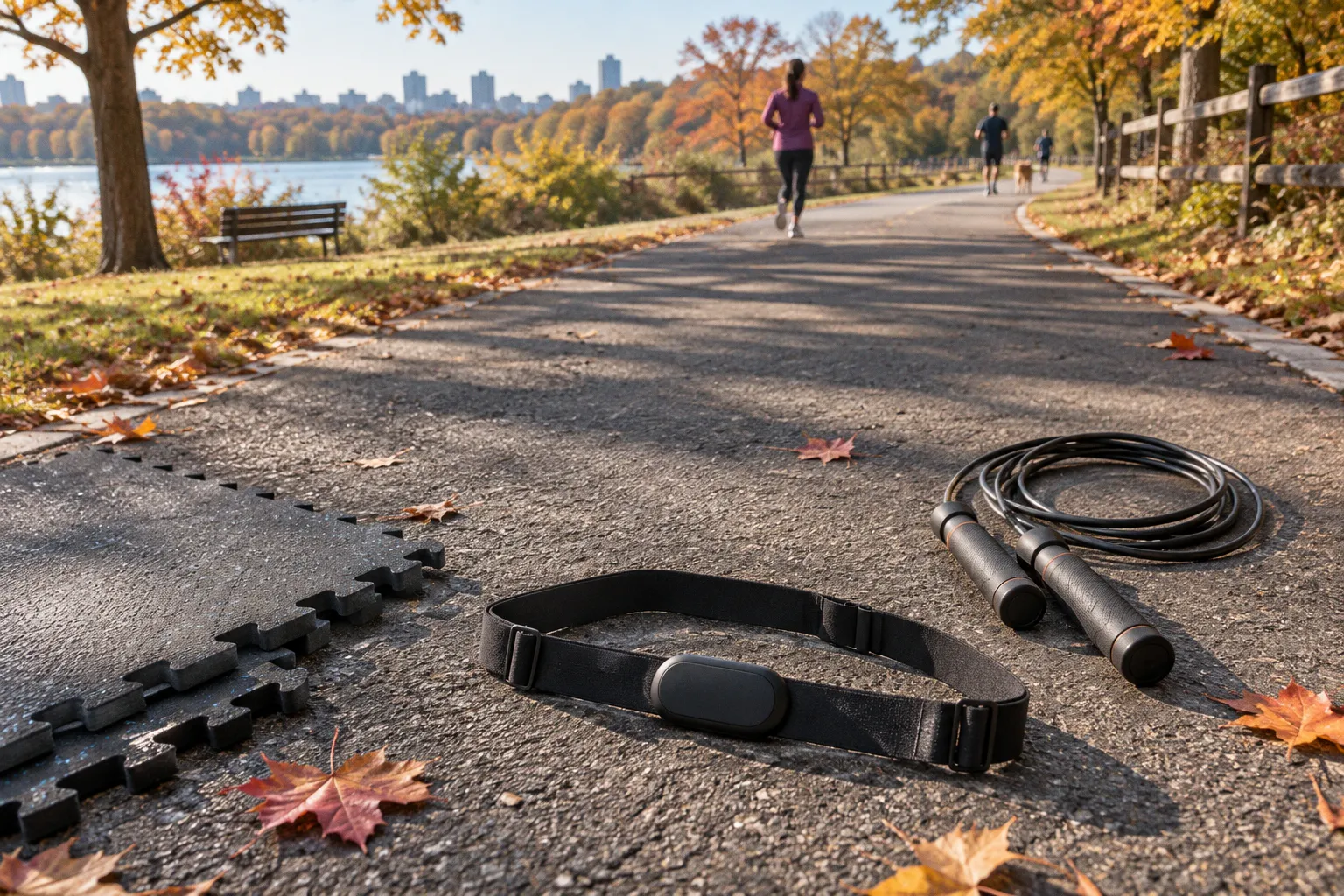
I mean the green LED on the back of your wrist is reading your heart rate wrong during the exact moments you care about most.
I've been testing recovery gear and wearables for years, and I've worn dozens of these gadgets through thousands of miles and hundreds of interval sessions. The pattern is depressingly consistent: at rest, when you're parked on the couch digesting a protein bar, the sensor is pretty solid. The moment you hit a sprint, swing a kettlebell, or drop into a burpee — the data frays at the edges. Sometimes by a little. Sometimes by enough to throw your training-zone math out the window.
That gap matters. If you're using heart rate to gauge effort, calibrate intensity zones, or — God help you — drive calorie burn calculations, the sensor strapped to your wrist is the wrong tool for the job. So let's talk about what's actually happening on your skin, why optical wrist monitors buckle under load, and when a chest strap is the only honest answer.
A wrist-based optical heart rate monitor is a consumer-grade estimation tool, not a clinical instrument. Treat it accordingly.
The science of PPG: why wrist sensors falter under intensity
Every optical heart rate sensor on your wrist runs the same underlying trick. It shines light into your skin — usually green LEDs, sometimes a blend of green, red, and infrared — and measures how that light scatters off the blood running through your capillaries. The technique is called photoplethysmography, or PPG for short, and it's been around in medical settings for decades.
The problem isn't the principle. It's the deployment.
A wrist sits at the trailing edge of a swinging arm. The skin flexes constantly, there's a thick layer of hair, dead skin, and tendon noise between the LEDs and any usable blood signal, and the bone underneath is shallow. Under steady-state conditions — walking, easy jogging, sitting still — PPG sensors can hit a mean absolute percentage error (MAPE) of around 2% to 3% against an ECG. That's good enough to fool you into trusting them.
Push the intensity, though, and the physics starts to wear. The same sensor that nailed your resting heart rate can jump to an error rate of 8% to 12% during vigorous exercise. In real BPM terms, the wrist reading can drift by ±10 to 15 beats per minute while a chest strap stays within ±1 to 2 BPM under identical load.
Why? Three things break at once:
- Motion artifacts. When your arm pumps during a run or flails during a burpee, the LED-to-skin distance varies by millimeters. The light scatters off tissue, sweat, and skin bouncing over bone. The sensor reads the noise as blood flow and starts guessing.
- Blood flow dynamics. During hard effort, blood is being shunted to working muscles and venous return shifts. The capillary bed at the wrist doesn't behave predictably the way it does at rest.
- Contact pressure. Every time the strap loosens — from sweat, wrist flexion, or simple impact physics — the optical signal degrades. A loose watch is essentially a placebo.
This is not a software bug. It's a hardware limitation wearing a clever algorithm as a costume.
Clinical reality: chest straps vs. optical wrist monitors
A chest strap works differently. Instead of playing tag with photons, it measures the electrical signal that actually triggers your heart to beat — the same signal an ECG reads in a hospital. Two conductive pads sit against your skin, detect the R-wave of each heartbeat, and transmit the R-R interval (the time between beats) directly to your watch or phone.
In a landmark evaluation published in the Journal of Medicine and Science in Sport and Exercise, the Polar H7 chest strap demonstrated 99.6% accuracy when measured directly against an ECG. That's not marketing copy. That's bench-test reality.
A more recent comparison of identical ECG-grade hardware embedded in a sports vest versus a traditional chest strap put the chest strap at roughly 0.76% MAPE during physical training, while the sports vest clocked in at 3.32% MAPE — and even that was on a stable torso surface, not a swinging wrist.
Here's the honest comparison you actually need:
| Parameter | Chest strap (ECG) | Wrist optical (PPG) |
|---|---|---|
| Accuracy vs. ECG at rest | ~99.6% | 2%–3% MAPE |
| Accuracy during high-intensity intervals | ±1–2 BPM | ±10–15 BPM |
| Best use case | Intervals, HIIT, calibrated zones | Daily activity, sleep, easy cardio |
| Comfort for long wear | Low — chafes, needs moisture | High — set and forget |
| Battery life | Months on a coin cell | Days on a charge |
| Skin tone sensitivity | Minimal | Higher error on darker skin tones during motion |
The chest strap wins on the data. The wrist sensor wins on the human factors. Pretending they do the same job is where the industry gets slippery.
The impact of movement and placement on data integrity
Here's the detail most reviews skip: where you wear the optical sensor changes the data more than which brand you buy.
Researchers have shown that moving the PPG sensor proximally — from the wrist up to the forearm or even the upper arm — significantly improves heart rate monitoring agreement with an ECG chest strap during high-intensity and full-body exercises. The upper arm doesn't swing as freely, the tissue is more stable, and there's less motion artifact bleeding into the signal.
Some manufacturers have caught on. Upper-arm optical heart rate monitors from brands like Polar and Wahoo have shown markedly better agreement with chest straps during running and interval work than their wrist-based cousins. The trade-off is convenience — nobody wants a band squeezing their bicep at 5 a.m. — but the data quality is real.
Other factors that move the needle:
- Skin tone. A systematic review in npj Digital Medicine evaluating Apple Watch metrics reported a minimal mean resting heart rate bias of around –0.27 bpm across the cohort, but noted that measurement variability widens during high-intensity activity and across darker skin tones. Green light doesn't penetrate melanin as efficiently as red or infrared. That's a published limitation, not a brand-specific quirk.
- Watch fit. A loose watch is worse than no watch. Snug, one finger tight, sensor centered on the flat of the wrist — not over bone.
- Tattoos. Ink blocks the light. Wrist tattoos are the silent killer of optical heart rate data.
- Cold and perfusion. Cold fingers and wrists clamp down on peripheral blood flow. PPG struggles when your capillaries are doing their best to keep your core warm.
Optimizing your wearable for better heart rate precision
You bought the watch. You might as well squeeze the best data out of it. Here's the field-tested checklist I run before any serious session:
- Wear it one finger-width above the wrist bone. On the flat of the wrist, not the side. Snug enough not to slide under impact.
- Moisturize or wet the sensor area before the session. Dry skin scatters light. A thin film of sweat or a quick spritz of water improves contact.
- Disable continuous tracking during heavy lifts if your device allows it. On-demand readings cut down on noise from static contractions and grip flex.
- Cross-check with a chest strap once a week. Pick one hard session, wear both, compare the numbers. The gap will educate you fast.
- Skip the calorie burn estimate entirely. Even when the heart rate is right, calorie algorithms are guesses layered on guesses. The error compounds fast.
- Update the firmware. Manufacturers tweak signal-processing algorithms regularly. A software update can move the needle by a few percentage points without buying new hardware.
One chest strap workout per week will tell you more about your wrist wearable's real-world accuracy than a year of staring at the wrist numbers alone.
If you won't wear a strap even once a week, accept that your wrist device is a directional tool, not a precision instrument. It'll tell you "harder than yesterday" with reasonable confidence. It won't tell you "you nailed zone 4 at minute 12" with any.
When to rely on electrical sensors over optical tech
Here's the short version of the verdict:
Use a chest strap when:
- You're running intervals, sprints, or HIIT.
- You're training to a specific heart rate zone for endurance work.
- You need a clean R-R interval for HRV or recovery analysis.
- You're racing and pacing decisions matter down to the second.
Use a wrist optical sensor when:
- You want all-day wear and sleep tracking.
- You're doing long, steady-state endurance and don't need pinpoint precision.
- You need to satisfy a corporate wellness program that won't accept a chest strap.
- Comfort and convenience matter more than data fidelity.
The two technologies aren't competing. They serve different jobs. Treating them as interchangeable is how people end up "training in zone 2" while their actual heart rate is parked in zone 4 wondering why they're cooked halfway through the workout.
I own both. I wear the wrist sensor every day because it's a watch, a notification hub, and a sleep tracker that doesn't strangle me. But when the work matters — when I'm timing intervals, pacing long efforts, or pulling HRV data — the strap goes on. No debate.
The verdict
If you came here looking for a clean ranking — best wearable on top, rest below — you came to the wrong place. The honest answer is more boring than that: chest straps win on data, optical wrist sensors win on daily life, and the smartest setup is wearing both and knowing which one to glance at.
Stop trusting the green light on your wrist during the hard sets. It's not built for that job. The chest strap is. The numbers don't lie, even when the marketing does.