Glute activation: which warmup path fits your workout?
The best glute activation routine before lifting is not the longest one, the hardest one, or the one that leaves your glutes shaking before the first working set.
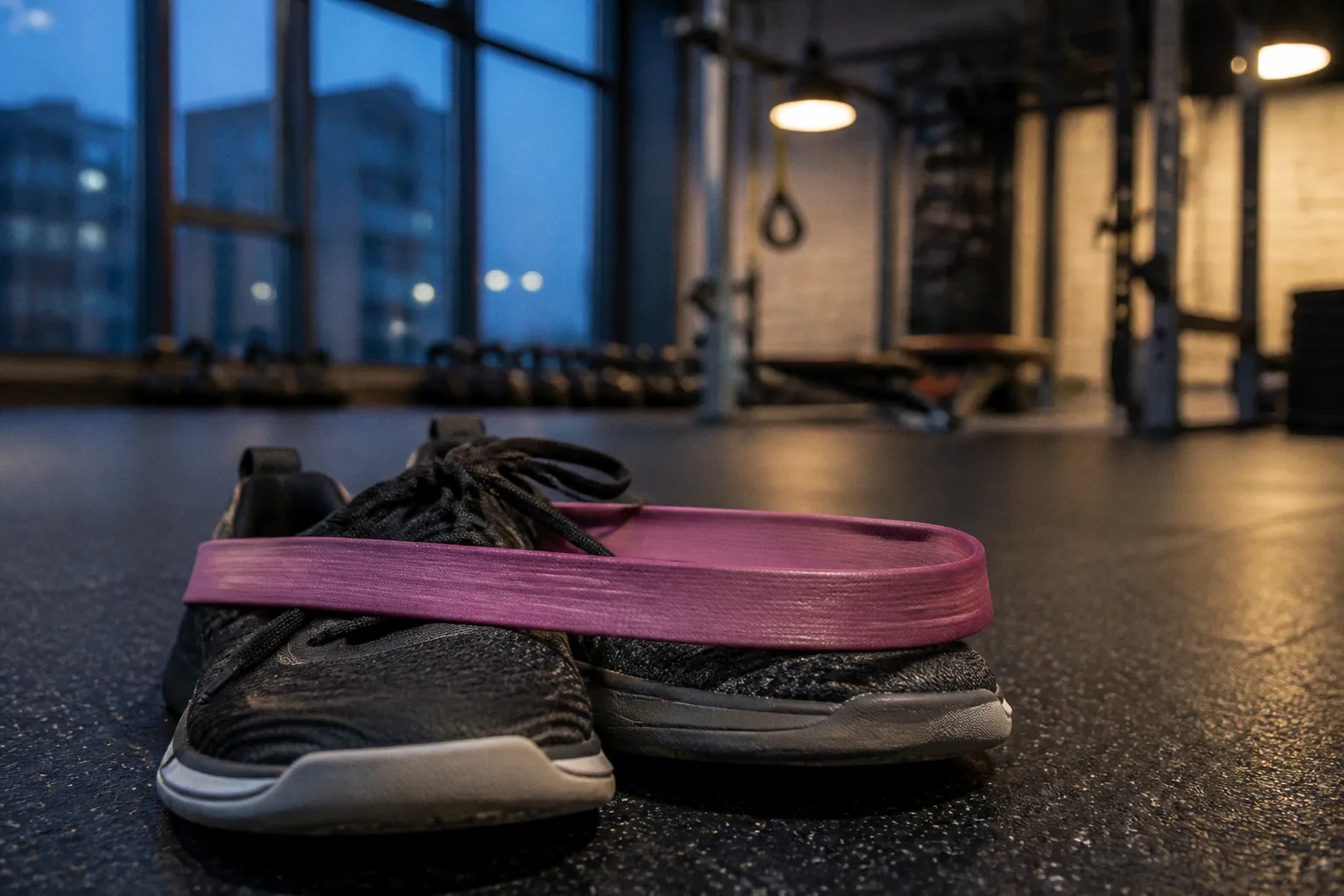
It is the warm-up that prepares the muscles for the job ahead without spending the energy you need for squats, deadlifts, jumps, or running.
That distinction matters because “glute activation” can mean several different things. A few controlled bodyweight drills may help you connect with the glutes before training. Resistance bands can add a small amount of challenge and encourage the hips to work through abduction and external rotation. Dynamic lunges may be the better choice when your session involves running, single-leg balance, or fast changes of direction.
So rather than searching for one universal best glute activation for squats—or one perfect booty warm-up for every training day—we can match the warm-up path to the movement demands of the session.
What glute activation is preparing you to do
The gluteal complex is made up of three main muscles: the gluteus maximus, gluteus medius, and gluteus minimus. Together, they contribute to hip extension, moving the leg away from the body, external rotation, and pelvic stability.
That gives us a useful starting point. Your glutes are not only there to make hip extension powerful during a deadlift or squat. They also help keep the pelvis controlled when one foot is on the ground, as it is during walking lunges, running, and many mobility drills.
A targeted warm-up can help you rehearse those actions at a low load:
- Hip extension: glute bridges and donkey kicks prepare the back of the hip for movements such as deadlifts, hip thrusts, and squats.
- Abduction and lateral control: clamshells and lateral mini-band walks challenge the muscles that help control the knees and pelvis.
- Single-leg stability: walking lunges with rotation and side walking lunges create a closer match for running or unilateral strength work.
- Movement awareness: slow, deliberate repetitions help you notice whether the work is coming from the hips or whether your lower back and thighs are taking over.
The goal is not to make a muscle feel exhausted. It is to give your nervous system a clear rehearsal of the movement pattern you are about to load.
Glute activation should sharpen the first working set, not compete with it.
This is where many warm-ups lose their purpose. A long circuit of high-repetition bridges, band walks, kickbacks, and squats may create a strong burn, but a burn is not the same thing as readiness. Excessive fatigue before heavy or explosive work can reduce the quality of what follows.
Three glute activation paths—and when each one makes sense
There is no single winner among glute activation options for workouts. Each path has a different relationship with effort, movement complexity, and the demands of the main session.
| Activation path | Best fit | Main advantage | Main risk |
|---|---|---|---|
| Bodyweight drills | Beginners, technique-focused sessions, heavy lower-body training | Low fatigue and easy control | The movement may be too easy to create a clear stimulus for experienced lifters |
| Resistance-band drills | Squats, hip thrusts, general lower-body strength sessions | Adds light resistance during abduction and hip extension | Too much band tension or volume can fatigue the hips before compound lifts |
| Dynamic unilateral drills | Running, lunges, sports movement, mobility-focused sessions | Prepares the hips for single-leg stability and changing positions | More coordination is required, so rushed repetitions can become messy |
1. Bodyweight glute activation exercises
Bodyweight drills are often the cleanest place to start. They require little equipment, allow you to control the range of motion, and make it easier to pay attention to pelvic position.
A simple sequence might include glute bridges, clamshells, fire hydrants, and donkey kicks. These movements are familiar for a reason: they let us train hip extension, external rotation, and abduction with a low external load.
For a pre-lifting routine, the value is in the quality of the repetition:
1. Set the ribs and pelvis in a comfortable, neutral position rather than arching aggressively through the lower back.
2. Move slowly enough to feel where the motion is coming from.
3. Pause briefly at the hardest point if you need a clearer sense of the glutes working.
4. Stop while the movement still feels crisp.
Bodyweight work is especially useful when the main session already contains a lot of load. Before heavy squats or deadlifts, we do not need to create a second workout on the floor. We need just enough practice to improve coordination and confidence.
A common choice is the glute bridge. It rehearses hip extension without asking you to balance a weight overhead or coordinate a full squat. Clamshells and fire hydrants shift the focus toward the side and back of the hip, which can be helpful before movements where the knees and pelvis need to stay controlled.
The limitation is equally straightforward: bodyweight may not feel challenging enough for someone with a high training age. That does not make it useless. It simply means the drill may function more as a movement rehearsal than as a meaningful resistance exercise.
2. Glute activation with resistance bands
Mini-bands can make a low-load warm-up more demanding without turning it into a heavy strength block. They are commonly used for lateral walks, clamshells, glute bridges, and similar drills.
The band creates resistance as the hips move apart or the knees press outward. This can give you a clearer external cue: keep the feet grounded, maintain control, and avoid letting the knees collapse inward during the movement.
For a glute activation routine before lifting, the band path works well when your primary exercises include:
- squats and split squats;
- hip thrusts and glute bridges;
- deadlift variations;
- step-ups;
- lower-body strength work that requires stable knee and hip alignment.
A practical band sequence could be:
- lateral mini-band walks;
- banded glute bridges;
- clamshells;
- a few controlled bodyweight squats to reconnect the activation work with the pattern you will load.
Keep the steps short during lateral walks. Large, hurried steps often turn the drill into a balance exercise, and the band may pull the pelvis from side to side. We want the hips to work, but we also want the trunk and pelvis to remain quiet enough that the movement is repeatable.
Band tension deserves some judgment. A stronger band is not automatically better. If you need to twist, lean, or rush to complete the repetitions, the resistance is too high for a warm-up. The ideal level allows you to maintain control and finish feeling more prepared, not less.
The same applies to volume. A typical targeted warm-up may last around five to eight minutes, with bodyweight or light mini-band drills performed for roughly 15–20 repetitions. Those figures are a useful range, not a rule that every body and every session must obey. If the last repetitions are slow because the hips are tired, reduce the number. If the movement feels effortless and your main session is moderate, a small increase may be reasonable.
3. Dynamic and unilateral activation
The third path is more movement-specific. Instead of staying on the floor for isolated drills, you use controlled lunges and mobility-based patterns to prepare the glutes for standing, stepping, rotating, and stabilizing.
This is often the most relevant option before running or a session with a large unilateral component. Dynamic walking lunges with rotation and side walking lunges prepare the hips to manage single-leg ground contact. That is a different demand from lying on your side and opening the knee, even though both approaches can involve the gluteal muscles.
For runners, field athletes, and people whose strength training includes many split-stance movements, a short dynamic sequence can include:
1. Walking lunges with a controlled rotation.
2. Side walking lunges.
3. A few bodyweight squats or reverse lunges.
4. Gradual acceleration into the main movement rather than an abrupt jump in intensity.
The rotation should remain controlled. It is not there to force a large range of motion through the spine. The purpose is to coordinate the hips, trunk, and legs while changing position.
This path also fits a mobility-focused workout because it connects preparation with movement. You are not trying to isolate every part of the glutes. You are preparing the lower body to produce force while the pelvis stays organized over the supporting leg.
How to choose the right path for your workout
The easiest way to choose among glute activation options for workouts is to look at the first major demand of the session. Ask what you need your hips to do, then select the least fatiguing warm-up that rehearses that demand.
Before heavy squats
For squats, the best glute activation for squats is usually simple and controlled. Start with bodyweight or light-band work, then move into unloaded squat repetitions before adding weight.
A practical route:
- glute bridges;
- lateral mini-band walks;
- clamshells or fire hydrants;
- several slow bodyweight squats;
- warm-up sets of the squat with gradually increasing load.
This sequence gives you hip extension and lateral control, then reconnects those sensations with the actual squat pattern. The warm-up sets are still essential. No floor-based activation drill can replace gradually exposing your body to the range of motion, bar position, and load you are about to use.
If your working squats are heavy, keep the activation especially brief. Your aim is to arrive at the bar alert and coordinated, not to prove how much discomfort you can tolerate from a mini-band.
Before deadlifts or hip thrusts
Deadlifts and hip thrusts place a strong emphasis on hip extension. Glute bridges and donkey kicks can provide a low-load rehearsal, while a few controlled hinge patterns help you connect the preparation to the main lift.
Band work can fit here, but it should stay light. The main objective is to feel the hips contributing without turning the warm-up into repeated near-maximal contractions.
You may use:
- glute bridges with a short pause;
- bodyweight hip hinges;
- light lateral band walks;
- gradual warm-up sets of the deadlift or hip thrust.
The hinge pattern deserves attention. If you perform several rounds of bridges but never practice the hinge, you may feel prepared lying on the floor and still need extra time to organize the standing movement. A good activation routine should lead naturally into the exercise that follows.
Before running or jumping
Running and jumping ask for more than hip extension. They require the glutes to help stabilize the pelvis and control the body during single-leg contact or rapid force production.
This is where dynamic unilateral drills become more useful. Walking lunges with rotation and side walking lunges create a closer bridge to the demands of running than a long series of isolated clamshells.
The intensity should build gradually. Start with controlled movement, then progress toward the speed of the session. Do not turn the activation block into repeated maximal jumps before the body is ready.
Research on low-load gluteal warm-ups has found that the timing after activation may matter for explosive performance. In a 2015 study, a low-load protocol was associated with improved jump force when an eight-minute rest period was used before the jump. That does not mean every person should copy an exact eight-minute pause before every workout. It does suggest that more stimulation is not always better, and that the transition between preparation and maximum effort deserves thought.
A 2017 study involving professional rugby players also suggested that gluteal activation may support force production during explosive movement by changing the neural demand required to produce that force. The practical takeaway is modest: a short, well-timed warm-up may help you express power, while a fatiguing circuit may work against it.
Before a Pilates or core-focused session
A Pilates core workout may not need a separate glute circuit at all. The glutes are already involved in pelvic control, bridging patterns, and many lower-body stability exercises.
Here, activation can be woven into the first movements of the session:
- slow bridges;
- controlled leg movements;
- side-lying hip work;
- breathing and pelvic-position practice.
The emphasis is precision rather than resistance. Adding a heavy band or chasing a strong burn may distract from the core control the session is designed to build.
A practical five-to-eight-minute framework
A warm-up does not need to be complicated to be effective. We can build it in three stages: connect, prepare, and transition.
Stage one: connect
Choose one low-load exercise that makes hip extension or lateral control easy to feel. Glute bridges are a useful starting point, while clamshells can bring attention to the side of the hip.
Use controlled repetitions rather than rushing. Around 15–20 repetitions may be appropriate for a bodyweight or light mini-band drill, but stop earlier if your form begins to change.
Stage two: prepare
Add one exercise that matches the session:
- lateral band walks before squats or step-ups;
- donkey kicks before hip extension-focused work;
- side walking lunges before running or unilateral training;
- bodyweight hinges before deadlifts.
This is the stage where the warm-up becomes specific. You are not collecting exercises. You are building a short path toward the main movement.
Stage three: transition
Finish with the pattern you will train, using no load or a very light load first. Perform slow squats before loaded squats, controlled hinges before deadlifts, or easy lunges before faster running.
This transition is often the missing piece. Isolated glute work may help you notice the muscles, but the body still needs to coordinate the whole movement. The final rehearsal closes that gap.
The most useful activation drill is the one that makes the next movement feel more organized.
Signs your activation routine is doing too much
A good warm-up should leave you feeling ready to train. It should not create the same fatigue as a glute-focused strength session.
Scale the routine back if you notice that:
- your first working set feels unusually heavy;
- your hips are already burning before the main lift;
- your range of motion becomes smaller with each repetition;
- you need to compensate by arching your lower back or rotating your pelvis;
- the band work makes your legs feel tired rather than responsive;
- your jumping or running feels flat after the warm-up.
These signs do not mean glute activation is wrong for you. They usually mean the dose is poorly matched to the session. Reduce the number of exercises, use less band tension, or create more space between the warm-up and the highest-intensity effort.
It is also worth separating muscle sensation from training quality. Feeling the glutes strongly can be useful when you are learning a pattern, but it is not a requirement for productive strength training. Compound lifts naturally distribute work across several muscles. The purpose of activation is to support that coordination, not to force one muscle to dominate every repetition.
Common mistakes that make a warm-up less useful
Treating activation as a test of toughness
If the routine leaves you trembling, you may have crossed from preparation into fatigue. This is particularly unhelpful before heavy lower-body strength training or explosive work.
Using the same circuit before every session
A warm-up for squats does not need to look identical to a warm-up for running. Squats may benefit from controlled hip extension and lateral preparation, while running calls for more single-leg movement and gradual rhythm.
Chasing perfect isolation
The glutes do not need to work in complete isolation for you to train well. The hips, trunk, hamstrings, and quadriceps are part of the same movement system. A drill is valuable when it improves control or readiness, not simply because it creates a stronger burn.
Skipping the actual warm-up sets
Activation drills are not a replacement for progressive loading. Before a demanding lift, use warm-up sets to practice the exact exercise and build toward the working weight. This is where you assess how the body is responding that day.
Assuming more activation means more muscle growth
The available evidence supports the use of low-load drills as preparation for movement and force production, but it does not establish that targeted activation provides uniform hypertrophy benefits compared with every other warm-up approach. Keep the claims—and your routine—proportionate to the goal.
The simplest route is often the sustainable one
For most lower-body strength sessions, we can keep the decision-making simple:
- Heavy squats: bodyweight bridges, light lateral band walks, then progressive squat warm-up sets.
- Deadlifts or hip thrusts: bridges, hinges, and a gradual transition into the main lift.
- Running: dynamic lunges, side walking lunges, and a progressive increase in movement speed.
- Single-leg strength: unilateral lunges and controlled lateral work.
- Pilates or core training: low-load pelvic and hip control built into the opening sequence.
There is no need to collect every glute activation exercise you see online. Choose one or two that match the session, perform them with control, and leave enough energy for the training that actually drives progress.
The small win for your next workout is easy: before your first lower-body exercise, spend five minutes on one hip-extension drill and one movement-specific drill. Then complete a few gradual warm-up sets of the exercise you plan to train. Notice whether the first working set feels clearer—not whether the warm-up made your glutes burn the most.
That is the standard worth keeping: more readiness, less noise, and a routine you can repeat consistently.