Batch cooking vs ingredient prep: fitness meal prep routes
The hardest part of eating well for fitness is rarely knowing what a balanced meal looks like.
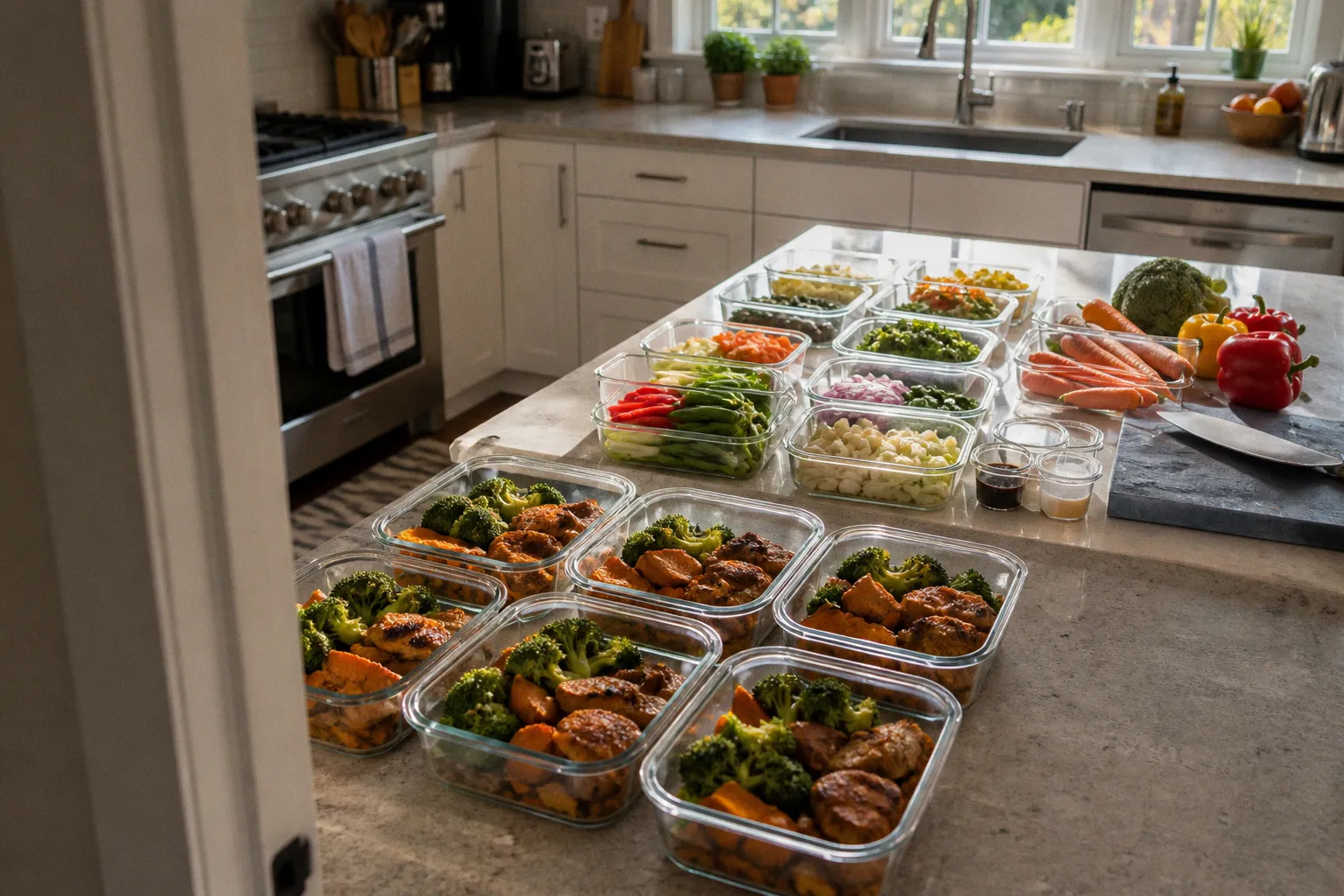
Batch Cooking vs Ingredient Prep: Choosing Your Fitness Meal Prep Route
The friction usually appears later: training ends, hunger is high, the fridge is empty, and the meal that fits your protein target still needs to be cooked from scratch.
That is where meal prep helps—but not every meal prep system solves the same problem. Batch cooking vs ingredient prep for fitness is less a question of which method is “better” and more a question of how much structure, variety, and daily decision-making your routine can support.
Batch cooking gives you complete meals, portioned and ready to reheat. Ingredient prep keeps proteins, carbohydrates, and vegetables separate so you can build different meals across the week. Both can support portion control, consistent protein intake, and more efficient fitness meal prep. The better choice depends on your schedule, training demands, appetite, and tolerance for eating similar meals repeatedly.
The real difference: finished meals or building blocks?
Let’s start with the simplest distinction.
Batch cooking means preparing complete dishes in larger quantities, then dividing them into individual containers. Think chili with rice, chicken with roasted potatoes and vegetables, or a lentil curry portioned for several lunches.
Ingredient prep, sometimes called component meal prep or source prepping, means preparing the main parts separately. You might cook shredded chicken, brown rice, and roasted vegetables, then combine them differently throughout the week with sauces, spices, wraps, or salad greens.
The food may be similar. The experience is not.
| Meal prep approach | What you prepare | Main advantage | Main trade-off |
|---|---|---|---|
| Batch cooking | Complete meals in individual portions | Maximum convenience during busy days | Less variety once meals are packed |
| Ingredient prep | Proteins, carbs, vegetables, and sauces separately | Flexible combinations and easier variety | Requires some assembly during the week |
| Hybrid prep | A few complete meals plus separate components | Balances speed and flexibility | Takes more planning than choosing one method |
This distinction matters because fitness nutrition is not only about the ingredients on your plate. It is also about whether the system is easy enough to repeat.
A meal plan that looks perfect on paper but becomes unappealing by Wednesday will not support consistency. Likewise, a flexible system that requires too much chopping, weighing, and decision-making may fail on the busiest training days.
The best meal prep method is the one that still works when your schedule, appetite, and motivation are less than perfect.
Batch cooking: efficiency for busy schedules
Batch cooking is the most direct route from a busy week to ready-to-eat meals. You cook once, portion the food, and reduce the number of decisions required later.
For many people, this is exactly what makes the method effective. If you have early training sessions, long workdays, or a family schedule that changes constantly, a complete meal waiting in the fridge can remove a major barrier. You do not need to decide which protein to cook, how much rice to make, or whether the vegetables are still available. The meal is already built.
A typical batch-cooked meal includes:
- A protein source such as chicken, turkey, lean beef, eggs, tofu, beans, fish, or Greek yogurt-based components.
- A carbohydrate source such as rice, potatoes, oats, pasta, beans, quinoa, or whole-grain wraps.
- Vegetables or fruit for volume, fiber, color, and micronutrients.
- A sauce, dressing, seasoning blend, or garnish that helps the meal remain enjoyable.
The method works especially well for meals that improve—or at least hold their texture—after reheating. Chilis, soups, stews, curries, casseroles, grain bowls, and roasted tray meals are usually easier to prepare in volume than delicate foods such as crisp salads or fried eggs.
Why batch cooking supports fitness goals
Complete meals make portion control more automatic. Instead of building a plate while hungry, you decide the portions during prep, when your appetite is calmer and your choices are more deliberate.
This can be useful when your goal requires a relatively consistent intake of energy or macronutrients. You can distribute the cooked food into containers and create a predictable pattern across the day. That does not mean every meal has to be identical or that your macro targets need to be rigid. It simply reduces the amount of guesswork.
Batch cooking also protects your post-workout window from turning into a takeout decision. After a demanding session, convenience tends to win. Having a complete meal ready makes the more supportive option the easier option.
There is one practical limitation: fully assembled meals usually have their best freshness and texture within about three to four days in the refrigerator. Reheating can gradually affect moisture, crispness, and the texture of vegetables or lean proteins. If you prepare more than you can comfortably eat in that period, freezing single portions is often the better route for large-batch foods such as soups, stews, and chili.
That means a seven-day plan does not necessarily require seven refrigerated containers. You can refrigerate the first few portions and freeze the rest, then move portions to the refrigerator as needed.
Where batch cooking becomes frustrating
The most common problem is food boredom. Even a nutritious meal can become difficult to enjoy when the same flavor, texture, and smell appear repeatedly.
This is not a discipline problem. It is a design problem.
If you prepare five identical containers with the same protein, sauce, and vegetables, you have created efficiency—but not much flexibility. That may work for a short period, especially during a busy week, but it can create resistance over time.
Batch cooking can also make it harder to adjust your meals based on training. On a rest day, you may want a different carbohydrate portion than on a high-volume training day. If everything is already packed, changing the balance can feel inconvenient.
For this reason, batch cooking works best when you build variety into the prep itself:
1. Use two flavor profiles instead of one. For example, season part of the protein with herbs and lemon, and the rest with smoked spices or a mild curry blend.
2. Cook one main dish and prepare a few fresh add-ons, such as salad greens, salsa, yogurt sauce, or herbs.
3. Keep some components unassembled so you can modify portions or textures later.
4. Freeze the later-week portions rather than asking refrigerated meals to carry the entire week.
Batch cooking is not about surrendering variety. It is about deciding where variety belongs: in the base meal, in the toppings, or in the meals you prepare on different days.
Ingredient prep: flexibility without starting from zero
Ingredient prep takes a different approach. Instead of asking, “Which complete meal will I eat all week?” we ask, “Which prepared components will make several meals easier?”
You might prepare:
- A tray of roasted vegetables.
- A pot of rice, potatoes, or another carbohydrate base.
- A batch of chicken, turkey, tofu, beans, or lean beef.
- Hard-boiled eggs or another quick protein option.
- Washed salad greens and chopped vegetables.
- Two sauces with different flavor profiles.
- Fruit, yogurt, or other simple snack components.
At mealtime, you assemble what fits your appetite and training day. A serving of chicken and rice can become a grain bowl with vegetables, a wrap with salad and yogurt sauce, or a quick stir-fry with a different seasoning blend.
This is the central advantage of ingredient prep: the same cooked foods can support several meals without tasting like the same meal.
Why component meal prep reduces palate fatigue
Palate fatigue is one of the quiet reasons people abandon otherwise sensible meal plans. The issue is not always the food itself. Often, it is the repeated combination.
A neutral or lightly seasoned base gives us room to change the final flavor. Chicken can take on different roles depending on the sauce. Rice can sit beside vegetables one day and become part of a burrito-style bowl the next. Roasted vegetables can move from a lunch bowl to an omelet, wrap, or dinner plate.
This flexibility can make ingredient prep more sustainable for people who:
- Prefer variety from day to day.
- Share meals with a partner or family.
- Adjust food intake according to training intensity.
- Track macros but do not want identical meals.
- Become bored quickly with repeated flavors.
- Prefer to cook a fresh final portion without doing the entire recipe from scratch.
Ingredient prep also gives you more control over texture. Sauce can be added just before eating instead of soaking into the meal for several days. Greens stay separate from warm ingredients. Crispy toppings remain crisp. This is a small detail, but food that feels fresh is easier to continue eating consistently.
The cost of flexibility
Ingredient prep is not completely hands-off. You still need to assemble meals during the week, and that can be inconvenient when you are exhausted or rushing between work and training.
It also requires a little more visual organization. Separate containers for protein, carbohydrates, vegetables, and sauces take up space. If your refrigerator is already crowded, the system may need some planning.
The most efficient version is not to prepare every possible ingredient. Choose a limited set of components that overlap across several meals. Two proteins, one or two carbohydrate bases, several vegetables, and a couple of sauces are usually enough to create variation without turning prep into a second job.
A useful rule is to keep the components familiar and the combinations flexible. You do not need a new recipe for every day. You need enough options to avoid feeling trapped by the food you prepared.
Managing freshness: the three-to-four-day boundary
Freshness is where meal prep plans often become unrealistic. A recipe may be designed to produce a large quantity, but the refrigerator does not automatically preserve quality indefinitely.
Fully assembled cooked meals generally maintain their best freshness for around three to four days in the refrigerator. After that point, texture and moisture can decline, especially in meals with tender vegetables, lean proteins, or ingredients that release water during storage.
This does not mean every meal changes in exactly the same way. Soups and stews may reheat more successfully than roasted vegetables. A dressed salad will deteriorate faster than its ingredients stored separately. Rice and potatoes may require careful cooling and reheating to maintain a pleasant texture.
A practical weekly system might look like this:
- Prepare enough complete meals for the first part of the week.
- Keep sauces, greens, and delicate toppings separate.
- Freeze portions that will not be eaten within the refrigerator window.
- Prepare a second small batch of fresh components later in the week if needed.
- Use ingredient prep for foods that lose quality when fully assembled.
Freezing is particularly useful when batch cooking recipes such as chili, soup, stew, or casserole. Portioning before freezing makes the food easier to use later and prevents the common problem of thawing an entire container when you only need one meal.
With ingredient prep, you can sometimes extend the feeling of freshness because the final meal is assembled later. However, the individual cooked components still need appropriate storage and handling. Flexibility does not remove the need for a sensible food-safety routine.
Macro tracking becomes easier when the structure is clear
Both meal prep styles can support macro tracking, but they offer different levels of control.
With batch cooking, you calculate or estimate the recipe as a whole, then divide it into portions. This is efficient when each container is intended to be similar. It works well for people who like repeatability and do not want to make many choices during the day.
The limitation is that the portions need to be reasonably consistent. If one container contains noticeably more rice and another contains more chicken, the numbers become less predictable. You can reduce that variation by weighing the finished batch before dividing it, or by portioning the main ingredients separately before combining them.
Ingredient prep gives you more room to adjust each macro category. You can add more carbohydrate around a hard training session, increase protein when a meal is lighter, or use extra vegetables when you want more volume without changing the overall structure dramatically.
The research provided here does not establish one universal macro ratio for every fitness goal—and there is no responsible reason to pretend that one exists. A runner in a high-volume training block, someone focused on strength, and someone working toward gradual fat loss may all need different adjustments.
What component prep does provide is a practical way to make those adjustments. You are not rebuilding the meal from the beginning. You are changing the balance of already prepared parts.
A simple component-based portion framework
Rather than treating every meal as a fixed recipe, build it from three main categories:
1. Protein anchor: Choose the amount that helps the meal support your daily protein target. This might be poultry, fish, eggs, dairy, tofu, tempeh, beans, or another reliable source.
2. Training-support carbohydrate: Adjust the portion based on appetite, activity, and the demands of the day. Higher-volume training days may call for more carbohydrate; lighter days may need less.
3. Vegetable and flavor layer: Add vegetables for volume and variety, then use sauces, herbs, spices, or acidic ingredients to change the character of the meal.
This structure is not a rigid prescription. It is a repeatable decision-making tool. It helps us move away from the idea that healthy eating requires perfect meals and toward a system that can adapt without losing direction.
Macro-friendly meal prep does not have to mean eating from identical containers. It can mean preparing enough structure to make smart adjustments quickly.
Which meal prep style fits your training week?
The right method depends on the shape of your week, not just your nutrition goal.
Choose batch cooking when convenience is the priority
Batch cooking is often the stronger option when:
- Your weekday schedule leaves very little time for meal assembly.
- You train early or late and need food ready immediately.
- You prefer predictable meals and consistent portions.
- You enjoy soups, stews, grain bowls, casseroles, or reheatable dishes.
- You are trying to reduce reliance on restaurant food or delivery.
- You are comfortable eating the same base meal several times.
For a busy training week, the reduction in decisions can be more valuable than maximum variety. If the main obstacle is getting food on the table, complete portions are a practical solution.
Choose ingredient prep when flexibility keeps you consistent
Ingredient prep may suit you better when:
- You dislike eating the same meal repeatedly.
- Your training schedule changes from day to day.
- You want to adjust carbohydrate portions according to activity.
- You share meals with people who have different preferences.
- You prefer fresh sauces, crisp vegetables, or varied textures.
- You enjoy assembling quick meals but do not want to cook every ingredient daily.
This style is especially useful for people who already know that rigid plans create resistance. The goal is not to force yourself to become someone who loves identical containers. The goal is to make nutritious choices easier within the routine you actually have.
The hybrid approach is often the most sustainable
We do not have to choose one method for every meal.
A hybrid system might include two or three complete portions for the busiest days, plus separate ingredients for meals that can be assembled later. You could batch-cook a chili for lunches, prepare chicken and vegetables separately for dinners, and keep quick protein options available for snacks or breakfast.
This approach creates a dependable floor without making the entire week repetitive. It also gives you a backup for the days when cooking is not realistic and flexibility for the days when you want something different.
Here is a practical comparison:
| Your weekly reality | Better starting point | Why |
|---|---|---|
| Very little time between work and training | Batch cooking | The meal is ready with minimal effort |
| Appetite and training load change often | Ingredient prep | Portions can be adjusted at assembly |
| You lose interest in meals after a few servings | Ingredient prep or hybrid | Sauces and combinations can change |
| You prefer simple routines and repeated foods | Batch cooking | Fewer decisions and easier portioning |
| You cook for several people | Hybrid | Shared components can become different meals |
| You want food for the whole week | Batch cooking plus freezing | Protects later portions from quality decline |
| You are new to meal prep | Small batch or hybrid | Builds consistency without overcommitting |
How to build a system that survives real life
The best meal prep session is not the one that produces the most containers. It is the one that gives you enough support without creating a new source of fatigue.
A weekly prep session commonly takes around two to four hours, depending on the number of recipes, portions, and cooking methods involved. You can shorten that window by using overlapping ingredients and allowing the oven, rice cooker, slow cooker, or pressure cooker to handle multiple tasks.
Start with the meals that create the most friction. If breakfast is already easy but dinner is where you order food impulsively, prep dinner components first. If the problem is post-workout hunger, prepare meals that can be eaten or reheated quickly after training.
Then keep the menu narrow enough to manage:
- One or two dependable protein sources.
- One carbohydrate base that reheats well.
- One tray of vegetables or a mix of raw options.
- Two sauces or seasoning directions.
- One emergency meal that requires almost no assembly.
The emergency meal matters. A flexible meal plan should include food for the day that goes off schedule. This might be frozen chili, a yogurt bowl with fruit and oats, eggs with toast, or a quick wrap assembled from prepared components. It does not need to be elaborate. It needs to be available.
Avoid under-seasoning everything in the name of “clean eating.” Nutritious food still needs to be satisfying. Herbs, spices, citrus, vinegar, salsa, yogurt sauces, and measured dressings can make a major difference without turning the meal into a complicated recipe.
And do not prep quantities based on an imaginary version of yourself who never changes plans. If you are uncertain whether you will eat five identical meals, prepare fewer complete portions and keep more ingredients separate. A little flexibility is often more sustainable than a refrigerator full of food you no longer want.
The route to choose this week
If you need maximum convenience, start with batch cooking. Make a complete dish that reheats well, portion it into servings, and freeze anything you will not eat within the next three to four refrigerated days.
If variety is what keeps you consistent, choose ingredient prep. Cook a protein, a carbohydrate, and several vegetables separately, then change the sauces and combinations throughout the week.
If you are not sure, use the hybrid route: prepare a few finished meals for your most demanding days and keep the rest as components. That gives you structure when energy is low and freedom when your appetite or training changes.
For your very next meal, make the smallest useful improvement: choose one protein, one carbohydrate, and one vegetable you already enjoy, then prepare enough for more than one meal. You do not need a perfect weekly menu. You need a system that makes the next supportive choice easier—and that is where sustainable progress begins.
FAQ
How long can I keep meal-prepped food in the refrigerator?
What should I do if I prep more food than I can eat in four days?
Which meals are best suited for batch cooking?
How can I avoid food boredom when meal prepping?
How much time does a typical meal prep session take?
More products
 FlashBurnUSD79