Collagen in hot coffee: does heat ruin the protein?
If you are holding a scoop of hydrolyzed collagen over a freshly brewed mug of coffee, the question is not ridiculous: does the heat damage the supplement before you drink it? Collagen is still a protein, and proteins can change shape under heat.
That basic fact has been stretched into a much more dramatic warning—that hot coffee somehow destroys the useful part of collagen peptides before they reach your stomach.
For ordinary brewed coffee, that conclusion is not supported by the way hydrolyzed collagen is made or by the temperatures involved. The powder in your container is not the same material as raw collagen tissue. It has already been processed into shorter peptide chains, specifically to make it easier to digest, dissolve, and use in everyday foods and drinks.
That does not mean temperature is irrelevant in every possible situation. Extremely high heat, prolonged heating, moisture, acidity, and the difference between a finished drink and a dry manufacturing process can all matter. But a normal cup of hot coffee is a much less hostile environment than the online warnings suggest.
The Science of Hydrolysis: Why Collagen Peptides Are Heat-Stable
The first distinction is the one that gets skipped most often: native collagen and hydrolyzed collagen are not interchangeable.
Native collagen is the structural protein found in connective tissue. Its molecules are arranged in a strong triple-helix structure, which helps give skin, tendons, ligaments, cartilage, and other tissues their mechanical properties. When raw collagen is exposed to heat, acids, or enzymes, that structure begins to unwind. In food preparation, this is part of how tough connective tissue becomes softer and more gelatinous.
Collagen supplements usually contain something different. The raw collagen source may come from bovine, porcine, marine, or poultry material, but the finished powder is generally collagen that has undergone hydrolysis. During that process, long protein chains are broken into shorter fragments called peptides. These fragments are easier to disperse in liquid and easier for the digestive system to handle than intact collagen.
That is why the term collagen peptides matters. The product has not been left in its original, tightly organized form and then casually dropped into your coffee. Much of the structural change that people associate with heat has already taken place during manufacturing.
The word denatured also causes confusion here. Denaturation usually describes a change in a protein’s folded structure. Hydrolysis goes further by breaking peptide bonds and reducing larger chains into smaller ones. Those are related but not identical processes. Saying that a scoop of collagen has been hydrolyzed is not the same as saying that it has been ruined.
What happens in a warm mug?
In practical terms, hydrolyzed collagen peptides are relatively tolerant of the temperatures found in common hot drinks. They are not delicate strands waiting to collapse the moment they touch coffee. The finished powder is designed to be mixed into foods and beverages, and many products are used in hot drinks, soups, oatmeal, and baked recipes.
The main concern with hot coffee is therefore not instant protein destruction. It is whether the heat, acidity, or storage conditions cause measurable changes over time—and whether those changes would matter in a real serving consumed by a person.
Those are more reasonable questions than the idea that one hot mug switches collagen from effective to useless.
Hydrolyzed collagen is not raw connective tissue in powdered form; it has already been broken down into shorter peptides before it reaches your kitchen.
Hydrolysis also explains why collagen powder can dissolve in liquid at all. Native collagen is not a convenient beverage ingredient. Hydrolyzed peptides are made to behave more like a soluble food ingredient, although the texture still depends on the formula, the liquid, and how the powder is added.
Thermal Thresholds: Comparing Brewing Temperatures to Peptide Degradation
Coffee is hot, but the phrase hot is doing too much work in this discussion. A freshly brewed drink, a simmering liquid, a boiling mixture, and a dry powder exposed to industrial heat are not the same thermal environment.
Coffee is commonly brewed at temperatures around 195–205°F, or approximately 90–96°C, inside the machine. By the time it reaches your mug, it may be somewhat cooler, and it continues losing heat while it sits. The temperature you actually drink is often lower still.
That matters because peptide degradation is not an on-off switch triggered by an ordinary kitchen temperature. The chemical stability of a peptide depends on the combination of heat, time, moisture, pH, oxygen, and the specific amino-acid sequence. A brief exposure to a hot liquid is not equivalent to sustained exposure to much higher temperatures during processing.
A simplified comparison looks like this:
| Situation | Approximate temperature or condition | What it means for collagen peptides |
|---|---|---|
| Coffee brewing | About 195–205°F (90–96°C) | Hot, but within the range commonly encountered in beverage preparation |
| Coffee served for drinking | Often below brewing temperature | Short contact time and immediate consumption limit prolonged heat exposure |
| Warm coffee or tea | Lower than freshly brewed coffee | Even less thermal stress for the powder |
| Simmering or boiling a mixture for a long time | Near the boiling point with extended exposure | A different situation from stirring powder into a finished drink |
| Very high industrial or dry heat | Far above normal beverage temperatures | More relevant to manufacturing stability than to a morning mug |
Some technical discussions place the beginning of meaningful peptide breakdown at temperatures far above those encountered in a normal serving of coffee, while other warnings focus on lower temperatures and the possible loss of specific peptide structures. The problem is that these claims are often presented as though they describe the same endpoint. They do not.
A peptide can undergo a chemical change without the entire supplement becoming nutritionally worthless. A change in molecular profile is not automatically a total loss of amino acids. And a laboratory observation under prolonged or unusually intense heating does not automatically predict what happens when a scoop sits in coffee for a few minutes.
Why the temperature gap is not the whole story
It is tempting to solve the question with one dramatic number: below this temperature, collagen is safe; above it, collagen is destroyed. Biology and food chemistry rarely cooperate with that kind of clean boundary.
The duration of exposure matters. So does the liquid itself. Coffee is mildly acidic, and acidity can influence chemical reactions, but the acidity of a normal cup is not the same as placing collagen in a highly acidic solution and heating it for an extended period.
The serving context matters too. A supplement mixed into coffee and consumed shortly afterward has a different exposure profile from collagen incorporated into a dry food and held at high heat during cooking. The amount of water, the concentration, the surrounding ingredients, and the length of heating all change the conditions.
For everyday use, the useful conclusion is modest rather than theatrical: putting hydrolyzed collagen into hot coffee is unlikely to cause the kind of immediate, complete destruction implied by social-media warnings.
The 140°F Debate: Understanding Bioactive Peptide Breakdown
The 140°F, or 60°C, warning appears frequently in conversations about collagen and hot drinks. It usually rests on a more specific concern than general protein denaturation: that heat could break down short bioactive peptides into individual amino acids before the body has a chance to absorb them in their original form.
That argument sounds plausible because collagen peptides are marketed around their small molecular size. Some research has identified collagen-derived peptides in the bloodstream after ingestion, and particular peptide fragments may be relevant to how the body responds to collagen supplementation. It is understandable that consumers would want to preserve those fragments.
The difficulty is moving from that biological possibility to a confident rule about coffee. A claim that a peptide structure can change under certain laboratory conditions is not the same as proof that a normal cup of coffee eliminates the relevant benefits. To establish that, researchers would need to compare the same collagen product prepared at different temperatures and then measure meaningful outcomes in people—such as changes in skin properties, joint symptoms, or exercise-related recovery.
That kind of direct comparison is not the basis of most online temperature warnings. The warnings often blend manufacturer guidance, theoretical chemistry, and cautious label language. None of those automatically demonstrates that coffee-temperature exposure creates a meaningful difference in real-world results.
There is also a conceptual trap in the phrase bioactive peptide. It can make a molecule sound fragile, as if its value disappears the moment its environment changes. In reality, peptide behavior depends on its sequence, concentration, surrounding chemistry, and exposure time. Not every change affects every function, and not every peptide found in a supplement is responsible for the same proposed effect.
A cautious temperature recommendation can be reasonable without turning 140°F into a proven cliff edge between effective collagen and useless powder.
If you want to follow the most conservative approach, let the coffee cool for a few minutes before adding the powder. That is easy enough, especially if you are already sensitive to very hot drinks. It may also make the coffee more comfortable to drink and reduce the chance of scorching your mouth while you stir.
But if convenience is what makes you take the supplement consistently, waiting for lukewarm coffee is not automatically necessary. Consistency, an appropriate serving, and choosing a product you tolerate are more practical variables than treating every temperature above 140°F as a disaster.
What about protein denaturation in general?
The phrase protein denaturation is often used as though it means the protein has been destroyed. That is not how the term works. Heat can alter a protein’s shape, but altered shape does not always mean the amino acids have disappeared or that the material has no nutritional value.
Egg whites are the familiar example: heat changes their structure, texture, and appearance, but it does not make the protein vanish. Collagen behaves differently from egg proteins, and this analogy should not be pushed too far, but it illustrates why denaturation and destruction are not synonyms.
For collagen peptides, the question is even more specific because the product has already been hydrolyzed. You are not trying to preserve the original triple helix. That structure is not the target of a collagen peptide supplement. The relevant question is whether ordinary drink preparation substantially changes the peptide mixture in a way that undermines its intended use.
For a normal mug of coffee, there is no strong reason to assume that it does.
Practical Mixing: Why Hot Liquids Improve Solubility and Texture
Heat is usually more of a mixing aid than a collagen problem.
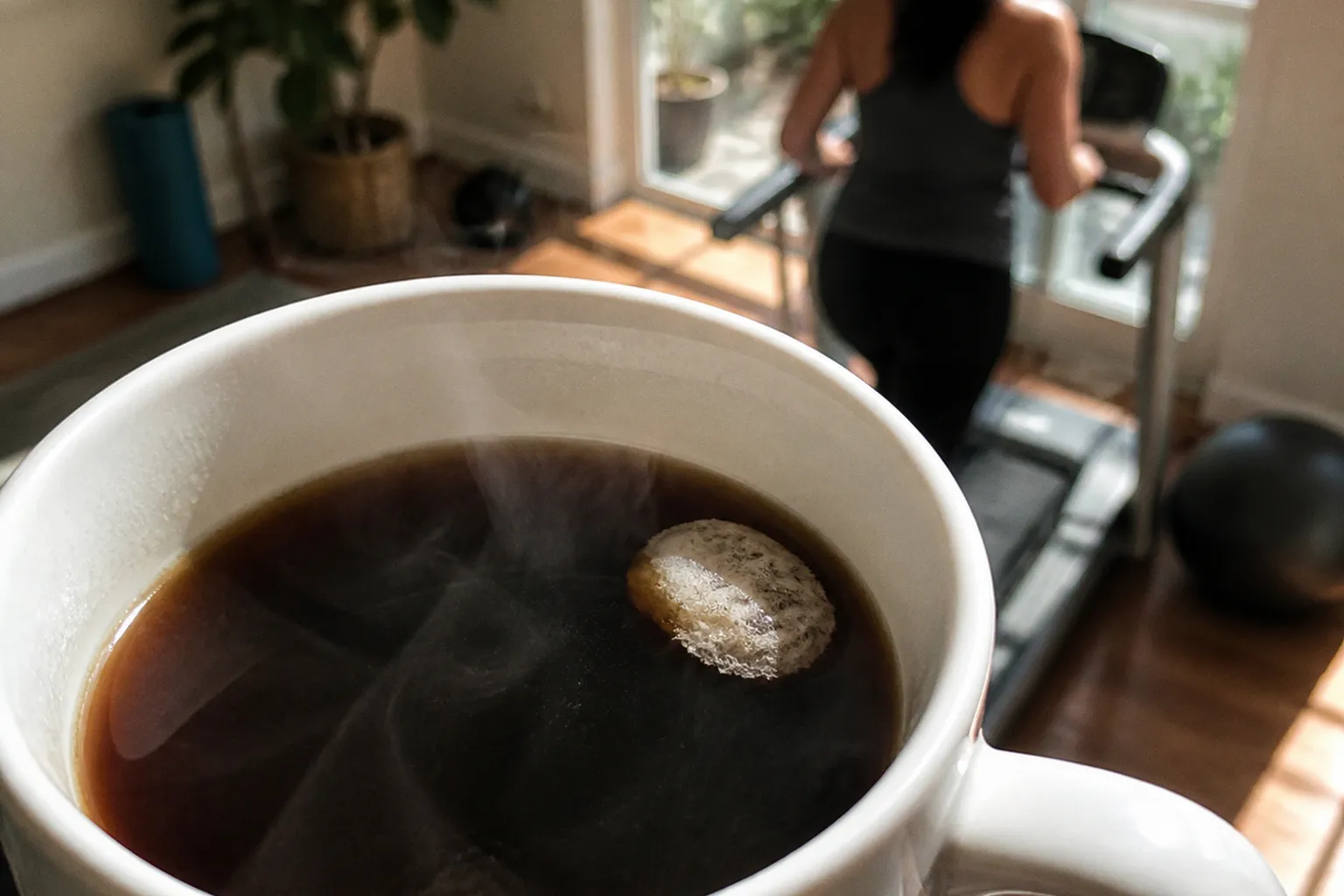
Hydrolyzed collagen dissolves more readily than intact collagen, but dissolves readily does not mean dissolves perfectly under every condition. Powder can float, clump, stick to the side of the mug, or form small rubbery-looking beads when it lands on the surface of a full drink. This is especially likely when the powder is dumped in all at once.
The fix is mechanical. Give the powder a chance to hydrate gradually instead of forcing a dry scoop to disperse across the entire mug.
A reliable method is:
1. Add the collagen powder to an empty mug.
2. Pour in a small amount of coffee rather than filling the cup immediately.
3. Stir until the powder becomes a smooth paste or thin slurry.
4. Add the remaining coffee while continuing to stir.
5. Use a handheld frother if the formula remains stubborn or if you prefer a more uniform texture.
This approach works because each particle is wetted before it has time to collect with its neighbors. Once a dry layer forms around a clump, the outside can become hydrated while the center stays dry. More stirring may break it apart, but prevention is easier than chasing floating lumps around the mug.
Does flavor make a difference?
Unflavored collagen is the least complicated option for coffee, but it is not necessarily invisible. Depending on the product, it can add a faint dairy-like, savory, or mineral note. Vanilla versions may blend more naturally with coffee, although flavor systems and sweeteners vary widely.
The choice is mostly about palatability, not heat protection. A flavored powder does not automatically become more stable in a hot drink, and an unflavored powder is not inherently more vulnerable. If the taste makes you avoid using the supplement, the theoretically perfect routine is not a useful routine.
Coffee also brings its own variables. Dark roasts, sweeteners, milk, cream, plant-based alternatives, and flavored syrups can change the final texture. Milk proteins and fats may make the drink feel smoother, while some combinations can make sediment more noticeable. None of that necessarily means the collagen has degraded; it may simply be a texture issue created by the rest of the drink.
Cold brew is possible, but it needs more agitation
Collagen can also be mixed into cold coffee, smoothies, yogurt, or water. The lower temperature is not a requirement for preserving the powder, but cold liquid often makes the mixing process less forgiving. The powder may hydrate more slowly and remain suspended less evenly.
A shaker bottle, blender, frother, or vigorous stirring can solve that problem. If you are mixing into a small amount of liquid first, the same paste method works well for cold drinks. The trade-off is convenience: cold coffee can be perfectly workable, but it may demand more effort than hot coffee.
Optimizing Your Routine: Best Practices for Supplementing with Coffee
The best way to take collagen powder is the method you can use regularly without creating an unpleasant drink. Temperature is one part of that decision, but it is not the only one.
A sensible routine has a few moving parts:
- Follow the product’s serving instructions. Different powders may use different serving sizes, sources, flavors, and additional ingredients.
- Check the ingredient list. Collagen peptides are not the same as a product that also contains stimulants, herbs, sweeteners, or other active compounds.
- Prioritize texture. Adding powder gradually or making a slurry first is usually more effective than simply stirring harder after a large dry clump has formed.
- Use a comfortable drinking temperature. If very hot coffee irritates your mouth or throat, allow it to cool. That is a sensible health choice independent of collagen stability.
- Keep the supplement dry before use. Moisture in the container can create clumping long before the powder reaches your mug.
- Do not confuse convenience with proof of benefit. Mixing collagen into coffee makes supplementation easier, but it does not guarantee a particular skin, joint, or performance outcome.
- Consider your broader diet. Collagen is a source of protein-derived amino acids, not a replacement for a varied diet or for complete protein sources when those are needed.
Coffee itself is not a special delivery system for collagen. It does not make the peptides work better merely because it is hot, and there is no need to treat the mug as a supplement laboratory. The advantage is practical: coffee is already part of many people’s routines, so adding collagen there may reduce the number of separate tasks required in the morning.
That practical advantage should be weighed against anything else in the cup. If coffee worsens reflux, anxiety, sleep, or digestive symptoms, collagen does not make the drink a better choice. If you take medication or have a medical condition that affects your diet, the relevant question is the full ingredient list and your individual circumstances—not a general rule about peptide temperature.
When should you cool the coffee first?
Cooling the coffee is a reasonable preference when:
- the product label specifically instructs you to avoid hot liquids;
- you are preparing a drink that will be heated for a long time rather than consumed soon after mixing;
- you want to follow the most conservative interpretation of uncertain evidence;
- the coffee is so hot that stirring and drinking it safely are difficult;
- the texture or flavor improves noticeably at a lower temperature.
There is no prize for taking collagen at maximum heat. If waiting a few minutes makes the routine more comfortable, do that. The important point is not to mistake a cautious personal preference for proof that standard hot coffee destroys collagen peptides.
The Bottom Line
For most people, putting hydrolyzed collagen into hot coffee is a reasonable way to take it. The powder has already been processed from native collagen into shorter peptides, and a normal brewed drink is not comparable to the extreme heat conditions associated with serious thermal degradation.
The 140°F warning is best treated as a cautious recommendation, not a universally established cutoff. There is a legitimate scientific question about how heating might affect particular peptide fragments, but that question is not the same as demonstrating that a regular mug of coffee removes the practical value of the supplement.
The more immediate problem is usually clumping. Add the powder to a small amount of coffee, stir it into a slurry, and then top up the mug. A frother can help, but good sequencing often matters more than expensive equipment.
So yes, you can mix collagen powder into hot coffee. Let it cool if the label tells you to, if you prefer the taste, or if you simply want to take the cautious route. Otherwise, the heat in an ordinary morning cup is unlikely to be the reason your collagen routine succeeds or fails. Consistency and tolerability will matter far more than whether the coffee was served steaming or merely hot.
FAQ
Does hot coffee destroy the benefits of collagen peptides?
What is the 140°F warning for collagen?
How can I prevent collagen powder from clumping in my coffee?
Is it better to mix collagen into cold drinks instead of hot coffee?
Does protein denaturation mean the collagen is ruined?
More products