Collagen peptides for muscle recovery: hype or necessity?
Walk into any supplement aisle right now and you'll see collagen peptides marketed as the missing link for muscle recovery — tubs promising faster repair, less soreness, stronger workouts. The shelves agree.
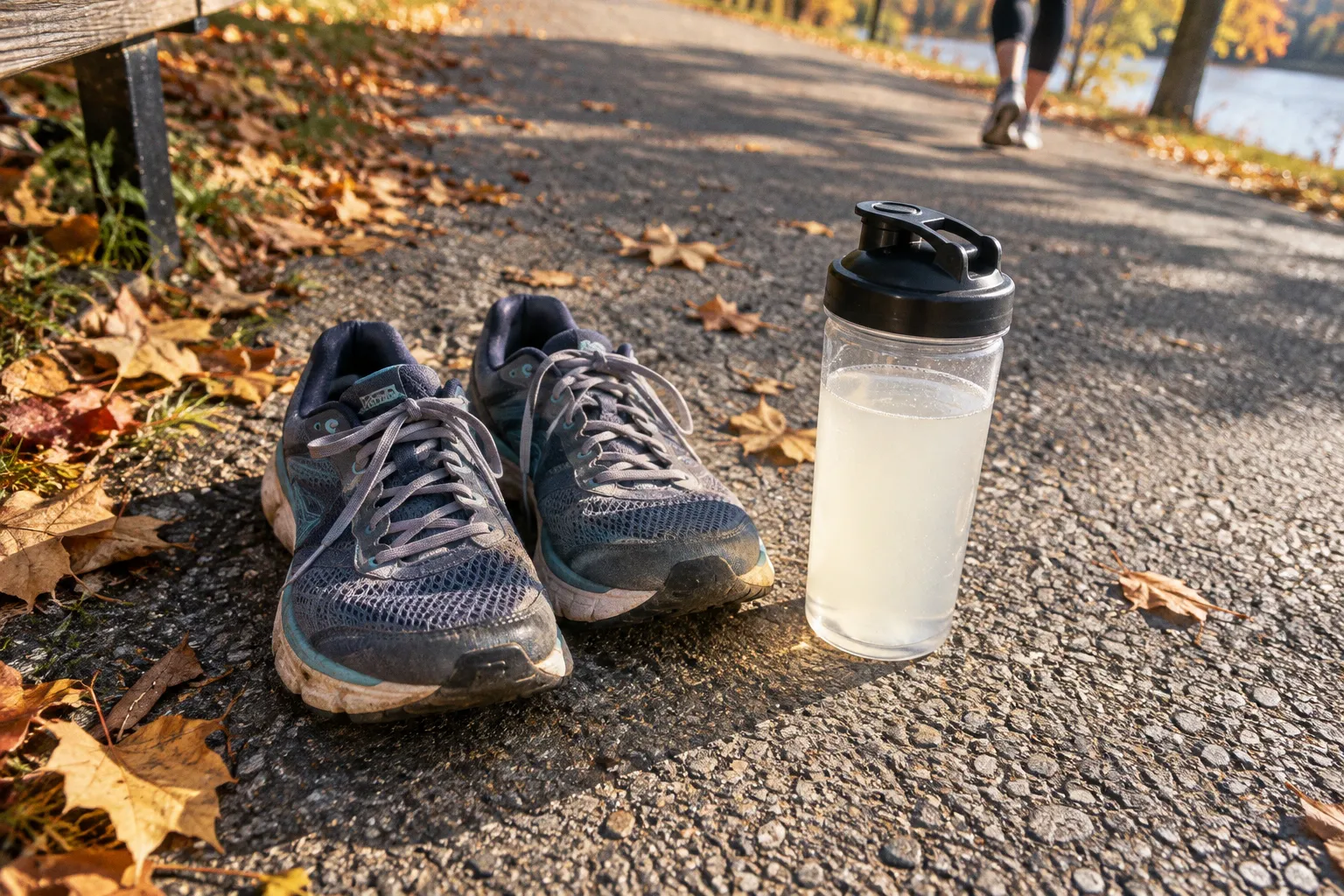
The question we hear from clients every week is whether the science actually backs it up or whether we've been sold a beautiful story wrapped in a scoop.
We've been digging into the research, parsing through 113 randomized controlled trials and the specific peptide studies released over the last several years, and here's what we want to walk you through today: where collagen genuinely earns its place in an active woman's routine, where the marketing outruns the evidence, and how to use it without abandoning the protein that actually rebuilds muscle fiber.
The amino acid gap: why collagen isn't a complete protein
Let's start with the part most marketing materials quietly skip over. Collagen peptides are a real food-derived protein, typically hydrolyzed from bovine or marine sources, but their amino acid profile is fundamentally different from the muscle-building proteins most of us already know, like whey, egg, or poultry.
The difference comes down to essential amino acids, and especially one in particular: leucine. Leucine is the specific amino acid your muscle cells read as the signal to switch on protein synthesis. Collagen, by its very nature, is naturally lean in leucine and several other essentials. Whey protein, by comparison, triggers meaningfully higher rates of muscle protein synthesis for this exact reason — its amino acid profile is richer where it counts.
In practical terms, if your goal is rebuilding muscle tissue after a heavy leg day or a hard lifting block, collagen peptides on their own simply don't carry the raw materials to shoulder the work. They can support your recovery picture, but they can't lead it.
Collagen isn't a complete protein. It never was meant to be — and that's exactly where the confusion around muscle recovery begins.
So does that mean collagen is useless for anyone training hard? Absolutely not. It just means we need to be honest about the role it's playing.
Beyond muscle: where collagen genuinely shines
Here's the part of the conversation the wellness world actually has right. Collagen isn't a muscle-building protein in the traditional sense, but it is the dominant structural protein in your connective tissues. Tendons, ligaments, cartilage, joint surfaces, skin — all of it is built on a collagen scaffold.
This is where the science gets interesting, and frankly, more aligned with what we see clients actually struggle with. A 12-week trial combining specific collagen peptide supplementation with high-load resistance training found increased intramuscular collagen type I content in skeletal muscle. That's the fancy way of saying the connective scaffolding inside the muscle itself responded. Another read on it — collagen feeds the tissue around and within your muscles, not the contractile fibers that grow visibly stronger.
This matters most if you're:
- training with heavy compound lifts and want long-term joint resilience
- returning to exercise after a layoff or a minor strain
- noticing creaky knees, a nagging Achilles, or shoulder discomfort during pressing movements
- in a body-composition phase and focused on skin elasticity alongside the aesthetic changes
For these goals, collagen peptides have genuine, well-supported value. Where they don't — and this is where we have to push back firmly — is as a stand-in for your post-workout protein.
What 113 clinical trials actually reveal
The most comprehensive review of the supplement landscape landed in mid-2026, when a team at Anglia Ruskin University analyzed 113 randomized controlled trials on collagen supplementation. The scope was huge, the methodology was tight, and the conclusions were refreshingly clear.
For skin health and osteoarthritis symptoms, the data is consistent and strong — collagen helps. For athletic performance and direct post-workout recovery markers, the picture is much murkier. The headline claims you see on tubs lean well beyond what the bulk of trials support.
For skin and joints, the evidence is solid. For direct post-workout muscle recovery, the evidence is far thinner than the marketing suggests.
Here's how we'd translate that for you: if your primary motivation for picking up collagen is to recover faster between hard training sessions, the broad evidence base does not give you a clear green light. If your motivation includes joint comfort, skin quality, or connective tissue resilience, the evidence stack is meaningfully stronger.
The honest summary is that collagen sits in a supportive-complement category — useful, sometimes genuinely helpful, but never the lead actor in muscle recovery.
The 48-hour window: what soreness actually responds to
Now, that's the headline picture. The nuance lives in the smaller, more specific studies, and there are a couple we think are worth your attention before you draw a final conclusion.
One crossover trial involving healthy middle-aged men looked at a daily 10-gram dose of collagen peptides and measured how subjects felt 48 hours after an acute squat session. The result: measurably less reported muscle soreness and fatigue at that 48-hour mark. A separate 2023 study of 55 predominantly sedentary males used a 15-gram daily dose of specific collagen peptides alongside 12 weeks of concurrent training, then tested recovery markers after a demanding 150-drop-jump protocol. Recovery markers improved meaningfully compared to the control group.
So we do see real, measurable effects on how your muscles feel in the day or two after hard work. What we don't see, in any of the rigorous trials we reviewed, is collagen eliminating delayed onset muscle soreness entirely or speeding up your return to performance at a level you can bet your training on.
What this tells us is straightforward: if you want a smaller, more manageable soreness bill and you're already doing the foundational work — adequate total protein, real sleep, consistent hydration — collagen may give you a modest additional edge. It is not, on its own, a recovery strategy.
How to use collagen strategically in an active routine
Let's talk about the practical layer, because this is where most of you actually live. If you've decided collagen fits your goals, and for many active women it really does, here's how we'd coach you to use it.
Dose. The clinical research that produced the strongest outcomes used 10 to 15 grams per day. That's the range to keep in mind when you're reading labels. Less than that and you're outside the studied dosing window; significantly more and you're spending money without a clear therapeutic return.
Timing. The trials didn't lock participants into one specific timing window, which tells us there isn't a magic hour. We typically suggest pairing it with a meal or a post-workout shake, but what matters most is consistency — getting your daily dose in most days of the week.
What to pair it with. This is where collagen earns or loses its place in a complete recovery picture. It does not replace your post-workout protein; it sits beside it. A scoop of collagen stirred into your recovery shake is fine. Replacing your whey with collagen is not — you'd be downgrading the muscle-rebuilding signal your body actually needs.
Where it earns its spot. Women training through knee or shoulder niggles, runners stacking mileage, lifters moving heavier loads than last month, anyone in a fat-loss phase where skin and joint comfort often suffer first — those are the bodies that tend to feel the most noticeable benefit.
A few pieces of the recovery puzzle that deserve more attention than collagen usually gets:
- Total daily protein, not just post-workout, landing in the ballpark most active women need to support muscle and connective tissue together
- Sleep quality, which quietly sets the ceiling on how well any supplement can actually work
- Hydration and mineral status, especially during high-volume training blocks
- Periodization, so your tissues actually get to recover before you load them again
The cleanest framework: complete protein rebuilds muscle. Collagen quietly supports the connective tissue that lets you keep training.
So — hype or necessity?
Here's where we land, plainly.
Collagen peptides are a useful, evidence-supported tool for connective tissue support, joint comfort, and modest reductions in how sore your muscles feel in the 48 hours after hard training. They are not a muscle-building protein. They are not a replacement for the complete protein sources that drive actual muscle protein synthesis. They are not mandatory for any healthy athlete or active woman who is eating enough total protein and managing the basics of recovery.
The honest framework is this — think of collagen as the supporting player on your recovery team, not the star. If your total daily protein is in a healthy range, your sleep is reasonably dialed, and you're curious whether collagen will soften the edges of your training soreness, the science gives you a measured yes. If you're looking for a powder that does the work of real food and a complete protein, you'll end up disappointed.
Try this the next time you're standing in your kitchen after a workout: finish your shake the way you normally would — a complete protein base, some carbs if the session was hard, water or milk to round it out. Then, if you've decided collagen fits your goals, stir a 10 to 15 gram scoop into a separate glass of water or your morning coffee. Keep the two roles distinct. Let your complete protein rebuild muscle, and let collagen quietly support the connective tissue that lets you keep showing up to train, week after week, for the long run.
That's the framework. Nothing flashy, no overnight transformation — just one more deliberate choice made on your next training day.
FAQ
Can I replace my post-workout protein shake with collagen?
Does collagen help with muscle recovery after a workout?
What is the recommended daily dose of collagen peptides?
Is collagen effective for joint health?
When is the best time to take collagen?
More products