High-protein breakfast prep: your roadmap to morning energy
A high-protein breakfast meal prep has one primary constraint: the meal must deliver approximately 25–30 g of protein per serving without creating excessive preparation time, caloric load, or storage risk.
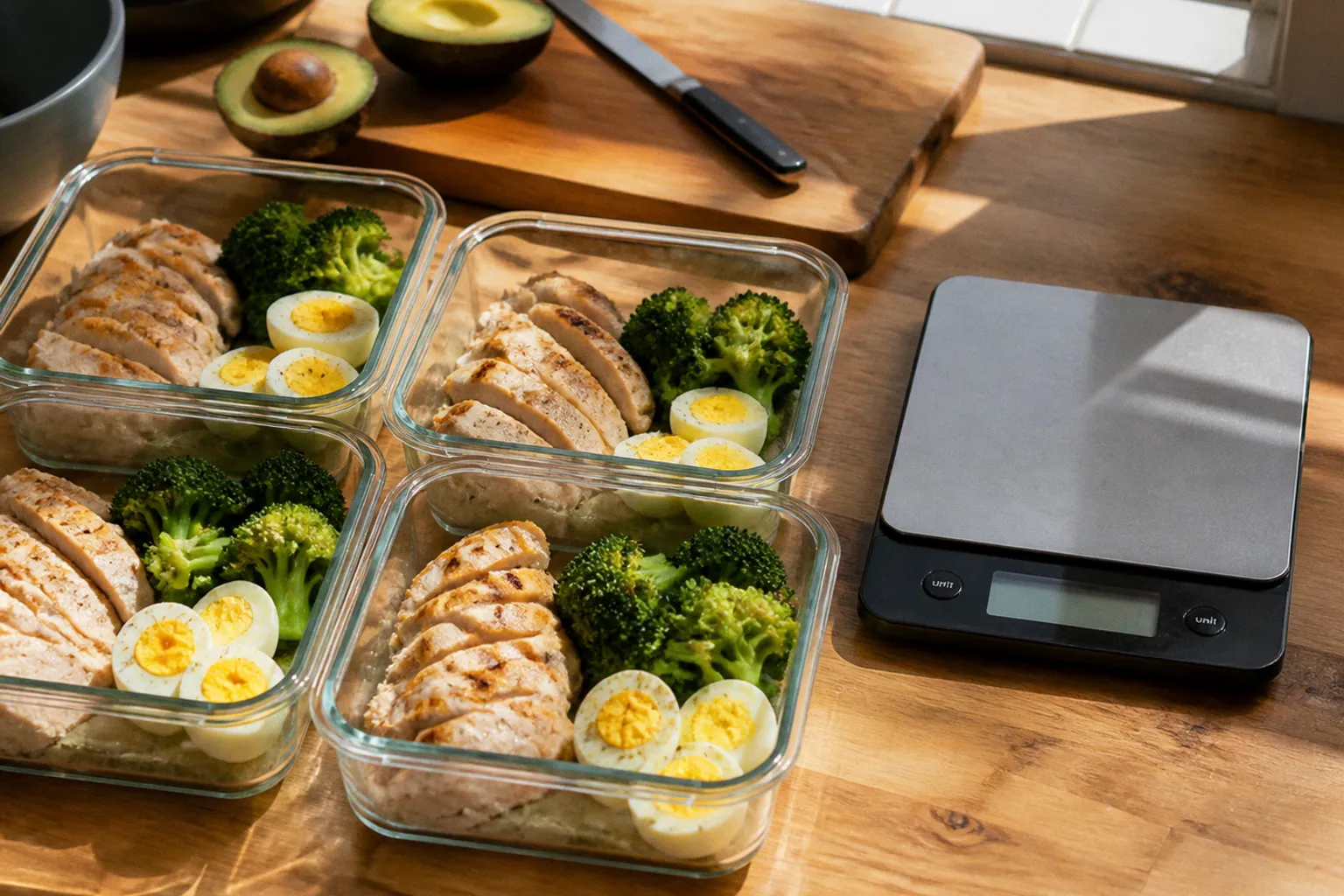
Most breakfasts fail because they contain protein as an accessory rather than as the structural component.
Toast with a small amount of yogurt is not a high-protein meal. A smoothie built around fruit and a minimal scoop of powder is not automatically balanced. Coffee is not breakfast. The physiology does not respond to branding.
A morning meal supplying 25–30 g of protein can slow gastric emptying, reduce the rate at which ghrelin rises, and support more stable blood glucose and satiety through the first part of the day. That does not override total energy intake. It does create a better starting condition for training, work, and appetite control.
The practical solution is batch preparation. Build two or three breakfast formats, portion them in advance, and rotate them across the week. The target is not culinary novelty. The target is repeatable nutrient intake with low decision cost.
The protein target determines the recipe
Protein distribution matters. If breakfast contains only 10–15 g of protein, the rest of the day must compensate. That may be manageable, but it creates avoidable pressure on lunch and dinner. A meal supplying 25–30 g gives you a more stable base for muscle maintenance and recovery.
Use foods with a high protein density:
- Skyr provides approximately 10 g of protein per 100 g.
- Greek yogurt provides roughly 8–10 g per 100 g.
- A large egg supplies approximately 7–8 g of protein.
- Egg whites add protein with less fat than whole eggs, but their texture changes when overcooked.
- Cottage cheese can increase protein in oats, egg mixtures, and baked recipes. Check the label because protein content varies by product.
- Lean poultry, fish, tofu, and legumes work better in savory breakfast preparations than in sweet recipes.
- Protein powder can simplify portioning, but it should solve a preparation problem rather than disguise a low-protein meal.
The exact amount depends on the product label. Greek yogurt is not a standardized food. Some containers contain significantly less protein per 100 g than strained products. Skyr is usually more concentrated, but the label remains the controlling variable.
Build the breakfast around a protein dose. Do not add protein as an afterthought to a carbohydrate meal.
A useful assembly sequence is:
1. Select the primary protein source.
2. Add a carbohydrate source if you need training fuel or a higher-energy meal.
3. Add fruit or vegetables for fiber and volume.
4. Add fat in a measured portion.
5. Adjust texture, flavor, and storage method.
This sequence prevents a common error: adding calorie-dense ingredients first and trying to reach the protein target afterward.
Four breakfast formats that survive meal prep
A successful prep recipe has three properties. It reaches the protein target, maintains acceptable texture after refrigeration, and can be portioned without recalculating the entire meal each morning.
1. Greek yogurt or Skyr jars
This is the lowest-friction option. It requires no cooking and can be assembled in several minutes.
Use:
- Greek yogurt or Skyr as the base
- Oats for carbohydrate and structure
- Berries or another fruit
- Chia seeds or ground flax in a measured portion
- Cinnamon, cocoa, or a small amount of nut butter for flavor
- Optional protein powder if the base alone does not reach the target
A practical portion starts with enough Skyr or Greek yogurt to provide a substantial protein base. For example, 250–300 g of Skyr supplies approximately 25–30 g of protein before other ingredients are counted. With Greek yogurt, the same target may require a larger portion or an added protein source because its protein concentration is often lower.
Mix the ingredients in a jar, seal it, and refrigerate. Overnight oats prepared this way typically last four to five days in the refrigerator. Keep fruit separate if it releases excess liquid or degrades quickly. Add it immediately before eating.
Texture control is mechanical, not mysterious:
- More oats produce a denser mixture.
- Chia absorbs liquid and increases viscosity.
- Protein powder can make the mixture dry or pasty.
- Fruit adds water during storage.
- A thinner yogurt base requires less additional liquid.
Do not add liquid by instinct. Start with a small amount, mix, and reassess after refrigeration. The oats and chia will continue absorbing fluid overnight.
For a protein breakfast prep for weight loss, portion the calorie-dense ingredients. A medium avocado contains approximately 240 calories, but the same principle applies to nut butter, seeds, granola, and oils. Healthy does not mean energy-free. One uncontrolled topping can exceed the energy contribution of the protein base.
2. Egg bites
Egg bites are compact, portable, and compatible with savory ingredients. They also expose poor cooking control immediately. Excess heat produces a rubbery matrix and water separation.
Use:
- Whole eggs
- Egg whites, if you need more protein without increasing fat to the same degree
- Cottage cheese or Greek yogurt for a softer matrix
- Cooked vegetables with their moisture reduced
- Lean meat, poultry, or fish if desired
- Salt, pepper, and herbs
A large egg contributes approximately 7–8 g of protein. Three or four eggs alone may not create the preferred protein distribution once the mixture is divided into multiple portions, so combine whole eggs with egg whites, cottage cheese, or another protein source.
The preparation sequence matters:
1. Cook vegetables before adding them to the egg mixture.
2. Remove free water from spinach, mushrooms, zucchini, or frozen vegetables.
3. Blend or whisk the eggs with the dairy component until the mixture is uniform.
4. Fill the molds consistently.
5. Bake until the center is set but not dehydrated.
6. Cool before sealing and refrigerating.
Vegetable water is the main cause of failed egg bites. Frozen spinach and mushrooms release liquid. If that liquid remains in the mixture, the final product separates during storage. The problem is not the recipe. It is uncontrolled moisture.
For more consistent portions, use a standard muffin tin and divide the mixture by mass or volume. If you are tracking macros, weigh the finished batch and divide it into equal portions. This is more accurate than assuming every cup contains the same amount.
Egg bites keep well for several days when refrigerated correctly. Reheat them at moderate power rather than applying maximum heat for a long interval. The protein matrix continues cooking during reheating. Overheating produces contraction, liquid loss, and a dense texture.
3. Protein breakfast burritos
Burritos function as a complete meal because they combine protein, carbohydrate, fiber, and fat in one unit. They also create a storage problem: moisture migration. Wet fillings turn the tortilla soft and compromise the product during reheating.
Use:
- Eggs and egg whites
- Lean turkey, chicken, or another protein
- Beans for additional protein and carbohydrate
- A whole-grain tortilla
- Cooked vegetables
- Salsa, hot sauce, or a measured portion of cheese
Cook all fillings until excess liquid has evaporated. Let them cool before assembly. A hot filling releases steam inside the tortilla and creates condensation. That condensation damages texture and increases the chance of splitting.
Assembly order affects structural integrity:
- Place the drier ingredients against the tortilla.
- Keep salsa and other wet components in the center.
- Avoid overfilling.
- Fold the sides inward before rolling.
- Wrap each burrito individually.
For refrigerator storage, keep the burritos sealed and consume them within the short storage window appropriate to the ingredients. For longer storage, freeze them after cooling. Reheat from thawed or frozen according to the appliance and portion size. The center must be hot; the tortilla should not be burned to achieve it.
Burritos are useful for active people because portion size is fixed. That matters more than the recipe’s reputation. A meal that can be weighed, wrapped, and stored produces better adherence than a breakfast that requires five separate containers every morning.
4. High-protein baked oats
Baked oats provide a more rigid structure than overnight oats and can be portioned like a tray bake. The protein source can be Greek yogurt, Skyr, eggs, cottage cheese, or protein powder.
Use:
- Rolled oats
- Eggs or egg whites
- Greek yogurt or Skyr
- Milk or another liquid
- Fruit
- Cinnamon or cocoa
- Optional protein powder
Blend the wet ingredients if you want a uniform texture. Keep the oats whole if you want more chew. The distinction is not cosmetic. Blended oats form a smoother matrix, while whole oats preserve more particulate structure.
A basic high-protein baked oats formula should contain enough concentrated protein to reach 25–30 g per serving after dividing the tray. Calculate the batch before baking. If the recipe contains four eggs and 400 g of Greek yogurt, estimate the protein contribution from the label and divide it by the number of portions. Do not assume that a large tray automatically contains enough protein because it looks substantial.
Fruit affects moisture. Berries release liquid. Mashed banana adds density and sweetness but also changes the carbohydrate load. If the center remains wet after the edges set, reduce the liquid or extend baking time at a lower temperature. High heat can set the outside while leaving the interior undercooked.
Compare the formats before choosing one
The best option depends on your schedule, appetite, and access to reheating. There is no universal winner. Anyone claiming one breakfast format is optimal for every training phase is selling simplicity, not programming.
| Format | Preparation demand | Protein control | Storage profile | Best use |
|---|---|---|---|---|
| Skyr or Greek yogurt jars | Low | High if the base is weighed | Four to five days refrigerated | No-cook mornings and office meals |
| Egg bites | Moderate | High when the batch is portioned | Refrigerated; reheats quickly | Portable savory breakfast |
| Breakfast burritos | Moderate to high | High when fillings are weighed | Refrigerated or frozen | Full meal after training |
| Baked oats | Moderate | Moderate to high | Refrigerated in portions | Higher-carb breakfast with fixed servings |
The table reveals the central trade-off. The easiest recipes usually require less cooking but more portion control for toppings. Cooked recipes provide better meal structure but introduce cooling, storage, and reheating variables.
How to reach 25–30 g without inflating calories
A high-protein breakfast is not automatically a low-calorie breakfast. This distinction matters when the objective is fat loss. The phrase protein breakfast prep for weight loss describes a structure, not a guaranteed outcome.
Protein improves satiety and may reduce the need for frequent eating, but total energy intake remains relevant. The practical approach is to keep the protein dose stable and manipulate the surrounding ingredients according to the goal.
For a lower-energy version:
- Use Skyr or a lower-fat Greek yogurt as the base.
- Measure nut butter, seeds, granola, avocado, and oil.
- Use berries or another fruit portion instead of unrestricted dried fruit.
- Increase volume with vegetables in savory meals.
- Use egg whites to raise protein while controlling the number of whole eggs.
- Keep sauces separate and add them after reheating.
For a higher-energy training breakfast:
- Increase oats, rice, potatoes, or tortilla size.
- Add a measured fat source.
- Include additional fruit.
- Use the same protein target unless your total daily protein plan requires a different distribution.
The mistake is reducing breakfast to a single macro. A meal of protein powder and water may reach the protein target but provide poor chewing volume, low fiber, and limited training fuel. The opposite mistake is a large bowl of oats, fruit, seeds, and nut butter with insufficient protein. Both are incomplete solutions.
Protein sets the minimum structure. Total energy, carbohydrate, fiber, and fat determine whether the meal fits the training system.
Build a weekly prep system, not seven different recipes
Meal prep fails when it becomes a second job. Use a modular system.
Prepare one cold base and one cooked base. For example:
- Four jars of Skyr, oats, and fruit
- Eight egg bites or four burritos
- One container of chopped fruit
- One container of cooked vegetables
- Measured portions of toppings
This creates variation without requiring a new recipe every day. Change the flavor profile rather than the entire meal. Cinnamon and berries produce a different result from cocoa and banana. Eggs can use herbs one week and salsa the next. The protein architecture remains stable.
A useful weekly sequence is:
1. Choose the number of breakfast portions required.
2. Set the protein target for each portion at 25–30 g or higher.
3. Select one no-cook format and one cooked format.
4. Calculate the batch from package labels.
5. Cook or assemble in equal portions.
6. Cool cooked foods before sealing.
7. Mark preparation dates on containers.
8. Store the first portions in the refrigerator and freeze any portions that will not be consumed within the appropriate storage window.
9. Reheat only the portion you are eating.
10. Adjust the next batch based on texture, satiety, and training demands.
Do not prepare five recipes simultaneously. That creates ingredient waste and makes tracking less precise. Two formats are sufficient for most schedules. Three formats are useful when appetite or training volume changes across the week.
The mechanics of portion control
Portion control is not a cosmetic concern. It determines whether the intended macro distribution survives contact with the kitchen.
Use a food scale for ingredients with high energy density:
- Nut butter
- Seeds
- Granola
- Cheese
- Oil
- Avocado
- Dried fruit
A medium avocado contributes approximately 240 calories. That can fit into a high-protein breakfast, but the portion must be deliberate. Half an avocado and a full avocado are not interchangeable additions.
For batch recipes, calculate before dividing:
- Total protein in the batch
- Total number of servings
- Protein per serving
- Total energy per serving, if tracked
- Carbohydrate and fat contribution from major ingredients
If the batch contains insufficient protein, adding a topping after cooking is a weak correction. Modify the base instead. Add more Skyr, Greek yogurt, eggs, egg whites, cottage cheese, lean meat, or another concentrated source.
If the batch is too dense, do not remove protein first. Reduce the ingredients that contribute energy without improving the protein target. This is the correct order of operations.
Common preparation errors
The meal looks large but contains little protein
Volume comes from oats, fruit, vegetables, and liquid. None of those automatically produces a 25–30 g protein serving. Calculate the protein contribution from the base.
The recipe depends on an unmeasured topping
Granola, nut butter, seeds, and avocado can alter the energy profile substantially. They are not free flavor additions. Weigh them.
The egg mixture contains too much water
Cook vegetables first. Drain them. Frozen vegetables require particular control. Liquid separation is a preparation error, not an unavoidable property of meal-prepped eggs.
The container is sealed while the food is hot
Steam condenses inside the container. This damages texture and increases moisture. Cool cooked food before sealing, then refrigerate it promptly.
The burrito becomes wet and tears
The filling was assembled hot, over-sauced, or insufficiently reduced. Keep wet ingredients in the center and cool the filling before wrapping.
The oats become stiff
Chia, oats, and protein powder all absorb liquid. Adjust the formula instead of adding random liquid in the morning. A controlled increase in yogurt or milk is more consistent than trying to rescue one portion.
The breakfast is technically high-protein but fails during training
A protein target does not define carbohydrate availability. If you train in the morning, a jar dominated by yogurt and seeds may not provide the same immediate fuel as oats, fruit, or a burrito with potatoes. Match the carbohydrate portion to the session rather than treating all breakfasts as interchangeable.
The breakfast causes hunger after one hour
Check the total meal, not only the protein number. The portion may be too small, the fiber contribution may be low, or total daily energy may be insufficient. High-protein meal prep can extend satiety; it cannot compensate indefinitely for inadequate intake.
A practical three-day rotation
A simple rotation reduces friction:
Day one: Skyr oat jar
Use Skyr as the primary protein source. Add oats, berries, and a measured amount of chia. Verify the label and portion the Skyr so the meal reaches the protein target before counting minor ingredients.
Day two: Egg bites with fruit
Use whole eggs, egg whites, and cottage cheese or Greek yogurt. Add cooked vegetables with reduced moisture. Serve with fruit or a carbohydrate portion that matches the day’s training demand.
Day three: Breakfast burrito
Use eggs, lean poultry or beans, vegetables, and a tortilla. Keep salsa separate if the burrito will be stored for more than a short interval. Weigh the filling and divide it evenly before rolling.
Repeat the sequence or change one component. The aim is stable execution. You do not need seven unique easy high-protein breakfasts. You need enough variation to maintain compliance without degrading the protein target.
The implementation protocol
Use this protocol for the next prep cycle:
- Select two breakfast formats.
- Set each serving at 25–30 g of protein or higher.
- Use package labels for all primary protein sources.
- Weigh calorie-dense additions.
- Cook vegetables before combining them with eggs.
- Cool cooked food before sealing.
- Store overnight oats for up to four to five days in the refrigerator.
- Freeze portions that will not be consumed within the appropriate storage period.
- Keep wet sauces separate when texture is at risk.
- Adjust carbohydrates and fats according to training volume and energy requirements.
- Review the batch after three days: protein target, texture, satiety, and reheating performance.
High protein breakfast meal prep works when it is treated as a controlled system. Choose the protein source first. Calculate the serving. Control moisture. Control energy-dense additions. Match carbohydrate intake to the training demand.
The rest is culinary preference. The physiology is less negotiable.
FAQ
How much protein should a breakfast contain?
Why do my egg bites become rubbery or watery?
How can I keep breakfast burritos from getting soggy?
How long can I store overnight oats in the refrigerator?
Should I add protein powder to my breakfast?
More products
 Trimoryn
 GlycoPezilUSD79