Homemade vs store-bought protein bars for fitness snacks
The hardest part of a protein snack is rarely the protein itself. It is the timing. You leave a workout hungry, rush from work to the next commitment, or reach the afternoon slump with nothing prepared.
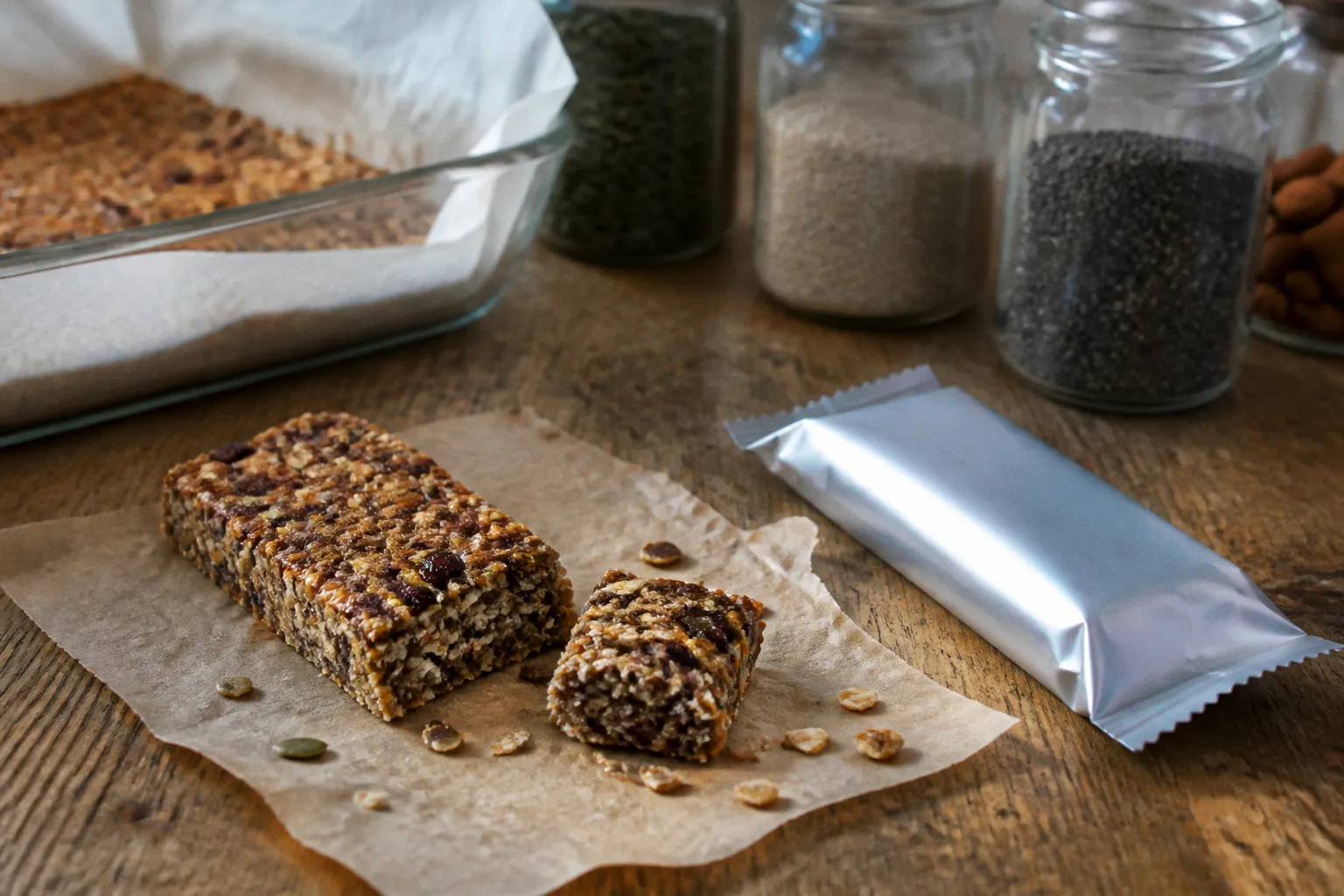
A protein bar looks like the simple answer—until you compare the ingredient list, the fiber, the price, and the way your stomach responds.
The real choice in homemade vs store bought protein bars is not between “clean” and “bad.” It is between control and convenience. Homemade bars let us choose the ingredients, texture, sweetness, and macronutrient balance. Commercial bars are ready immediately, travel well, and can stay in a gym bag or desk drawer for months. Both can support an active lifestyle. Neither is automatically the best option for every day.
The useful question is more practical: which bar fits this moment, this training session, and this eating pattern?
What a protein bar actually needs to do
A protein bar has a fairly modest job. It should help bridge the gap between meals, contribute meaningful protein, and keep you satisfied long enough to make your next meal calmer and more balanced.
For most people, a reasonable target is at least 12 grams of protein per serving. If the bar is being used after resistance training or a demanding workout, 20 to 25 grams is a stronger target for supporting recovery. That does not mean every snack needs to contain 25 grams. It means we should match the bar to the role it is playing.
A small afternoon snack may only need to prevent you from arriving at dinner ravenous. A post-workout option may need more protein, especially if your next full meal is several hours away.
Fiber matters as well. A bar with roughly 5 to 10 grams of fiber can be more satisfying than one built mostly from syrup and protein isolate. But more is not always better. Commercial bars sometimes use concentrated added fibers such as inulin, and large amounts can contribute to gas, bloating, or general digestive discomfort. Homemade bars can also become surprisingly fiber-heavy when they combine oats, dates, chia seeds, flax, and nut butter in one dense square.
This is where nutrition becomes less about finding the most impressive label and more about finding a snack your body can handle consistently.
The best protein bar is not the one with the longest ingredient list or the highest protein number. It is the one that supports your routine without creating a new problem.
Protein quality and digestibility belong in the same conversation. Whey and milk-based proteins generally provide a complete amino acid profile, while plant-based bars may combine sources such as pea, rice, soy, or seeds. A vegan bar can work well, but the total protein amount and the blend of ingredients matter more than the word “vegan” on the package.
Homemade bars: control without the illusion of simplicity
Making protein bars at home gives us something packaged snacks cannot: direct control over the formula.
A basic homemade bar might use:
- Rolled oats for carbohydrates and structure.
- Nut or seed butter for richness and fat.
- Dates, mashed banana, or a small amount of maple syrup for sweetness and binding.
- Protein powder to raise the protein content.
- Seeds such as chia, pumpkin, or ground flax for texture and additional nutrients.
- Milk, plant milk, or water to adjust consistency.
From there, the recipe can move in several directions. We can make a higher-protein bar by increasing the protein powder and adding enough liquid to keep it from becoming chalky. We can create a more substantial training snack with oats and dried fruit. We can use sunflower seed butter instead of peanut or almond butter for a nut-free version. Gluten-free oats can help accommodate a gluten-free eating pattern, provided they fit the person’s individual needs.
This flexibility is the main advantage of DIY protein bars versus commercial products. You are not choosing from a fixed ratio of protein, fat, carbohydrate, fiber, and sweetener. You can adjust the recipe to suit your training and your appetite.
The trade-off is density
Homemade does not automatically mean light, low-calorie, or better for weight loss. Dates, nut butters, seeds, coconut, and oats are nutritious ingredients, but they are also energy-dense. A homemade bar can become a compact meal in disguise if the pieces are large and the recipe contains several concentrated ingredients.
That may be exactly what you want after a long training session. It may be too much for a snack between two sedentary meetings. Portion size and context still matter.
For a balanced batch, we can begin by deciding what the bar is for:
1. A small snack: Keep the pieces modest and avoid adding every calorie-dense ingredient at once.
2. A post-workout option: Aim for a more substantial protein serving, especially if a meal is not coming soon.
3. A breakfast backup: Include enough carbohydrates and energy to make the bar function as more than a sweet bite.
4. A hiking or travel food: Prioritize stability and portability, then accept that homemade bars may not last as long as packaged ones.
There is also a texture issue. Protein powder absorbs liquid differently depending on the brand and type. Whey can behave differently from pea protein; a finely ground powder will not produce the same result as a coarser blend. A recipe that looks perfect on paper may need more liquid, more oats, or a short chilling period before it becomes easy to handle.
That is not a failure of the recipe. It is normal kitchen behavior. Homemade bars reward small adjustments rather than rigid obedience to a formula.
Store-bought bars: convenience with a label to interpret
Commercial protein bars solve the problem homemade bars cannot solve as efficiently: they are ready when you are.
They are individually wrapped, easy to carry, and designed to remain stable for months or even years. For a busy training schedule, that matters. A bar in a work bag can prevent the familiar chain reaction of missed lunch, extreme hunger, and an oversized evening meal. Convenience is not a nutritional flaw. It is a practical resource.
The label, however, deserves more attention than the front of the package.
Many store-bought bars use sugar alcohols such as erythritol, sorbitol, or xylitol to reduce sugar while maintaining sweetness. Some also include artificial sweeteners, emulsifiers, and preservatives such as potassium sorbate or BHA to improve texture and shelf life. These ingredients are not automatically disqualifying. The question is whether the bar works for you.
Some people tolerate sugar alcohols without a problem. Others notice bloating, cramping, or digestive urgency, particularly after eating a large bar quickly or combining it with coffee before training. If a bar repeatedly causes discomfort, its attractive protein number is not enough to make it a good choice.
Commercial bars also vary widely in how they deliver their protein. One bar may contain a straightforward whey or milk protein base. Another may use a blend of plant proteins, collagen, or lower-protein ingredients alongside a high-fiber coating. The package may still look impressive, so reading the nutrition panel is more useful than relying on marketing language.
A more useful way to read the front and back
When comparing packaged options, look at the following details:
- Protein: At least 12 grams is a useful baseline; 20 to 25 grams is more appropriate when the bar is filling a post-workout role.
- Fiber: Around 5 to 10 grams may support fullness, but inspect the type and watch your digestive response.
- Added sugars: A low-sugar bar can still taste very sweet if it relies heavily on sugar alcohols or intense sweeteners.
- Total calories: A protein bar may be a snack, but some are closer to a small meal. That is not a problem when it is intentional.
- Fat sources: Nuts, seeds, and nut butters can improve texture and satisfaction, while coatings may add extra sweetness and saturated fat.
- Protein source: Consider whether dairy, soy, egg, collagen, or a plant blend fits your dietary pattern and digestion.
- Texture additives: A long ingredient list does not automatically indicate poor quality, but it can explain why a bar feels unusually chewy or difficult to digest.
The goal is not to find a bar with a perfect label. Perfection is a poor strategy for eating on the move. We are looking for a product with a useful protein amount, tolerable ingredients, and a texture you will actually enjoy eating.
Homemade vs store-bought protein bars: the practical comparison
The two options become easier to evaluate when we stop treating them as moral categories and compare their real strengths.
| Parameter | Homemade protein bars | Store-bought protein bars |
|---|---|---|
| Ingredient control | Full control over protein powder, sweeteners, oats, seeds, and allergens | Limited to the manufacturer’s formula |
| Protein target | Easy to adjust for 12–25 grams or more per serving | Fixed by the product; labels vary considerably |
| Fiber | Can be increased with oats, seeds, fruit, or bran | Often includes added fibers, which may not suit every digestive system |
| Shelf life | Usually about 1–2 weeks when refrigerated | Commonly stable for months or longer |
| Convenience | Requires preparation, portioning, and storage | Ready to eat and individually packaged |
| Cost | Often more cost-effective when made in bulk | Typically about $1–$5 per bar |
| Dietary flexibility | Easy to make vegan, gluten-free, or nut-free | Depends on available products and allergen labeling |
| Portion control | You decide the size, but dense recipes can make large portions easy to underestimate | Individual packaging creates a defined portion |
| Best use | Planned snacks, meal prep, and customized nutrition | Travel, workdays, emergencies, and unpredictable schedules |
Cost is one of the clearest differences, although it needs a little context. Store-bought bars commonly cost between $1 and $5 each. Homemade bars can be less expensive per unit when ingredients are purchased in larger quantities and prepared as a batch. The exact cost depends on the protein powder, nut butter, seeds, sweeteners, and portion size.
Rather than asking only for the cost per bar, we can calculate protein bar cost per gram:
Cost per gram of protein = price of the bar ÷ grams of protein in the bar
For example, a bar that costs $2 and contains 20 grams of protein costs $0.10 per gram of protein. The same calculation can be used for a homemade batch. Add the cost of all ingredients, divide by the number of bars, and then divide the cost per bar by its protein content.
This does not make the cheapest bar the best bar. A bar that causes digestive distress, leaves you hungry, or tastes unpleasant is not delivering good value, even if the arithmetic looks attractive.
The shelf-life question changes the whole decision
The storage difference is easy to underestimate. Homemade bars made with ingredients such as oats, dates, nut butter, seeds, and protein powder generally have a refrigerated shelf life of around one to two weeks. Their moisture, fresh ingredients, and lack of synthetic preservatives make them less suited to long-term storage.
That makes homemade bars excellent for a weekly meal-prep rhythm. Make a batch, portion it, refrigerate it, and use it through the week. If you will not eat the entire batch within that window, freezing may be a sensible option, although the texture can change after thawing.
Store-bought bars are better for situations where food has to wait for you. Keep one in a desk drawer, car bag, or travel kit, while remembering that heat can affect texture and quality even when the package remains sealed. The ability to store a bar for a long time can support consistency, but it can also encourage buying products that sit untouched because they do not suit your taste.
A sustainable plan usually includes both options. Homemade bars handle predictable weeks. Commercial bars cover the days when your schedule ignores your meal plan.
Convenience is not the enemy of healthy eating. Unexamined convenience is. Choose packaged foods deliberately, and they can make consistency much easier.
Which option works best for weight loss?
Protein bars are often marketed as weight-loss snacks, but the bar itself does not determine whether it supports fat loss. The larger pattern does: total energy intake, protein across the day, fiber, meal structure, movement, sleep, and how satisfying the food feels.
A bar can help with weight loss when it replaces a less satisfying snack and keeps you steady until your next meal. It can work against your goal when it is added on top of regular meals, eaten quickly without noticing, or treated as a healthy label for an oversized dessert-like product.
This is why the best protein bars for weight loss are not necessarily the lowest-calorie bars. A very small bar may leave you searching for more food within the hour. A larger bar may be appropriate after training but unnecessary as a casual snack. We want the portion and protein amount to match the situation.
For a more satisfying option, pair the bar with a food that adds volume or hydration:
- A commercial bar with fruit can create a more complete snack.
- A homemade oat-and-protein bar with Greek yogurt can work as a quick breakfast.
- A smaller bar with coffee may be enough before a light workout, while a harder session may require more carbohydrate and protein.
- A bar eaten after training can be followed by a normal meal rather than replacing one automatically.
We also need to be honest about the “healthy snack” halo. Homemade ingredients can still produce a highly concentrated snack, and packaged bars can still be useful despite unfamiliar ingredients. The best choice is the one that helps you manage hunger without turning nutrition into a daily negotiation.
A simple framework for making the choice
When meal prep time is available, homemade bars are often the better fit. They allow us to build the recipe around our actual needs instead of adapting our needs to a package.
Choose homemade when:
- You want to control sweetness, protein source, or allergens.
- You prefer whole-food ingredients such as oats, dates, seeds, and nut butter.
- You are preparing several snacks for the week.
- You need a vegan, gluten-free, or nut-free recipe that is difficult to find in a packaged product.
- You want to adjust the carbohydrate-to-protein ratio around training.
- You enjoy a softer, less processed texture and can store the bars properly.
Choose store-bought when:
- You need a snack immediately after training or during travel.
- Your schedule changes too often for reliable weekly prep.
- You want individual portions with a predictable nutrition label.
- You need a shelf-stable option at work, in a gym bag, or during a long day away from home.
- You have already found a bar that provides enough protein and does not upset your digestion.
There is no requirement to make every snack from scratch. In fact, trying to do so can create an unnecessarily fragile plan. If the homemade version takes too much time, uses ingredients you rarely keep on hand, or becomes another task you resent, it may not be sustainable.
Likewise, there is no reason to accept every commercial product simply because it is convenient. A few minutes of label reading can eliminate the bars that are too low in protein, excessively sweet, or difficult for you to digest.
Building a better homemade bar
A useful homemade recipe begins with structure rather than sweetness. We need enough dry ingredients to provide shape, enough moisture to bind, and enough protein to make the bar worth preparing.
A practical formula looks like this:
1. Start with a protein anchor. Use a protein powder or another concentrated protein ingredient that fits your diet and digestion.
2. Add a carbohydrate base. Oats, dates, or another whole-food carbohydrate can provide structure and training fuel.
3. Include a binding fat. Nut butter or seed butter improves texture and makes the bar more satisfying.
4. Add fiber gradually. Seeds and fruit can help, but piling several concentrated fiber sources into one serving may be uncomfortable.
5. Adjust the moisture. Add milk, plant milk, or water a little at a time until the mixture holds together.
6. Portion before chilling. Cutting the mixture into defined pieces makes the nutrition easier to estimate and the snack easier to manage.
The most common mistake is adding protein powder without compensating for its drying effect. The second is adding too many dense ingredients because each one appears nutritious on its own. A bar does not need oats, dates, banana, nut butter, chia, flax, coconut, chocolate, and multiple seeds to be wholesome.
Keep the recipe focused. Two or three strong components usually create a more enjoyable bar than a pantry clean-out pressed into a square.
How to use either bar around training
Meal timing does not need to be precise to the minute. What matters is whether the snack supports the training session and the next meal.
Before training, a bar with some carbohydrates may be more useful than one built almost entirely from protein and fiber. A dense, high-fiber bar right before exercise can feel heavy for some people. If you are sensitive to digestive discomfort, allow more time between eating and training or choose a simpler option.
After training, 20 to 25 grams of protein can be a useful target when the bar is acting as your main recovery snack. Add carbohydrates when the workout was long, demanding, or followed by a delayed meal. If dinner is already waiting, a smaller bar may be enough—or unnecessary.
On rest days, the same principle applies. Protein bars are not reserved for gym sessions, but they also do not become essential simply because they are labeled “fitness food.” Use them when they solve a real food-timing problem.
This is the distinction between a helpful snack and a compulsory ritual. We eat to support our day, not to collect nutrition products.
The bottom line: make convenience part of the plan
The homemade vs store bought protein bars decision comes down to the kind of control you need.
Homemade bars offer control over ingredients, macros, dietary preferences, sweetness, and cost. They are especially useful for planned meal prep and people who want a simple whole-food base. Their limitations are preparation time, refrigeration, shorter shelf life, and the risk of making a bar that is more calorie-dense than expected.
Store-bought bars offer speed, portability, consistent portions, and a long shelf life. They are valuable when your schedule is unpredictable. Their limitations are a higher per-bar cost, less control over ingredients, and the possibility of excess sweeteners, added fibers, or preservatives that do not agree with you.
For most active people, the most sustainable strategy is not choosing one forever. Keep a homemade batch available when the week is predictable, and keep one or two reliable commercial bars for the days when it is not. Look for a protein amount that matches the job, a fiber level you tolerate, and a texture you genuinely enjoy.
For your very next meal, choose the smallest useful step: check the protein and fiber on one bar you already have, or prepare a simple batch with oats, protein powder, and nut or seed butter. That one adjustment can turn protein snacks from a vague fitness purchase into a practical part of your routine.
FAQ
How much protein should a protein bar contain?
Why do some protein bars cause bloating or digestive discomfort?
How long do homemade protein bars last?
Are homemade protein bars always healthier than store-bought ones?
How can I calculate the value of a protein bar?
More products