How MacroFactor Workouts Automates Progressive Overload for Personalized Training
Per BroBible, MacroFactor Workouts released in January to address that structural problem, built by co-founder Jeff Nippard around a progressive overload framework.
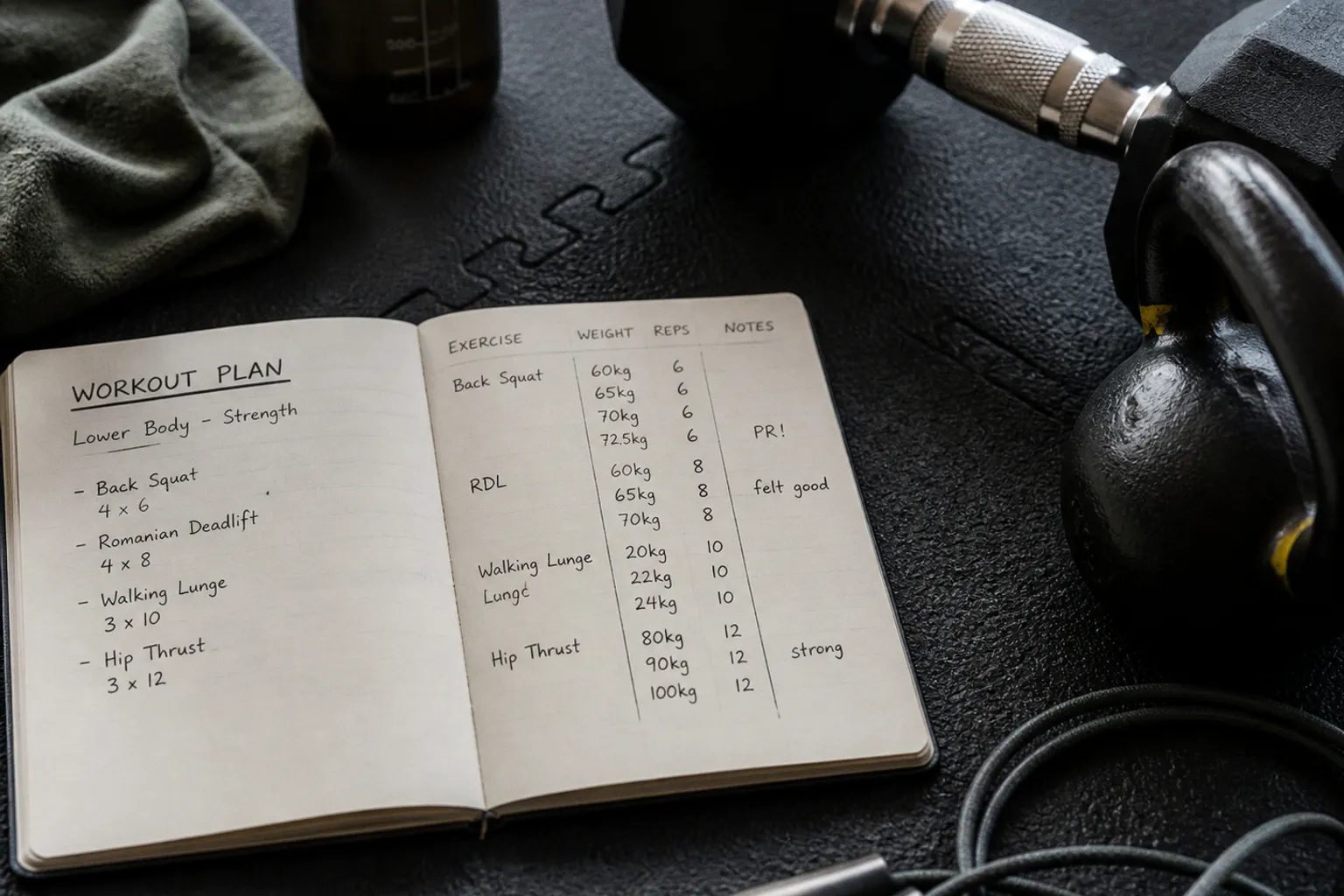
Most lifters stall because their programming collapses into a single template — same volume, same intensity distribution, same exercises — regardless of equipment access or recovery capacity. Per BroBible, MacroFactor Workouts released in January to address that structural problem, built by co-founder Jeff Nippard around a progressive overload framework. The app's value proposition is mechanical: feed it your training age, session frequency, duration ceiling, and available equipment, and it generates a periodized split with targeted muscle emphasis. That removes the most common failure point in self-directed lifting — inconsistent stimulus across training blocks.
The Input Variables That Drive Output
Programming quality is a function of input specificity. The app requests four mechanical parameters before generating a routine:
- Training age: novice lifter or experienced — this dictates volume and intensity floor.
- Frequency: 1–2 sessions per week or 3–5 — this sets recovery partitioning.
- Session duration: cap in minutes — this constrains exercise density.
- Equipment inventory: full gym, home setup, kettlebells, bands — this defines the movement pool.
These inputs determine whether the output is hypertrophy-biased or strength-biased, whether the split is upper/lower or full-body, and which muscle groups receive surplus volume. A routine built without these constraints is not personalized — it is a default template projected onto a non-matching physiology.
Where the AI Closes the Gap
Human coaches retain an edge in exercise substitution logic: matching joint angle and load curve when equipment is missing. Per BroBible, MacroFactor Workouts' internal algorithm performs that substitution without forgetting exercises the way a fatigued coach might. That addresses a specific failure mode — mid-session improvisation that violates the original mechanical intent of an exercise.
For lifters building a routine from scratch, the protocol is direct: select your emphasis muscles, choose split structure, generate. Then audit the output for:
- Volume per muscle group (sets per week)
- Progression scheme built in (load, reps, or density)
- Rest day distribution matching recovery capacity
If the generated routine satisfies those three checkpoints, execute it. Reassess at the four-week mark based on objective metrics — load moved, reps completed, body composition — not subjective fatigue signals. That is how a biological system gets optimized: input variables controlled, output measured, stimulus adjusted.
What to Track
- Weekly set volume per muscle group — the primary driver of hypertrophic response.
- Session adherence rate — BroBible flags consistency as the dominant variable; without it, programming quality is irrelevant.
- Progressive overload trajectory — load or reps must trend upward across mesocycles, or the routine has failed its mechanical purpose.
The app does not replace a coach for lifters with injury history or complex biomechanical constraints. For everyone else, it eliminates the programming blank-page problem that stalls more intermediate lifters than any single exercise choice.