Pre-packaged meal prep ingredients: budget and time traps
The cost of pre-packaged meal prep ingredients is not limited to the shelf price. The trade is usually simple: less manual preparation in exchange for a higher price, more sodium, weaker protein density, and less control over storage.
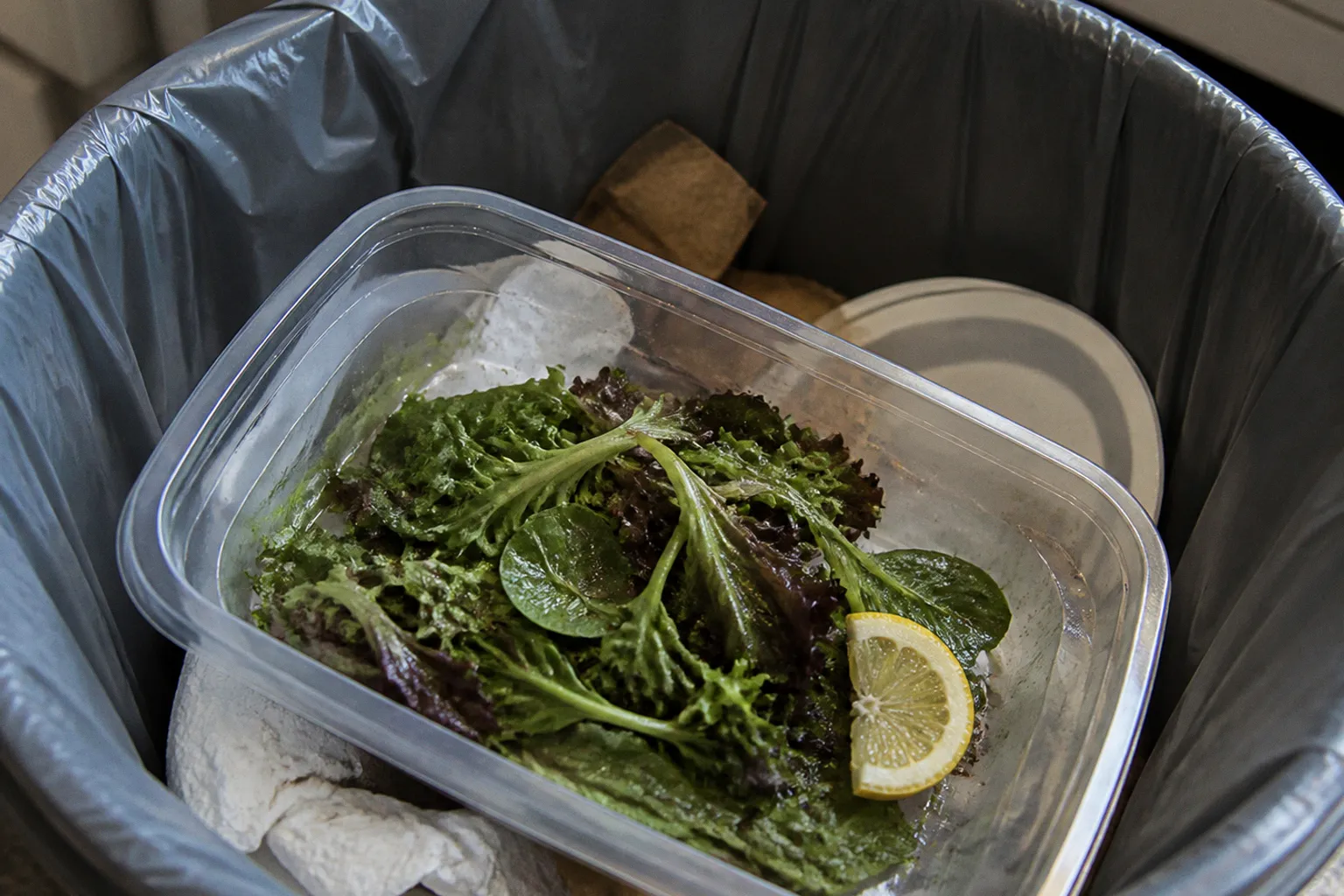
The error is treating that trade as automatically efficient.
A pre-portioned meal kit in the United States commonly costs $7–$14 per serving before subscription adjustments, delivery fees, or add-ons. A pre-cut fruit or vegetable can cost up to three times more per pound than the whole product. A frozen chicken-and-rice meal can contain more than twice the sodium of a comparable homemade bowl while providing less protein.
Convenience is not the problem. Unmeasured convenience is.
The hidden price premium of convenience
Pre-cut vegetables, peeled fruit, frozen grain blends, marinated proteins, and ready-to-cook meal kits all remove part of the food preparation sequence. That reduction has a price. Sometimes the price is justified. Often it is not.
The relevant comparison is not only the package price. It is the cost per edible pound, cost per gram of protein, preparation time removed, and probability of waste.
A whole bell pepper requires washing, cutting, and storage. A container of sliced peppers requires none of the first two steps. The product may also contain less usable food because of trimming, surface dehydration, or packaging loss. The time saved is measured in minutes. The price increase can apply to every pound purchased.
The same applies to pre-cut fruit. Removing a peel or cutting a melon does not increase the food’s protein content, micronutrient density, or satiety value. It increases labor performed by someone else. That labor is transferred to the price.
What the premium is paying for
A grocery store meal prep shortcut can include several separate charges:
- Processing labor: washing, cutting, peeling, portioning, or marinating.
- Packaging: trays, films, containers, labels, and controlled atmosphere.
- Distribution: refrigeration and short shelf-life logistics.
- Convenience margin: the price attached to eliminating a task at the moment of purchase.
- Waste transfer: some spoilage risk is moved from the retailer to the consumer through small packages and limited storage flexibility.
The last item is frequently ignored. A whole cabbage can remain usable for a substantial period. A container of shredded cabbage has more exposed surface area and usually a shorter useful window. The packaging may reduce dehydration, but it does not remove the biological process.
The correct comparison is not package price. It is cost per usable serving after protein, sodium, preparation time, and waste are included.
This does not make pre-cut food irrational. It makes the purchase conditional.
If cutting produce is the reason vegetables are not consumed, a higher unit price may produce a better dietary result. If hand pain, limited grip strength, a schedule constraint, or executive-function barriers prevent regular preparation, pre-cut ingredients can reduce waste by making the food usable. The mistake is calling every premium a trap. The premium is a trap when it buys time that was not scarce.
Nutritional trade-offs in ready-made meals
Ready-made meals create a second problem. Portioning is controlled, but the macronutrient distribution is controlled by the manufacturer, not by the training objective.
A meal can be labeled high-protein and still provide a weak protein-to-calorie ratio. It may contain enough protein to qualify for a marketing claim while supplying a large sodium load and a calorie structure dominated by refined starch, fat, or sauce.
A direct comparison illustrates the difference. One store-bought chicken-and-rice bowl cost $5.49 and supplied 380 calories, 24 grams of protein, and 860 milligrams of sodium. A homemade equivalent cost $2.80 and supplied 420 calories, 38 grams of protein, and 380 milligrams of sodium.
The homemade version cost $2.69 less per serving. It provided 58% more protein and 56% less sodium. The calorie difference was minor. The nutrient allocation was not.
This matters because training adaptation is not driven by calories alone. Protein supplies amino acids for muscle protein synthesis. Sodium affects fluid balance and may be relevant to sweat losses, but a high-sodium ready-made meal is not automatically useful for performance. In a standard sedentary or lightly active diet, repeated high-sodium meals can become an unnecessary constraint.
Most ultra-processed foods, including many frozen meals and pre-made meal prep products, contribute substantially to dietary sodium. A 2019 analysis in BMJ Open attributed 80% of dietary sodium in the American diet to ultra-processed foods. The number does not mean every packaged meal is nutritionally poor. It means the category has a predictable sodium mechanism: sauces, cured components, seasoning systems, and preservation.
Protein density is the practical metric
For fitness meal prep, inspect the protein relative to total calories. The label should answer four questions:
- How many grams of protein are in the complete serving?
- How many calories are required to obtain that protein?
- Is the protein supplied by a substantial portion of meat, fish, eggs, dairy, soy, or legumes?
- Does the meal contain enough volume to produce satiety without relying on additional snacks?
A 400-calorie meal with 35–40 grams of protein has a different utility from a 400-calorie meal with 20–25 grams. Both may fit a calorie target. Only one may support a high-protein meal plan without requiring additional food.
The same problem appears with pre-marinated proteins. The label may show a favorable raw protein source, but the marinade can add sodium, sugar, oil, and water. The weight of the package is not equivalent to the weight of the protein. Read the nutrition panel after preparation when that information is available.
Why frozen does not mean inferior
Frozen ingredients require separate treatment from frozen ready-made meals. Frozen vegetables, plain frozen fruit, frozen fish, and unseasoned meat can preserve control. They are often useful for meal prep because they reduce spoilage and allow portioning without immediate use.
The relevant distinction is not fresh versus frozen. It is raw or minimally processed versus formulated and portioned by a manufacturer.
A plain frozen broccoli bag and a frozen broccoli-cheese casserole occupy different nutritional categories. The first is an ingredient. The second is a constructed meal with added sodium, fat, and energy density.
Subscription meal kits versus raw ingredient prep
Meal kits remove planning, shopping for individual components, and measuring. They do not remove cooking time. They also do not eliminate cleanup, packaging disposal, or the need to use the delivered ingredients inside their storage window.
At $7–$14 per serving, subscription meal kits occupy a middle position. They cost more than many meals assembled from raw staples. They can cost less than takeaway food when waste and impulse purchases are included. The result depends on the household’s behavior, not the marketing claim.
A kit becomes expensive when it is treated as a permanent grocery system rather than a planning aid. It is most defensible when the consumer has a defined bottleneck:
- no reliable meal-planning process;
- limited ability to buy varied ingredients without duplication;
- low tolerance for recipe selection;
- a short period requiring controlled portions;
- frequent takeaway purchases caused by the absence of a ready cooking plan.
It is less defensible when the same meals could be assembled from rice, potatoes, oats, eggs, chicken, lean beef, canned fish, beans, frozen vegetables, and basic seasoning without meaningful preparation difficulty.
The cost comparison
| Parameter | Meal kit | Raw ingredient preparation |
|---|---|---|
| Direct price per serving | Typically $7–$14 before some fees or add-ons | Usually lower for staple-based meals |
| Planning demand | Reduced | Higher at the start |
| Portion control | Pre-measured | Determined by the cook |
| Protein control | Limited by the recipe | Adjustable by changing the protein portion |
| Sodium control | Often limited by sauces and seasoning | Directly controllable |
| Storage flexibility | Ingredient-specific and time-limited | Higher when using dry, frozen, or whole foods |
| Packaging waste | High relative to raw staples | Lower, depending on purchasing method |
| Preparation time | Reduced but not removed | Higher initial labor |
| Waste risk | Can be lower if the kit is used immediately | Lower with batch cooking and frozen components |
The correct question is not “Are meal kits worth it?” It is “What task is the meal kit replacing, and what does that task cost me?”
If it replaces a $15 takeaway meal, the financial comparison changes. If it replaces a $2.80 homemade bowl, the premium becomes obvious. If the kit prevents five unused ingredients from spoiling, its effective cost moves downward. If it arrives with ingredients that are never cooked, the entire purchase becomes waste.
Meal kits are a planning product first and a food product second. Pay for the planning only when planning is the limiting variable.
Food waste is a budget variable, not a moral issue
The average American household discards approximately $2,275 worth of food annually. The causes are familiar: buying duplicate ingredients, selecting quantities that exceed the meal plan, forgetting produce in the refrigerator, and purchasing aspirational food that does not match actual behavior.
This changes the raw-versus-prepared calculation.
Buying whole produce is cheaper per pound. It is not cheaper if half of it becomes inedible. A large package of chicken is economical only if it is cooked, frozen, or portioned before the storage window closes. A bulk purchase is not a saving. It is a liability with a low unit price.
The practical metric is edible use.
Use a storage architecture
A functional meal prep system divides ingredients by storage risk:
- Stable staples: rice, oats, pasta, potatoes, canned beans, canned fish, spices, and frozen vegetables.
- Medium-window foods: eggs, yogurt, firm produce, fresh poultry, and prepared grains.
- Short-window foods: cut fruit, leafy greens, cooked fish, opened soft dairy, and prepared meals stored in the refrigerator.
Build the week around the short-window foods first. Use stable staples to fill the remaining meals. This reduces the chance that a fragile ingredient controls the entire schedule.
Pre-cut vegetables can be rational when they are purchased in a quantity that will be used inside the storage window. They become irrational when the package is selected because it appears efficient but the meal plan does not contain a defined use for it.
A simple inventory system is more effective than a larger shopping trip. Before buying, identify:
- the number of meals required;
- the protein source for each meal;
- the carbohydrate source;
- the vegetable or fruit component;
- the storage method;
- the date by which each perishable item will be consumed.
This is not administrative overhead. It is the mechanism that converts food into meals.
When meal prep shortcuts make mechanical sense
The purpose of meal prep is not to produce an impressive refrigerator. It is to reduce the friction between a nutrition target and actual intake.
A shortcut earns its place when it removes a step that consistently causes failure without damaging the variables that matter: protein, calories, sodium, cost, and storage.
Pre-cut vegetables
Pre-cut vegetables are useful when:
- knife work is the barrier to consumption;
- the package will be used within a planned interval;
- the price premium is lower than the value of the time saved;
- the cut size is appropriate for the cooking method;
- the packaging quantity matches the number of meals.
They are less useful when the same produce can be prepared in one batch and stored without quality loss. Whole carrots, onions, cabbage, and squash usually tolerate batch preparation. Delicate leafy greens and cut fruit have different storage behavior.
Frozen vegetables and fruit
Frozen produce has high utility for meal prep because it decouples purchase timing from consumption timing. It also provides portion control and reduces the risk of buying fresh food without a plan.
Choose unseasoned products when sodium and calorie control are priorities. Season them during cooking. This preserves the ability to alter the meal for training days, rest days, or different protein targets.
Ready-cooked proteins
Pre-cooked chicken, hard-boiled eggs, canned tuna, canned salmon, tofu, and other ready proteins reduce preparation time. Their value depends on the label and the storage schedule.
Check for:
- protein per serving;
- sodium per serving;
- added oil or sugar;
- serving weight;
- number of servings in the package;
- whether the package is intended to be consumed after opening.
The product is not automatically inferior because it is ready to eat. It is inferior when the convenience obscures a poor protein-to-calorie ratio or an excessive sodium load.
Frozen complete meals
Frozen complete meals are the highest-risk category for a structured fitness diet because they combine portion control with limited ingredient control. They can function as emergency meals. They should not automatically become the base of a high-protein meal plan.
Use them as a controlled fallback. Add a separate protein source if the meal is deficient. Add frozen vegetables if volume and fiber are low. Do not compensate by adding random snacks. That is how a nominally portioned meal becomes an untracked meal sequence.
A protocol for building lower-cost meal prep
Use this sequence for the next seven days.
1. Set the protein requirement per meal.
Do not start with recipes. Start with the amount of protein each meal must provide. The recipe is subordinate to the target.
2. Select two protein bases.
Use one fresh or batch-cooked protein and one stable or ready protein. For example, cooked chicken plus eggs, or lean beef plus canned fish. This limits repetition without creating a shopping list with twelve fragile items.
3. Select one stable carbohydrate and one flexible carbohydrate.
Rice, oats, potatoes, and pasta are inexpensive structural components. Frozen grains or bread can provide flexibility without requiring daily cooking.
4. Use frozen produce to protect the plan.
Add fresh produce where it will be consumed first. Use frozen vegetables for meals later in the week or for days when cooking time is uncertain.
5. Buy whole produce when the preparation task is tolerable.
Purchase pre-cut produce when the manual step reliably prevents use. The decision is behavioral and mechanical, not ideological.
6. Prepare components, not seven identical meals.
Batch-cook the protein and carbohydrate. Store them separately when possible. This permits adjustment of portion size and reduces menu fatigue without requiring another cooking session.
7. Audit sodium on formulated foods.
Compare frozen meals, sauces, marinades, deli proteins, and packaged grains. A standard frozen meal may contain 700–1,200 milligrams of sodium. That number can consume a large part of the day’s allowance before the rest of the diet is counted.
8. Assign every perishable item a consumption date.
If no meal uses the item by that date, do not buy it fresh. Buy frozen, reduce the quantity, or remove it from the plan.
9. Calculate cost per complete meal.
Include the protein, carbohydrate, produce, sauce, and any disposable packaging. Do not compare the price of a meal kit with the price of only its most visible ingredient.
10. Review the failure point.
If the plan fails because of cutting, buy pre-cut vegetables. If it fails because of cooking, use ready proteins. If it fails because of planning, use a meal kit for a defined period. Apply the shortcut to the actual bottleneck.
The best meal prep system is not the one with the lowest sticker price. It is the system that delivers the required protein and energy with controlled sodium, low waste, and a preparation demand you will repeat.
Raw ingredients usually win on cost and control. Ready-made options win when they prevent missed meals or discarded food. Pre-cut produce wins when manual preparation is the limiting step. None of these categories deserves a universal verdict.
Measure the task being removed. Measure the nutritional cost. Measure the food that reaches the plate.
Then keep the shortcut only if it improves the system.
FAQ
Are pre-cut vegetables worth the extra cost?
Why are frozen meals often considered nutritionally inferior to homemade ones?
When is a subscription meal kit a good investment?
How can I reduce food waste in my meal prep routine?
Is frozen produce as healthy as fresh produce for meal prep?
More products