Pre-Workout Meal Timing: How Long Should You Wait to Train?
Every fitness creator has a number for you. Wait 30 minutes. Wait 60. Wait exactly two hours, but not three. Eat the banana at T-minus 45, the rice cake at T-minus 20, the pre-workout supplement at T-minus 15.
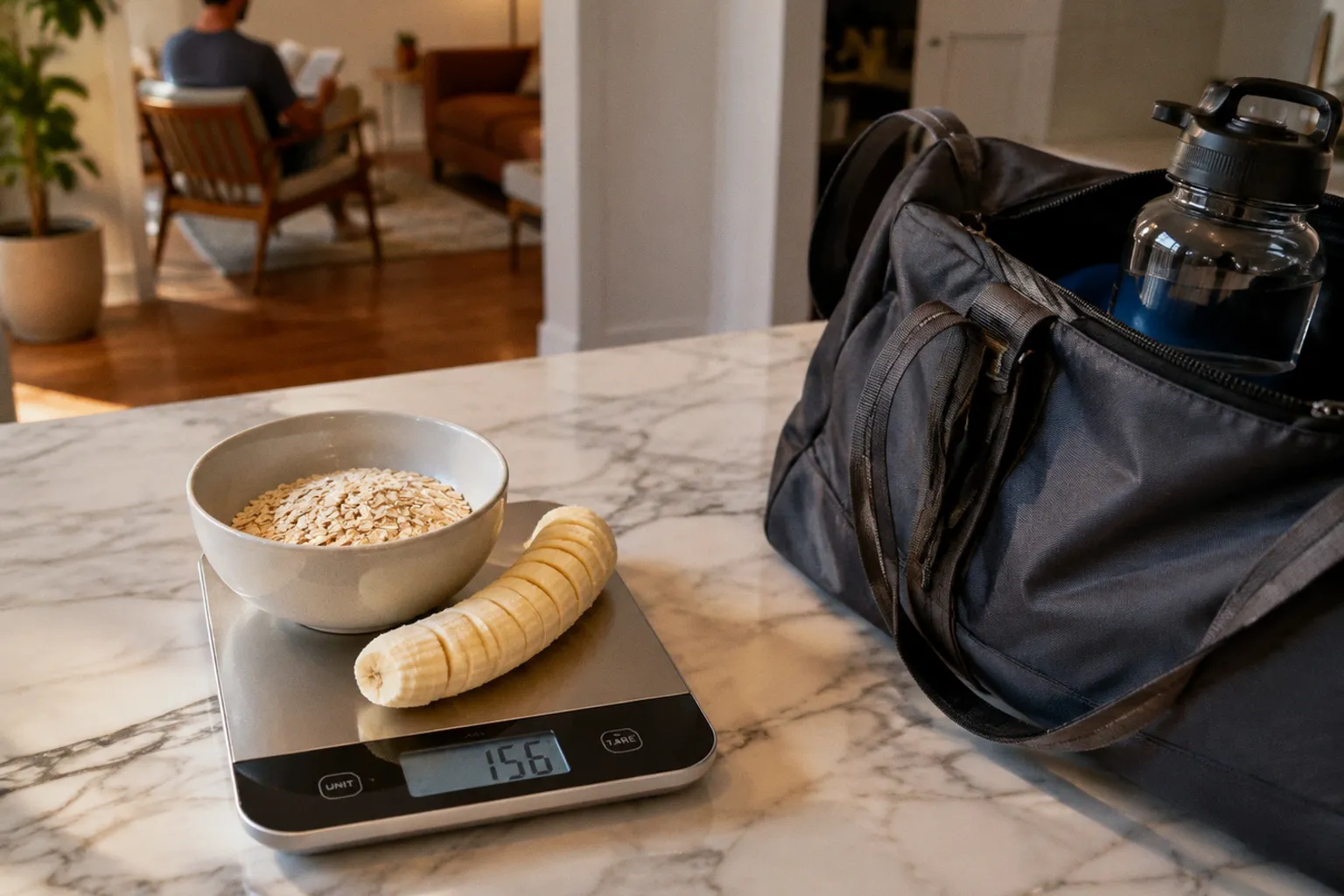
They have turned digestion into a NASA launch window, and most of it is a costume over a much simpler truth: how long you wait to lift depends almost entirely on what you ate, not on the clock.
A 1,200-calorie ribeye and a banana with a spoon of peanut butter are not the same problem. Yet the standard advice — wait a fixed number of minutes, period — treats them as if they are. I've watched enough lifters sabotage their own sessions by following the wrong timing rule for the wrong meal. Some of those lifters were me, ten years and a lot of bad sessions ago.
The useful question is not simply how long to wait after eating. It is what you ate, how much of it, how hard you are about to train, and how your own digestion behaves under pressure. That is the framework that makes pre workout meal timing before lifting practical instead of ritualistic.
The Physiology of Digestion and Exercise Performance
The problem isn't really that food is sitting in your stomach. The problem is that digestion and hard training place competing demands on the body.
After you eat, the gastrointestinal system has to mechanically process the meal, release digestive secretions, move nutrients through the gut, and begin absorbing them. When you start lifting, especially during demanding compound movements, your body has to support working muscles, breathing, bracing, thermoregulation, and cardiovascular output at the same time. Blood flow is redistributed according to those demands. Digestion does not necessarily stop, but it may become less comfortable or less efficient while the workout is asking for everything else to move up the priority list.
That conflict is where the familiar complaints come from: nausea, cramping, reflux, bloating, and the vague sluggish feeling where every set feels heavier than it should. You may still be able to train, but the session becomes a negotiation with your stomach instead of a straightforward effort.
Your gut doesn't care about your training split. It cares about whether the food you ate has had enough runway to clear.
The compounding factor is intensity. A casual walk after dinner is a different demand from a heavy squat session at 80% of your max. Bracing, breath-holding, repeated valsalva maneuvers, and high abdominal pressure can make a meal feel much more intrusive than it would during low-intensity movement. This is why timing rules borrowed from jogging or yoga often fall apart when they meet a real barbell.
Exercise selection matters, too. A meal that feels acceptable before upper-body accessories may become a problem before front squats, deadlifts, or high-volume leg work. The more your session involves heavy bracing and large muscle groups, the less interested you should be in testing the limits of your digestive system.
There is also a difference between discomfort and danger. A full stomach can make training unpleasant, and severe nausea or reflux is a good reason to stop. But the solution is not to assume every bite must be completely digested before any movement is possible. The body can digest food while you exercise. The goal is to match the meal to the session so that the process does not interfere with performance.
The Two-to-Four Hour Window for Full Meals
Here's the rule of thumb that actually has biology behind it: a full mixed meal commonly needs roughly 2 to 4 hours to move through the stomach to a meaningful degree. That is not a guarantee or a countdown timer. It is a useful planning window for a meal containing substantial protein and carbohydrates along with some fat and fiber.
What counts as a full meal? A chicken breast with rice and vegetables. A burger with fries. Pasta with meat sauce. A stir-fry over rice. Steak with potatoes. These meals differ in nutritional quality, but they have one relevant feature in common: they contain enough total food, protein, fat, fiber, or some combination of the four to require more digestive work than a piece of fruit or a few rice cakes.
If you're sitting down to a large plate with meaningful fat content, plan your training session at least two hours after the last bite when possible. Three to four hours may be more comfortable for a particularly large, rich, or high-fiber meal. That gives the meal time to move along before you ask your body to brace, lift, and repeat hard efforts.
The upper end of the window matters most when the meal is heavy in fat and fiber. A lean chicken-and-rice plate with a modest serving of vegetables may feel fine after two hours. A double-bacon cheeseburger with fries and a milkshake is a different assignment. Fat tends to slow gastric emptying, while a large amount of fiber can add bulk and increase the chance of bloating. The total size of the meal matters as well.
Calorie count is useful, but it is not the only variable. A smaller meal can still cause trouble if it contains foods you personally digest poorly. A larger meal may be comfortable if it is familiar, moderate in fat, and built from foods that reliably agree with you. The clock gives you a starting point; the contents of the plate determine how much trust you should place in it.
How long to wait after different types of meals
| Meal situation | Practical waiting window | What usually makes the difference |
|---|---|---|
| Large mixed meal with protein, carbs, fat, and fiber | About 3–4 hours | Total volume, fat, fiber, and how demanding the workout will be |
| Moderate mixed meal | About 2–3 hours | Portion size and individual tolerance |
| Small, mostly carbohydrate meal | About 60–90 minutes | Whether it is low in fat and easy to digest |
| Light carb-based snack | About 30–60 minutes | Simplicity, portion size, and personal sensitivity |
These are not permission slips to ignore your own experience. If a moderate meal consistently sits heavily after two hours, give yourself more time. If you are comfortable after a shorter interval with a familiar meal, there is no prize for waiting longer just because an online chart says you should.
The same meal may also require different timing on different days. Poor sleep, stress, dehydration, heat, and a sudden increase in training intensity can all make gastrointestinal discomfort more likely. Digestion is not isolated from the rest of your recovery. A meal that worked before a normal Tuesday session may not feel as good before a hard leg workout when you are already run down.
Strategic Fueling: When to Choose a Light Pre-Workout Snack
Not every training session happens after a full meal. Most don't, frankly. Sometimes you've got an hour between meetings and a squat session. Sometimes dinner is still several hours away. Sometimes you trained fasted yesterday and don't want to repeat that mistake.
That's where the 30-to-60-minute window comes in — but only with the right kind of fuel.
A light pre-workout snack should usually be carbohydrate-dominant, low in fat, relatively low in fiber, and easy to digest. Think banana, white rice, plain toast with a thin spread of jam, a small bowl of cereal, fruit, or a couple of rice cakes with honey. These choices are not magical. They simply avoid adding much volume, fat, or fiber immediately before a session.
Carbohydrates are the priority close to training because they can provide readily available fuel without requiring a large, slow meal. That does not mean every lifter needs a snack, or that a small snack will transform an average workout into a personal record. It means that if you are hungry, under-fueled, or facing a demanding session, a modest amount of easy-to-digest carbohydrate is often a better choice than trying to force down a complete meal.
What about protein? The old claim that protein inside the 60-minute window is automatically wasted is too blunt to be useful. Protein is not thrown away simply because you ate it shortly before lifting. An easily digested protein source can still be included if you tolerate it and if it helps you meet your overall intake. It may not be the main source of immediate training fuel, but that is not the same as having no value.
The closer you are to training, the more the priorities shift. Carbohydrates and low digestive burden come first. If you want some protein, keep the portion modest and choose something that has behaved well for you before: a small serving of yogurt, a low-fat dairy option, a shake, or another familiar source. There is no reason to add it if protein immediately before training makes you feel heavy, nauseated, or reflux-prone.
Inside the hour, carbs and comfort are the priority. Easily digested protein can still fit if your stomach agrees with it.
What does not belong in this window for many lifters? Anything with meaningful fat or a large amount of fiber. Peanut butter, whole eggs, cheese, avocado, nuts, trail mix, beans, and large servings of vegetables are useful foods in general, but they are not always useful immediately before heavy deadlifts. They slow the meal down or add bulk at exactly the point when you want the digestive task to stay small.
That does not make these foods bad pre-workout choices in every situation. A thin spread of peanut butter on toast may be completely fine for one person 90 minutes before training. A small yogurt with fruit may work better than a banana for someone else. The closer the snack is to the first working set, however, the less room you have for experimentation.
There is also a case for the genuinely empty-stomach session. If you wake up, train early, and don't want to eat beforehand, that can work for moderate training if you feel good doing it. Heavy compound movements on zero fuel may feel harder than expected, especially if your previous meal was far away or your total daily intake is low. A small carb-based snack before training can solve that without turning breakfast into a second workout.
Macronutrient Targets for Pre-Lifting Nutrition
Timing dictates the practical shape of the macros, not the other way around. A full meal several hours before training has room for protein, carbohydrates, fat, and fiber. A snack eaten shortly before the first warm-up set does not.
For most adult lifters, the following ranges are a reasonable starting point rather than a prescription carved into stone:
| Meal timing window | Protein target | Carbohydrate target | Fat and fiber guidance |
|---|---|---|---|
| 3–4 hours before training | About 30–40 g of protein | Roughly 1–4 g per kg of body weight | Moderate amounts are usually workable in a full meal |
| 2–3 hours before training | About 20–30 g of protein | Roughly 0.5–2 g per kg of body weight | Keep the meal smaller and avoid making fat or fiber excessive |
| 30–60 minutes before training | Optional, easily digested protein if tolerated | Light, simple carbohydrates | Keep fat and fiber minimal when gastrointestinal comfort is a concern |
The carbohydrate range is deliberately wide. Your needs depend on the size and duration of the session, your body size, your goals, what you ate earlier in the day, and how much volume you are handling. Someone preparing for a high-volume hypertrophy workout may want more carbohydrate than someone doing a short technical session. Someone trying to reduce calorie intake may choose a smaller serving without needing to eliminate pre-workout food altogether.
If you're 80 kilograms and eating three to four hours before training, that broad carbohydrate range could mean anywhere from 80 to 320 grams. That is a large span, and it should be. Those numbers represent very different training demands and eating patterns. The lower end may suit a smaller or less demanding session; the higher end may be relevant to substantial volume or a longer training day. Do not select the highest number simply because it sounds more serious.
Protein is more consistent, but the timing window still changes how you use it. A meal with 30 to 40 grams of protein three to four hours before lifting gives you a substantial serving well before the session. A smaller meal with 20 to 30 grams two to three hours out may be enough when you are also eating protein elsewhere across the day.
Inside the final hour, protein is optional rather than forbidden. Easily digested protein may still be useful for someone who prefers it, has not eaten much protein earlier, or is using a snack to bridge a long gap between meals. It should not displace the carbohydrates that make the snack more useful for immediate training fuel, and it should not be forced when it increases digestive discomfort.
This is the distinction the simplistic rule misses: a protein shake taken 30 minutes before lifting is not necessarily a performance enhancer for the next set, but it is also not automatically wasted. Its value depends on the rest of your diet, the size and type of the serving, and whether your stomach handles it. Nutrition is not a courtroom in which a nutrient either counts completely or counts for nothing.
What to eat before strength training
A practical full meal might combine lean meat, rice or potatoes, and a moderate serving of vegetables. A closer snack might be fruit and toast, cereal with a low-fat milk option, or rice cakes with honey. The details are less important than the pattern:
- Put more of the meal's fat and fiber further away from training when those foods tend to cause bloating or reflux.
- Use carbohydrates closer to the session when you want fuel without a large digestive load.
- Include protein according to your overall intake and tolerance rather than treating the final hour as a protein emergency.
- Reduce portion size as the workout approaches.
- Repeat meals that work instead of constantly testing new foods on heavy training days.
Hydration is another part of the timing equation. None of the meal planning matters much if you walk into the gym dehydrated, because dehydration can amplify fatigue, perceived effort, and gastrointestinal complaints. Sip water across the hours before training rather than trying to correct everything immediately before the first set. If a full stomach bothers you, use smaller amounts in the final stretch instead of chugging a large volume at the door.
Avoiding Gastrointestinal Distress During Heavy Lifts
The list of ways a poorly timed meal can ruin a session is longer than most people realize. Nausea is the obvious one: you've seen the lifter who eats a full breakfast, drives to the gym, and spends the warm-up sets trying not to lose it.
But it is not just nausea. Cramping can interfere with abdominal bracing during squats and deadlifts, making the session feel unstable. Heartburn can become more noticeable when intra-abdominal pressure pushes stomach contents upward. Bloating can make a belt feel too tight before the working sets even begin. Sluggishness often means the meal was too large, too rich, too close, or simply not a good match for that particular workout.
Heavy lifting also exposes bad timing quickly. A meal that feels fine while sitting at a desk may become uncomfortable once you are repeatedly bending, bracing, and holding your breath under load. If you have a history of reflux, irritable bowel symptoms, or food intolerances, your personal pre-workout digestion time may be less predictable than a generic chart suggests. That is a reason to plan conservatively, not a reason to stop eating before training altogether.
So what is the fix when you've miscalculated? Three options, depending on how far off you are.
- If you're inside an hour of training and you've just eaten a full meal, postpone the session or convert it to lower-intensity work. Light technique drills, mobility, and accessories that do not heavily load the spine may be reasonable if you feel well enough. Trying to grind a max-effort squat through a digestive bottleneck is how you earn a lesson you could have avoided.
- If you've eaten a moderate meal and you've got about 90 minutes, adjust the session instead of pretending nothing happened. Extend the warm-up, use lighter loads, keep the working sets manageable, and avoid turning the day into a test of willpower. A good session at reduced intensity is more productive than forcing a new personal record while fighting reflux.
- If you've eaten a light snack and you're 30 to 60 minutes out, proceed as planned if you feel comfortable. The snack was built for this window. Keep the first few sets honest, because even a normally reliable food can feel different when sleep, stress, heat, or hydration is off.
The other lever people forget is personal testing. Digestion speed varies significantly between individuals. Some lifters can handle a moderate meal relatively close to training. Others genuinely need several hours after anything substantial. Food allergies, intolerances, anxiety, menstrual-cycle changes, medications, and simply the difference between an upper-body and lower-body session can all affect the result.
Track the useful variables rather than obsessing over perfection: what you ate, roughly how much, when you finished it, what kind of workout followed, and how your stomach and performance felt. After a few weeks, you will have a personal timing profile that no article on the internet can give you. That profile may be more valuable than a universal rule because it reflects your actual training, your actual meals, and your actual tolerance.
There is one boundary worth keeping clear. Persistent pain, repeated vomiting, severe reflux, blood in the stool, unexplained weight loss, or ongoing digestive symptoms are not ordinary pre-workout timing problems. Those deserve medical attention. Moving your snack 15 minutes earlier is not a substitute for investigating symptoms that happen outside the gym as well.
The Verdict on Pre-Workout Meal Timing
There is no universal pre-workout clock. Anyone selling you one is selling you a certainty the digestive system never promised. The useful framework is straightforward: allow roughly 2 to 4 hours after a full meal, use 30 to 60 minutes for a light carb-based snack, and adjust both windows according to the size of the meal, the demands of the workout, and your own response.
Full meals have room for balanced nutrition. Close to training, carbohydrates and low digestive burden become the priority. Easily digested protein can still fit in the final hour if you tolerate it, but it is not mandatory and it should not be described as either a miracle or a wasted nutrient. The right choice is the one that supports the session without making your stomach the main event.
The fitness industry wants you to treat meal timing like a launch sequence because complexity sells programs, supplements, and coaching packages. Digestion does not actually work that way. It responds to the size and composition of the meal, your current state, and the demand profile of the workout you are about to perform.
If you've been guessing — and worse, guessing badly — now you have a usable map. Give full meals a longer runway. Keep close snacks small, carbohydrate-focused, and low in fat and fiber. Include protein when it helps and when your stomach accepts it, not because an online rule says you have one final chance to use it. Then pay attention to what happens under the bar.
That is the part no algorithm can replace. A timing rule is only useful if it produces a session you can actually train through.