Weekly meal prep checklist: essential steps before you start
It's 6:47 PM on a Tuesday. You just wrapped a long training session, your shirt is sticking to the bench, and your stomach is already making decisions for you. You open the fridge and — nothing.
Half a bag of wilting greens, three random condiments, and a container of something you can't even identify. Ordering takeout feels easier than figuring it out, and by 7:30 you're elbow-deep in a burrito bowl wondering where your nutrition plan actually went.
If that picture landed a little too close to home, here's the good news: the gap between wanting to eat well for your training and actually doing it most of the week isn't talent, willpower, or some secret macro formula. It's a routine. And routines, unlike motivation, can be built. That's exactly what a weekly meal prep checklist for fitness beginners is meant to provide: a repeatable path that takes the guesswork out of weekday meals.
This isn't about turning you into a meal-prep robot or chaining you to the stove every Sunday. It's about giving you a system you can actually run, week after week, so that the 6:47 PM problem starts getting solved before it ever shows up. The best place to begin is with the decisions that make everything else easier: your targets, your meal structure, your grocery list, and the amount of cooking you can realistically sustain.
A weekly meal prep routine isn't about cooking more — it's about deciding once, so you don't have to decide every day.
Set your targets before you touch a pan
The single biggest mistake beginners make is jumping straight to recipes. They scroll through gorgeous photos of grain bowls, save fourteen of them, hit the grocery store hungry, and come home with a cart full of ingredients that don't actually fit any coherent plan. By Wednesday, half of it has wilted in the crisper drawer.
Before you buy a single container, you need a number to aim at. Not a magic number copied from someone on the internet, but a target that reflects your actual training, your current eating pattern, and your goal.
For fat loss, most evidence-based frameworks point to a moderate daily calorie deficit — typically somewhere in the 300 to 500 calorie range below maintenance. That's enough to move the needle over time without leaving you foggy, under-recovered, and resentful of your own kitchen. For muscle gain, the range flips: a 200 to 400 calorie surplus above maintenance gives your body additional energy to support growth without turning every meal into an excuse to overeat.
Those ranges are starting points, not laws. Your maintenance intake is an estimate, and your training load, sleep, appetite, and progress all matter. If your performance is falling apart or you're constantly thinking about food, the plan may be too aggressive. If nothing changes after a reasonable stretch of consistency, the target may need adjusting. Meal prep is useful partly because it gives you a clearer picture of what you're actually eating, rather than forcing you to guess from one chaotic day to the next.
Protein deserves its own conversation. If you're training with any real intensity, you'll want to anchor your intake around 1.0 to 1.2 grams of protein per pound of body weight — a range commonly used in fat-loss frameworks to help protect lean mass while you reduce body fat. Don't obsess over hitting the upper end every single day. A consistent weekly pattern matters more than one perfect plate.
Here's a practical way to translate those numbers into something you can cook with:
| Goal | Daily calorie adjustment | Protein target | What it can look like at one meal |
|---|---|---|---|
| Fat loss | 300–500 cal below maintenance | 1.0–1.2 g per lb | Around 30–40 g protein per main meal |
| Muscle gain | 200–400 cal above maintenance | 1.0 g per lb minimum | Around 35–45 g protein per main meal |
| Recomposition or maintenance | At maintenance | 0.8–1.0 g per lb | Around 25–35 g protein per main meal |
These are not portions you need to force onto every plate. They are planning anchors. A snack will not look like dinner, and a rest day may not require the same amount of food as a hard training day. The point is to create a structure that supports your goal instead of letting every meal become an improvised calculation.
Write your targets somewhere visible: a notes app, a whiteboard, or the back of an envelope. Once they're in front of you, the rest of your meal prep routine starts pointing in the same direction.
The three-component formula that does the heavy lifting
You don't need seventeen different recipes to eat well across the week. You need one structure you can rotate. Think of it as a formula, not a meal: every main plate combines three elements, and once you understand the formula, you can swap the specifics without feeling bored or under-fueled.
1. A quality protein
This is the anchor of every prepped meal. Chicken thighs, ground turkey, lean beef, salmon, tofu, tempeh, eggs, Greek yogurt, cottage cheese, canned tuna, and legumes can all work. Pick the sources you genuinely enjoy and rotate two or three across the week.
Protein helps make a meal more filling and gives your body the raw material it needs to recover from training. It also makes a practical difference during prep: a cooked protein can move from a grain bowl to a wrap to a salad without requiring you to start from scratch.
If you are preparing lunches for several days, choose proteins that reheat well and stay appealing after refrigeration. Ground turkey works in bowls, wraps, and stuffed vegetables. Baked tofu can take on different sauces. Chicken thighs are generally more forgiving than very lean cuts if they sit in the fridge for a few days. You don't need to make every meal identical; you need a base that can survive the week without becoming something you avoid by Thursday.
2. A high-fiber carbohydrate or grain
This is your training fuel and your gut's best friend. Rice, quinoa, farro, oats, sweet potatoes, regular potatoes, whole-grain pasta, lentils, and black beans can all serve this role.
The best choice depends on the meal and on what you will actually eat. A container of quinoa is not more useful than rice if you keep leaving the quinoa untouched. Meal planning for busy workout schedules works when the food is convenient and appealing enough to become the default.
Use a portion that matches your energy needs. A fist-sized serving is a simple visual starting point for a main meal, but more active days may call for more and quieter days may call for less. The goal is not to make carbohydrates suspicious. It is to place them deliberately, especially around training sessions when they can make meals feel more satisfying and workouts feel better supported.
3. A healthy fat
Olive oil, avocado, nuts, seeds, nut butters, and fatty fish bring flavor and staying power to a meal. Dietary fat also helps with the absorption of fat-soluble vitamins. A thumb-sized portion is a useful starting point for many meals, but remember that fats are calorie-dense and easy to add without noticing.
This is where sauces and dressings can quietly change the character of a meal. A measured spoonful of olive oil, a tahini dressing, or a small serving of avocado can make vegetables and grains much easier to enjoy. The trick is not to eliminate flavor. It is to include it on purpose instead of pouring freely while distracted.
That's the formula: protein, carbohydrate, and fat, repeated with different seasonings, sauces, and produce. The reason it works for beginners is that it replaces the vague question of what should I eat with a more manageable one: which combination sounds good today?
Protein anchors the meal, complex carbs fuel the training, and fat carries the flavor. Same formula, different rotation.
You can also use the formula to troubleshoot a plate that leaves you unsatisfied. If you are hungry again almost immediately, the meal may need more protein, fiber, or total volume. If it feels heavy before a workout, the fat or portion size may be too high for that timing. If your training feels flat, you may need more carbohydrate around the session. Meal prep is not about locking yourself into one perfect arrangement; it gives you enough consistency to notice what needs changing.
Build a grocery list that protects your goals
Here's where many weekly routines quietly fall apart. You can have clear targets and a beautiful meal formula, but if your shopping trip looks like a scavenger hunt through the store with a half-empty cart and a sleeve of crackers you didn't need, you'll be improvising meals by Thursday.
The fix is a structured list built in a specific order: proteins first, carbohydrates and produce second, fats and flavor last. When you write the list that way, your cart fills with the components of your plan instead of whatever caught your eye at the end of the aisle.
A macro-friendly grocery shopping list does not need to look clinical. It simply needs to answer a few practical questions before you leave home:
- What meals are you making? Choose three to five protein-centered meals for the week, then list every component for each. If a meal needs chicken thighs, rice, broccoli, and olive oil, all four items go on the list together. This prevents orphaned ingredients and mystery leftovers.
- Which foods will last? Pre-washed greens, broccoli, cauliflower, carrots, bell peppers, apples, citrus, and bananas at different stages of ripeness usually offer more flexibility than a pile of delicate herbs or several ripe avocados that all need attention at once.
- What can rescue a difficult day? Keep a few pantry and freezer backups: canned tuna, marinara, frozen vegetables, microwaveable rice pouches, and whole-grain wraps. These are your safety net when you don't get to prep, not a sign that the plan has failed.
- What do you already own? Check your freezer, pantry, spices, and sauces before shopping. The fastest way to create clutter is to buy another jar of something that was already sitting behind the oats.
- When will you shop? A single weekly shop, timed for when you are not starving, can make impulse purchases easier to avoid. If fresh produce tends to run out early, a smaller midweek top-up may work better than buying more than you can use.
The produce decision is especially important for beginners. Fresh vegetables are valuable, but frozen vegetables can be just as practical for a busy schedule. They require less preparation, do not spoil as quickly, and can be added to a skillet, soup, grain bowl, or stir-fry with very little effort. A meal plan should account for your actual week, not an imaginary version of you who has unlimited time and never forgets what's in the crisper drawer.
And the payoff of cooking at home is real. Research from Johns Hopkins University found that people who cook dinner at home six to seven times per week consume fewer calories, less fat, and less sugar each day compared with people who cook once a week or less. You don't have to be perfect. You just have to make the home-cooked default easy enough that it wins by inertia.
Batch cooking without losing your whole Sunday
The phrase meal prep tends to summon images of an entire Sunday spent chained to the stove, an industrial-sized container collection, and a fridge that looks like a Tupperware warehouse. That's not the version we're building here, and it is not the version most beginners can sustain past week two.
A realistic time budget for a beginner-friendly prep session might look like this:
- Around 30 minutes for planning: scanning recipes, writing the grocery list, and checking what you already have.
- About 1.5 to 2 hours for cooking and portioning: roasting or pan-searing proteins, cooking grains in one batch, roasting vegetables, and dividing everything into containers.
That's roughly a two-and-a-half-hour investment once a week. It is enough time to make the week easier without turning meal prep into the main event of your weekend. If that still feels like too much, shorten the menu. One protein, one carbohydrate, one vegetable, and one sauce can be plenty for a first attempt.
The order of operations matters more than speed. Start with the item that takes the longest, then use that cooking time to wash produce, prepare sauces, and portion ingredients. While rice simmers, chop vegetables. While the oven heats, season the protein. While food cools, clear the counter and set out containers.
A few techniques make the process feel much more manageable:
- Cook one protein in bulk. A sheet pan of chicken thighs at 425°F can provide several portions, depending on the size of the batch and your serving needs. The same approach works with a pot of ground turkey, a tray of baked tofu, or salmon roasted alongside vegetables.
- Use the oven and stovetop together. Put vegetables in the oven while a grain cooks on one burner and a protein cooks on another. The goal is to overlap tasks, not to create a frantic kitchen. Start with the item that has the longest cooking time and work outward from there.
- Use two sheet pans when the batch calls for it. One pan can hold protein while another handles vegetables, allowing you to cook larger batches without crowding the food. Leave room around the ingredients so they roast instead of steaming. The exact amount you can prepare depends on your oven, pan size, and the foods you are cooking, but the method is useful because it keeps separate ingredients moving at the same time.
- Cook grains in larger batches than you think you need. Rice, quinoa, and farro reheat well and can become the base for grain bowls, stir-fries, stuffed vegetables, or quick side dishes.
- Keep sauces separate when possible. A dressing or sauce stored on the side can prevent greens from wilting and lets you change the flavor of the same basic meal.
- Cool and portion before you clean up. As soon as food is cool enough to handle, move it into containers. Leaving everything on the counter with the intention of portioning it later creates one more task for your tired future self.
A useful rule is to prep components rather than forcing yourself to assemble identical meals. Store chicken, rice, vegetables, and sauce separately if that gives you more options. The same ingredients can become a bowl one day, a wrap the next, and a salad after that. Variety does not always require more cooking. Sometimes it only requires keeping the pieces flexible.
A manageable prep session buys you back several days of decisions. That is a trade worth making.
Food safety belongs in this part of the routine, too. Let cooked food cool appropriately before sealing it, refrigerate it rather than letting it sit out, and freeze portions you will not eat soon enough. If you are unsure whether something is still good, do not make your meal plan depend on optimism. A well-organized fridge should make the safe choice the easy choice.
Start with one meal, then let the habit grow
The fastest way to abandon a new routine is to launch it at full volume. Too many beginners try to prep three full meals a day, seven days a week, on their first attempt. By the middle of the week, they're staring at a fridge full of containers they do not want to open, and the whole system gets labeled not for me.
Start with one meal type per week. For most people, that means weekday lunches — the slot that is easiest to derail because you're busy, hungry, and surrounded by coworkers with takeout menus. Pick a protein, a grain, and a vegetable combination you genuinely like, multiply it by the number of lunches you need, and stop there.
You do not have to prep five identical containers if that makes you dread the plan. Prepare enough of each component for several meals, then vary the seasoning or assembly. One portion can become a rice bowl with salsa. Another can go into a wrap with greens. A third can be served over roasted vegetables with a yogurt-based sauce.
Once lunch feels automatic — once you've repeated it for two or three weeks without thinking about every individual step — then add breakfast prep. After that, you can consider dinners or snacks. Each layer gets added when the previous one no longer requires constant willpower to execute.
This is the part most meal-prep advice skips, and it is the part that determines whether the routine survives past the first month. Habits grow downward, into the floor of your actual life. They do not arrive fully formed from a Pinterest board.
A simple progression for many beginners looks like this:
1. Weeks 1–3: Prep weekday lunches only. Use one basic formula and rotate the seasoning, sauce, or vegetable for variety.
2. Weeks 4–6: Add breakfast prep, such as overnight oats, egg muffins, or a batch of protein pancakes that reheat quickly.
3. Weeks 7–9: Layer in two or three prepped dinners. This is where the home-cooking default starts to become more reliable.
4. After that: Experiment with new recipes, cuisines, and components. The routine is solid enough to support creativity without collapsing when one recipe takes longer than expected.
The right pace is the one you can repeat. If your schedule changes every week, build a flexible system rather than pretending every Sunday will look the same. Some weeks may call for full batch cooking. Other weeks may be better served by washing produce, cooking one protein, and stocking a few emergency meals.
Tools that earn their counter space
You don't need a kitchen full of gadgets to do this well, but a handful of essential kitchen tools for meal prep can make the work cleaner and easier.
- A half-sheet pan and a rimmed baking dish. These give you enough surface area for roasting proteins, vegetables, potatoes, and tofu. Two pans can keep separate foods moving through a hot oven at the same time, which is especially useful when you are preparing several components.
- A good chef's knife and a cutting board with a grip. Most prep time involves some kind of chopping. A sharp, comfortable knife can make that work feel noticeably easier and more controlled, especially when you are cutting several vegetables. The time it saves will depend on the food, your technique, and how much you are preparing, so treat it as a comfort and consistency upgrade rather than a guaranteed stopwatch trick.
- A 6-quart pot or larger. This works for grains, beans, soups, and one-pot proteins such as shredded chicken or braised beef.
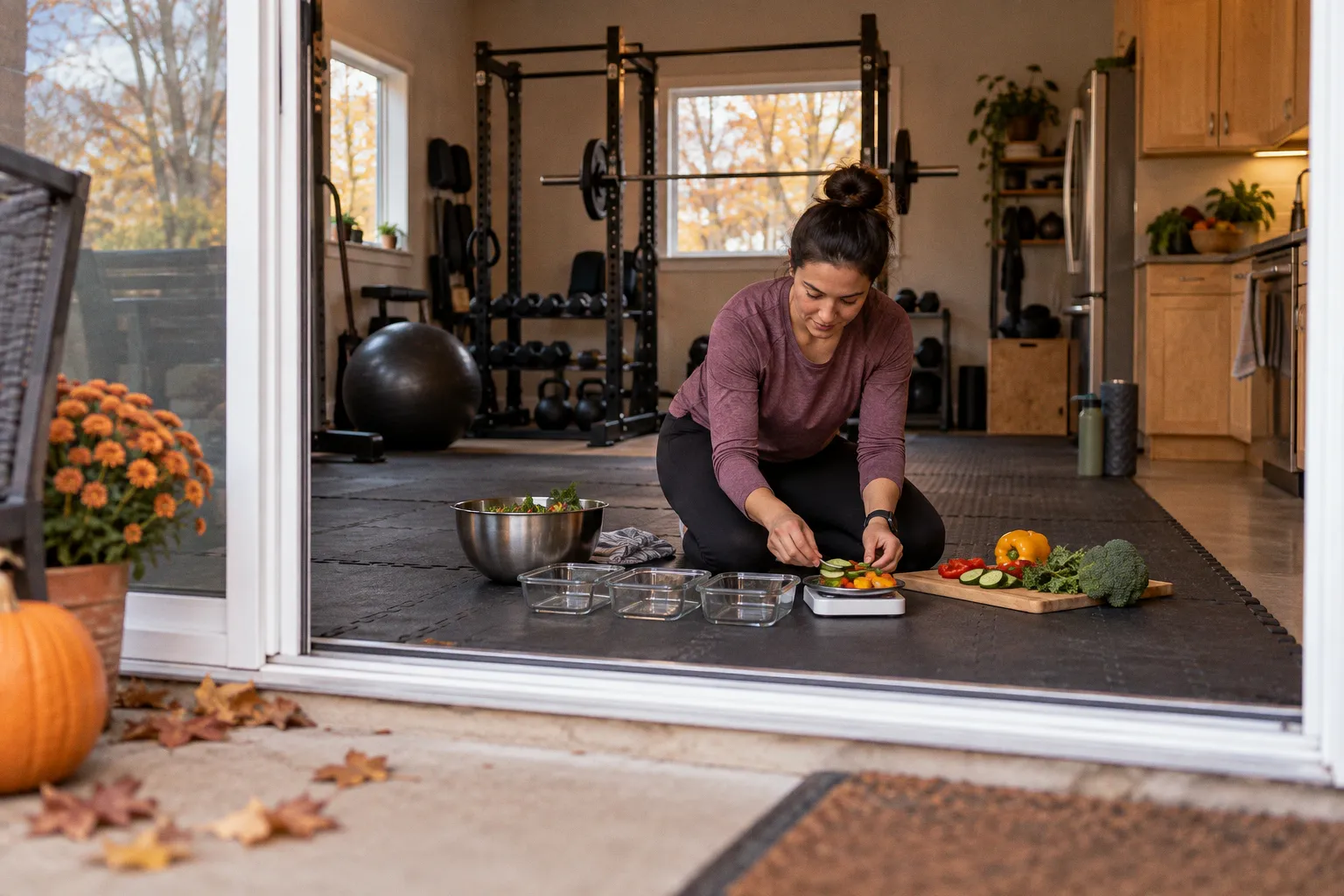
- A digital kitchen scale. It is especially useful early on, when you are still learning what a serving of cooked chicken, rice, or oats looks like on your plate. With practice, you may rely on it less often, but it remains helpful when you are adjusting portions or checking a recipe.
- A set of matching glass containers. Containers of the same size make portioning and stacking easier. Glass handles reheating well and is less likely to retain odors, although sturdy plastic can also work if it suits your kitchen and budget.
- Small containers for sauces and toppings. A separate space for dressing, salsa, nuts, or seeds can keep the main meal fresh and make a basic combination feel less repetitive.
- A freezer-safe container or bag system. This gives you somewhere to put extra portions before they become forgotten leftovers. Labeling the contents can save you from playing freezer archaeology later.
None of these tools is required on day one. Start with what you have. Add equipment as friction shows up, because friction will show you faster than any shopping list exactly what is worth investing in.
A tool earns its place when it solves a recurring problem. If you keep spilling dressing, buy smaller containers with secure lids. If your cutting board slides, get one with a grip or place a damp towel underneath it. If you regularly run out of cooked grains, use a larger pot or make a second batch. The kitchen does not need to be impressive. It needs to support the routine you are actually trying to build.
Make the plan fit your training week
A meal plan is more useful when it follows your schedule instead of fighting it. Look at the week before you shop. Identify the days you train, the days you commute, the evenings when you get home late, and the meals most likely to disappear when things get hectic.
On a training day, you may want a more substantial carbohydrate serving before or after the workout. On a rest day, the same meal may work with a different portion or a larger serving of vegetables. You do not need separate recipes for every kind of day. You can adjust the plate using the same prepared components.
For example, a batch of rice, chicken, and vegetables can become:
- A larger rice bowl after a demanding training session.
- A wrap with greens and yogurt sauce on a busy workday.
- A salad with chicken and a measured dressing on a lighter day.
- A freezer portion for a night when cooking is not realistic.
This is how to organize a fitness meal plan without making it rigid. You plan the components, then decide how to combine them according to the day. That flexibility is not a loophole; it is what helps the system survive real life.
Pay attention to hunger, recovery, and training quality. If you are constantly hungry, struggling to complete workouts, or feeling unusually tired, the plan may need more food or a different distribution of meals. If you are preparing meals you dislike, change the seasonings or ingredients before deciding that meal prep itself does not work. A sustainable plan has room for feedback.
Your next meal is the only one that matters right now
The point of building a weekly meal prep routine for fitness beginners is not to become a different person in the kitchen. It is to remove enough friction from your weekdays that good nutrition becomes the path of least resistance, not an act of heroic discipline.
You've got the targets, the formula, the grocery list, the cooking strategy, the progression, and the tools. None of them matters, though, until you pick one and use it.
For your very next meal, choose a protein, a carbohydrate, and a vegetable you already know you like. Cook enough for two servings and put one in the fridge for tomorrow. No new recipe, no elaborate shopping trip, no spreadsheet. Just one prepped meal, tucked away like a small gift to your future self.
After that, repeat the same process before you add more complexity. Build one reliable lunch before planning a whole week of breakfasts, dinners, snacks, and homemade sauces. The routine becomes useful when it is boring enough to repeat and flexible enough to survive a busy day.
That is the real weekly meal prep checklist: decide what supports your goal, buy only what belongs to that plan, cook in components, start with one meal, and adjust as your schedule teaches you what you need. The 6:47 PM problem does not disappear because you found a perfect recipe. It loses its power one prepared meal at a time.