Vegetarian High-Protein Meal Prep: A 7-Day Roadmap
Vegetarian muscle gain fails most often at the planning stage. The issue is not the absence of meat.
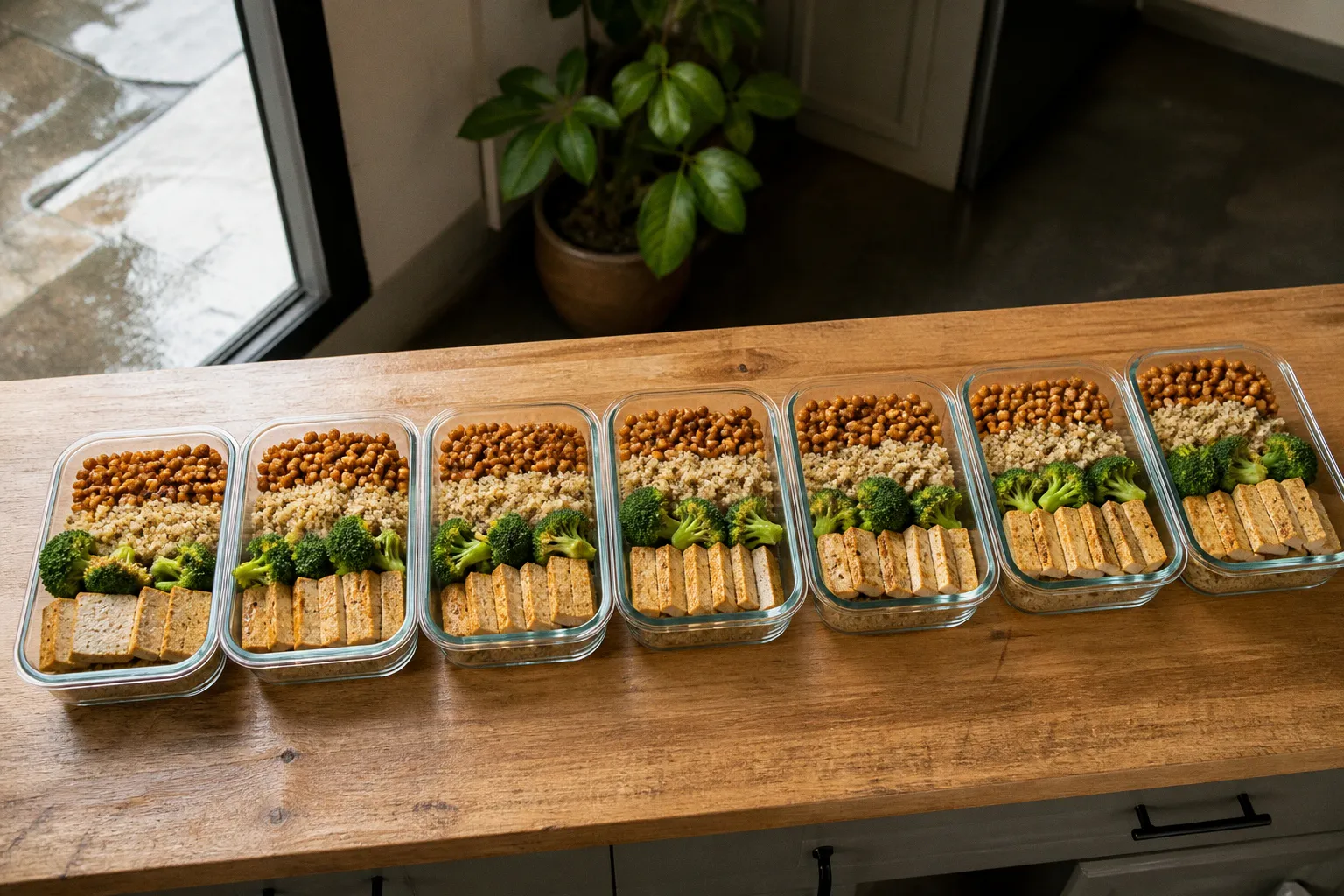
It is an inadequate protein dose, inconsistent calorie intake, or meals built around carbohydrates with a small protein garnish.
A functional vegetarian high-protein meal prep for muscle gain needs three controls: total protein, energy surplus, and repeatable food preparation. If one is missing, the hypertrophic response becomes difficult to predict.
The practical protein ceiling for athletes pursuing strength and muscle gain is approximately 2.0 g per kilogram of body weight per day. That is an upper target, not a universal requirement. Your body weight, training volume, appetite, digestion, and current calorie intake determine the appropriate number.
Energy is the second variable. A daily surplus of approximately 300–500 calories above maintenance is commonly recommended for individuals strength training to support muscle growth and recovery. The surplus must be consistent. One large meal on Saturday does not correct five underfed days.
The math of muscle: protein and calorie targets
Start with body weight. Multiply it by a protein coefficient that fits your current intake and training status. If you are already eating a high-protein diet, moving toward 1.6–2.0 g/kg can be reasonable. If your current intake is low, increasing gradually is more practical than forcing the upper ceiling immediately.
For example, an 80 kg lifter using a 1.8 g/kg target would require approximately 144 g of protein per day. At the 2.0 g/kg upper ceiling, the target would be 160 g. These numbers describe the daily total. They do not need to come from one meal.
Distribute protein across the day. A vegetarian muscle-building meal plan is easier to execute when it contains four protein feedings rather than one protein-heavy dinner.
A workable structure is:
- Breakfast: eggs, cottage cheese, Greek yogurt, tofu, or a combination.
- Lunch: seitan, tempeh, tofu, lentils, or a legume-grain combination.
- Post-workout meal: Greek yogurt, cottage cheese, tofu, tempeh, or a prepared high-protein bowl.
- Dinner: seitan, eggs, dairy, legumes, or a mixed protein plate.
- Optional snack: yogurt, cottage cheese, or a pre-portioned protein-rich food when the daily total is short.
Do not treat the protein target as an excuse to remove carbohydrates. Resistance training requires training fuel. Rice, potatoes, oats, fruit, quinoa, and bread can support performance and increase total calorie intake without excessive meal volume.
A simple target system
| Variable | Starting point | How to adjust |
|---|---|---|
| Daily protein | Set from body weight; up to 2.0 g/kg is a practical upper ceiling | Increase if meals consistently fall short |
| Daily calories | Maintenance plus approximately 300–500 calories | Reduce or increase based on body-weight trend and recovery |
| Protein feedings | Four structured doses across the day | Add a fifth feeding if appetite or schedule requires it |
| Main protein source | Seitan, tofu, tempeh, lentils, eggs, cottage cheese, or Greek yogurt | Rotate sources to improve adherence and micronutrient coverage |
| Meal preparation | Two batch-cooking sessions per week | Use smaller batches if texture or food storage becomes a problem |
Maintenance calories cannot be assigned from body weight alone. Training frequency, body composition, daily movement, age, and current intake all alter the result. Estimate maintenance from your existing food intake and body-weight trend. Then apply the surplus.
Do not increase calories and protein simultaneously without tracking the change. If body weight rises rapidly and digestion deteriorates, the problem is not that vegetarian food cannot support muscle. The problem is poor calibration.
Protein is a daily system. It is not a recovery supplement attached to dinner.
Powerhouse ingredients: seitan, tempeh, dairy, and legumes
Vegetarian high-protein meal prep works when the kitchen contains concentrated protein sources. Vegetables and grains are useful. They are not sufficient as the primary protein structure for a high target unless portions become large.
Seitan
Seitan provides approximately 25 g of protein per 100 g. It is one of the most protein-dense vegetarian foods available. Use it as the central component of bowls, wraps, stir-fries, and pasta sauces.
Its main limitation is culinary rather than nutritional. Seitan can become rubbery when overheated or stored without sauce. Slice it thinly, sear it briefly, and store it with a wet component such as tomato sauce, curry, or a low-fat yogurt dressing.
A practical batch:
1. Slice seitan into strips.
2. Season with smoked paprika, garlic, black pepper, soy sauce, and a small amount of oil.
3. Sear until the surface is browned.
4. Divide into containers with cooked rice or quinoa and vegetables.
5. Add sauce after cooling or store it separately to preserve texture.
Seitan is not suitable for individuals who need to avoid gluten. Do not use it as the only protein source in a seven-day plan.
Tempeh and tofu
Tempeh provides a dense, firm protein base with more texture than tofu. Tofu is more adaptable. It absorbs marinades, works in scrambles, and can be blended into sauces.
The preparation distinction matters:
- Tempeh: steam or simmer briefly before marinating if bitterness is an issue. Then bake, pan-sear, or crumble into a skillet.
- Extra-firm tofu: press or drain, cube, season, and bake or sear. Use it in bowls, wraps, or cold salads.
- Soft tofu: blend into sauces, dressings, or high-protein desserts.
- Soy crumbles: use in chili, pasta sauce, or taco filling when a faster option is required.
Tofu and tempeh vary by brand. Read the label and calculate their contribution from the package data. Do not assume that every block contains the same protein amount.
Dairy staples
Dairy makes a high-protein vegetarian plan easier to execute.
One cup of cottage cheese contains approximately 25 g of protein. Plain Greek yogurt provides roughly 15–17 g per cup. These foods require no cooking and can correct a low-protein day without adding another full meal.
Use cottage cheese in three ways:
- mixed with fruit and oats for breakfast;
- blended with herbs and lemon as a savory sauce;
- served beside potatoes, lentils, or whole-grain toast.
Use Greek yogurt as:
- a post-workout meal with oats and fruit;
- a base for a cucumber-herb sauce;
- a replacement for part of the mayonnaise or oil in a salad;
- a frozen snack with berries.
The low-fat or full-fat choice depends on calorie requirements and tolerance. If the goal is a calorie surplus and appetite is low, higher-fat dairy can increase energy density. If calories are already sufficient, lower-fat versions provide protein with less energy.
Lentils, quinoa, and the supporting structure
Lentils are useful for fiber, carbohydrate, minerals, and additional protein. They are not as protein-dense by weight as seitan or dairy. Use them as part of a meal, not as the only high-protein element when the daily target is high.
Cooked quinoa provides approximately 8–9 g of protein per cup. It contributes more protein than many grains, but it should be paired with tofu, tempeh, seitan, eggs, cottage cheese, or Greek yogurt for a serious muscle-building meal.
A useful meal architecture is:
- one concentrated protein;
- one carbohydrate source;
- one or two vegetables;
- one sauce or fat source;
- optional fruit for additional carbohydrate.
This controls meal composition without turning food into a spreadsheet.
Strategic batch cooking for consistent weekly gains
Meal prep is a logistics problem. The objective is not to cook seven identical dinners. The objective is to prepare interchangeable components that produce different meals with minimal daily work.
Use two cooking sessions. The first creates the base for the first half of the week. The second refreshes the foods that lose texture or quality after several days.
Batch one: days one through three
Prepare:
- a tray of seitan strips;
- baked tofu or tempeh;
- cooked quinoa or rice;
- roasted vegetables;
- a lentil-tomato sauce;
- boiled eggs if included in the plan;
- Greek yogurt sauce with herbs and lemon.
Store protein and carbohydrates separately when possible. This allows you to change seasoning and meal format without cooking again.
A seitan bowl can use the same base as a wrap. Lentil sauce can become a pasta topping, a baked potato filling, or a chili component. This is more efficient than preparing seven recipes with seven ingredient lists.
Batch two: days four through seven
Prepare:
- a second seitan or tempeh batch;
- a fresh grain or potato base;
- a tofu scramble mixture;
- cottage cheese portions;
- chopped vegetables;
- overnight oats;
- a second sauce with a different flavor profile.
Do not cook every vegetable for the entire week. Leafy greens, cucumbers, tomatoes, and herbs degrade faster than roasted carrots, peppers, or frozen vegetables. Store fragile ingredients separately.
The preparation checklist
- Weigh or portion the primary protein source before storage.
- Record the protein value from the product label.
- Cook grains and legumes in bulk, but keep sauces separate.
- Use containers large enough to prevent compression of vegetables.
- Place post-workout meals at the front of the refrigerator.
- Keep one no-cook protein option available.
- Freeze portions that will not be eaten within the safe storage window for the prepared food.
- Recalculate the plan when a brand or product changes.
The last point is operational, not academic. A food database entry is not a substitute for the label on the product in your refrigerator.
The 7-day vegetarian muscle-building menu
The following structure uses repeated ingredients but changes the meal format. This reduces preparation time while limiting menu fatigue. Portions should be scaled to your body weight, protein target, calorie requirement, and training schedule.
Day 1: seitan quinoa bowl
Breakfast: Greek yogurt with oats, berries, and seeds. Add cottage cheese if the meal needs more protein.
Lunch: Seitan, quinoa, roasted peppers, spinach, and yogurt-herb sauce. One cup of cooked quinoa contributes approximately 8–9 g of protein. The seitan provides the concentrated dose.
Post-workout meal: Cottage cheese with fruit and toast.
Dinner: Lentil tomato pasta with a side of tofu or a cottage cheese-based sauce.
This day uses dairy for fast protein and seitan for density. The carbohydrate distribution is appropriate for a training day.
Day 2: tofu scramble and tempeh bowl
Breakfast: Tofu scramble with potatoes, spinach, and two eggs if eggs are included in your diet.
Lunch: Tempeh with rice, edamame, cabbage, and a soy-ginger dressing.
Snack: Plain Greek yogurt with banana and oats.
Dinner: Seitan tacos with black beans, vegetables, and cottage cheese mixed with lime and herbs.
Do not count the vegetables as the main protein source. They provide volume and micronutrients. The protein comes from tofu, eggs, tempeh, yogurt, seitan, and beans.
Day 3: cottage cheese and lentil structure
Breakfast: Cottage cheese bowl with oats, fruit, and nut butter.
Lunch: Lentil and quinoa salad with seitan strips, cucumber, tomatoes, and yogurt dressing.
Post-workout meal: Greek yogurt with cereal or oats and fruit.
Dinner: Tofu curry with rice and roasted vegetables.
This is the first day to use the second protein format. The same ingredients now function as a cold meal, a snack, and a hot meal. That improves adherence without requiring a new preparation system.
Day 4: tempeh chili
Use the second batch-cooking session here.
Breakfast: Egg and cottage cheese toast with fruit.
Lunch: Tempeh and bean chili with rice. Add Greek yogurt as a topping.
Snack: Cottage cheese with berries or sliced fruit.
Dinner: Seitan stir-fry with noodles, broccoli, and a sesame-soy sauce.
The chili can be prepared in a large pot and portioned immediately. Keep rice separate. This prevents the grain from absorbing the sauce and becoming soft during storage.
Day 5: high-protein pasta day
Breakfast: Greek yogurt, oats, berries, and seeds. Add a measured portion of cottage cheese if needed.
Lunch: High-protein pasta with lentil tomato sauce and seitan pieces.
Post-workout meal: Tofu smoothie bowl or yogurt bowl, depending on tolerance and preference.
Dinner: Baked tofu with potatoes, green vegetables, and yogurt-based sauce.
A smoothie is not mandatory. It is useful when chewing a large meal after training is difficult. Blend soft tofu with fruit, milk or a fortified alternative, oats, and a flavoring such as cocoa. Adjust the portion according to the rest of the day.
Day 6: vegetarian burrito bowl
Breakfast: Tofu scramble with whole-grain toast and Greek yogurt on the side.
Lunch: Burrito bowl with seitan, black beans, rice, corn, salsa, and cottage cheese or yogurt.
Snack: Cottage cheese with fruit.
Dinner: Tempeh, quinoa, roasted vegetables, and tahini sauce.
This meal combines multiple protein sources. That is useful when a single source would require an impractical portion. It also allows you to reduce the amount of seitan if gluten intake or texture becomes a concern.
Day 7: low-preparation recovery menu
Breakfast: Cottage cheese with oats, fruit, and seeds.
Lunch: Leftover protein bowl assembled from seitan, tofu, quinoa, or lentils.
Snack: Greek yogurt with fruit.
Dinner: Egg and lentil frittata with potatoes and a vegetable salad, or tofu if eggs are excluded.
The final day should not require a complex recipe. Use it to clear prepared ingredients and identify what needs to be cooked for the next cycle.
Building meals around training
Post-workout nutrition is not a single narrow window that closes immediately. The priority is to complete the daily protein and calorie targets. The meal after training should still contain a meaningful protein portion and enough carbohydrate to support recovery.
Choose the format based on digestion and schedule:
| Situation | Practical meal | Reason |
|---|---|---|
| Full meal available | Seitan or tofu bowl with rice or quinoa | Provides protein and carbohydrate in one serving |
| Low appetite | Greek yogurt with oats and fruit | Lower preparation demand and moderate volume |
| Need for high protein without cooking | Cottage cheese with toast and fruit | Approximately 25 g protein per cup of cottage cheese |
| Training near breakfast | Egg and tofu scramble with potatoes | Combines multiple protein sources and carbohydrate |
| Training late in the day | Tempeh or seitan with noodles and vegetables | Easy to portion from a prepared batch |
Do not automatically remove fats from the post-workout meal. Total calorie requirements determine whether fat needs to be limited. The exception is gastrointestinal tolerance. If a high-fat meal slows digestion and affects the next session, move more fat to another meal.
Meal timing also interacts with training time. If you train early, use a smaller pre-training meal and a larger meal afterward. If you train after work, distribute protein across breakfast and lunch so dinner does not carry the entire target.
Common failure points in vegetarian muscle-building meal prep
The meal contains protein, but not enough
A bowl with quinoa, vegetables, and a small amount of beans may be nutritious. It may still be low in protein relative to the target. Add a concentrated source: seitan, tofu, tempeh, cottage cheese, Greek yogurt, eggs, or a combination.
Protein is concentrated in one meal
A large dinner does not repair a low-protein breakfast and lunch. Build the day from separate feedings. This is easier to measure and usually easier to digest.
Calories are too low
High-fiber plant foods can create satiety before the calorie surplus is reached. If body weight and training performance do not move, increase energy density through rice, potatoes, oats, bread, olive oil, seeds, nut butter, dairy, or larger portions of the existing meals.
Do not increase everything at once. Add one controlled change, maintain it, and observe the trend.
The plan uses too many novel foods
A meal plan that requires a new recipe every day has poor compliance. Keep the protein base stable and change sauces, grains, and serving formats. The body does not require culinary novelty. It requires adequate intake.
Seitan replaces every other protein source
Seitan is efficient, but a seven-day plan should not depend on one ingredient. Rotate seitan with soy foods, dairy, eggs, lentils, and quinoa. This improves texture, food tolerance, and nutritional variety.
Macro tracking becomes inaccurate
Prepared meals create measurement errors when ingredients are shared across portions. Weigh ingredients before cooking when the product label provides values for the uncooked state. Use the same method each week. Consistency is more useful than false precision.
The correct meal plan is the one that reaches the protein target without requiring daily improvisation.
A strict protocol for implementation
Use the following protocol for the next seven days:
1. Set body weight and protein target. Use a target appropriate to your training status. Treat 2.0 g/kg/day as an upper ceiling, not a mandatory number for every person.
2. Estimate current maintenance intake. Use your present food intake and body-weight trend. Add approximately 300–500 calories if muscle gain is the objective and your current intake maintains weight.
3. Select four protein feedings. Assign one source to breakfast, lunch, the post-workout meal, and dinner.
4. Prepare two protein batches. Use seitan, tofu, tempeh, eggs, dairy, or legumes. Do not depend on one source.
5. Prepare two carbohydrate bases. Rice, quinoa, potatoes, oats, pasta, and bread are interchangeable tools. Select the foods you digest and store well.
6. Build meals from portions, not recipes. Combine one concentrated protein, one carbohydrate, vegetables, and a sauce.
7. Track the actual protein contribution. Use package labels for seitan, tofu, tempeh, dairy, and other packaged foods. Use the established values for cottage cheese, Greek yogurt, quinoa, and seitan as planning references.
8. Review after seven days. Check whether protein was reached, calories were consistent, digestion was stable, and training performance was maintained.
9. Adjust one variable. Add food if recovery and body-weight trends are stagnant. Reduce the surplus if the increase is excessive or digestion is impaired.
10. Repeat the structure. Change seasonings and meal formats only after the system works.
Vegetarian muscle building is not limited by the absence of meat. It is limited by an unstructured intake pattern. Concentrated protein sources solve the density problem. Batch preparation solves the consistency problem. A controlled calorie surplus supplies the energy required to support growth.
The implementation standard is simple: calculate, prepare, portion, train, and adjust.